
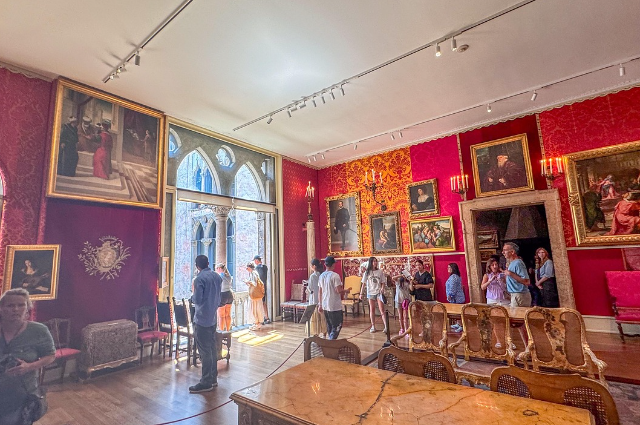
Museums seem to be silent halls with glass cases and printed labels. They are also being redesigned as a new wave of innovation called narrative architecture to become immersive storytelling spaces in which history is reenacted through digital improvement. Narrative architecture is a planned expression of museum space intended to narrate in multi-layered manners, including a combination of physical objects, digital media, soundscapes, lighting and interactive media. This is a change of both opportunities of engagement, as well as it has generated intense debates surrounding the idea of authenticity, ethics, and the limits of historical interpretation.
Over the past few years, there has been a surge in technologies used in museum storytelling, including the use of the Augmented Reality (AR) paradigm, Virtual Reality (VR), holograms, and artificial intelligence. The tools enable the visitors to feel the history not as abstract information but as a sensory experience. Visitors do not have to read about a king, a battle, or an ancient civilisation, but see complete reconstructions, explore virtual environments, or even listen to the voices of historical figures talking. This is radically opposed to the old model of the museum, which used text-based interpretation to a large extent.
The reason why museums are considering using digital storytelling is that the current audiences, particularly the young visitors, are seeking to be engaged. They would like to touch, feel and experience history. AR headsets will be able to superimpose ancient structures on ruins; VR rooms will be able to bring a visitor to a previous time period; deepfake technology can be used to re-create voices or facial expressions never recorded. The innovations contribute to making the process of learning more interactive and emotional and transforming the museum into a narrative space constructed by walls and code.
Nonetheless, there is also the emergence of immersive storytelling, which has not only sparked general discussion and argument, but also when it threatens to tread into an ethically sensitive area. An example of such an enormous case study is the scandal involving deploying deepfake technology to restore the voice of Egyptian Pharaoh Ramses II in one of the most significant museums in Europe. Using skeletal evidence, linguistic studies, and computer synthesis, the museum was able to use AI models to guess the voice of the pharaoh. Tourists listened to a natural-sounding, booming male voice, reciting lines, which were scripted, as though the ancient king were brought back to life.
The exhibition was popular worldwide and generated a fierce controversy. It was acclaimed by fans as revolutionary and made ancient history contextual and thrilling to a contemporary audience. To them, listening to the strong reconstructed royal voice would give them a greater emotional attachment to the past, and this was something they could remember. A lot of visitors reported that the technology helped them to have a new understanding of ancient Egypt since it helped them reconcile the past and the present.
Critics were concerned about that. Historians claimed that the voice was theoretical rather than something real, and offering it with conviction could be a misleading move to the masses. Linguists cautioned that nobody really knows how Ramses II sounded, and that AI-based attempts to fill in the gaps could do more harm than good to history. Ethical critics questioned whether it was the right thing to recreate the voice of a person in the digital world without obtaining their consent, particularly that was a person who had died thousands of years ago and bore a strong cultural meaning. African scholars also raised questions in case the Western institutions were being given the authority to digitally recreate non-Western figures based on centuries of colonial-era appropriation.
This popular argument brings out a fundamental contradiction of the narrative architecture: Are museums turned too theatrical? Because immersive storytelling is on the rise, there is a concern that it may lose its accuracy in the name of entertainment. It is the role of the museum to deliver honest, dignified and transparent historical accounts. As digital re-creations confuse fact and fiction, the visitor might walk away with the understanding of a certain interpretation that has never been proven historically.
Another issue that is brought up by the controversy is the question of digital ownership and cultural responsibility. Who is the master of a reproduced voice? Is there any role of the communities related to the historical figure in the use of these technologies, e.g. Egyptians in this case? The controversy represents a wider international discussion concerning the manner in which museums can approach new technologies in an ethical manner, particularly concerning sensitive heritage.
Irrespective of these anxieties, immersive storytelling can be considered as one of the strongest tools that can be offered to museums today. It enables spaces to be remodelled into a narrative experience as opposed to a fixed showcase. Emotional layers can be developed through sound, motion, light, and digital interaction, which simple text panels would have never been able to accomplish. A visitor is able to experience the terror of entering a battlefield, the magic of strolling through a lost city, or the closeness of a historical figure talking to them. This emotional interaction could enrich learning and make history more memorable.
Nevertheless, the moral of the Ramses II scandal is evident: innovation needs to be accompanied by some responsibility. Museums have to be transparent by informing the visitors what is true and what is reconstructed. They ought to use communities, historians, and ethicists in the process of designing digital narratives. They ought to make immersive technology supplement truth and not substitute truth.
Finally, narrative architecture is the future of museum narrative. It recognises the fact that the citizens have ceased to be content with merely watching history; they wish to go inside it. Immersive digital tools can be used to time, culture, and memory intelligently in ways that reinforce the understanding when applied wisely. However, when abused, they have the potential to distort the history and undermine trust.