
The water crisis in India has developed into a national emergency with severe social, Economic, and general public health effects in 2026 since it is no longer just a latent environmental issue. Various national and international indices of water quality and management continually rank India as one of the worst-performing states in the world. These rankings are not simply statistical replicas; they reveal the failure of governance structures, deterioration of the environment, and unsustainable consumption habits that endanger the lives of millions. With water shortages continuing to close in on the country, India has been at a very sensitive junction where reform is no longer a choice but a necessity.
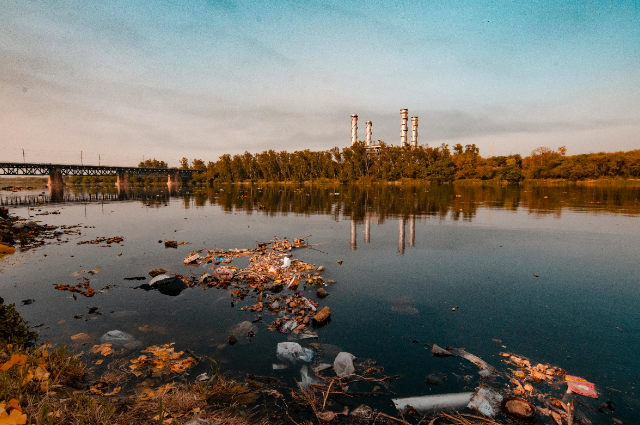
Worldwide, the highest-ranked country on water quality in India is the international rating of water quality, such as the Global Water Quality Index, based on the information collected in institutions like the World Bank and studies cited in NITI Aayog. India is ranked as a frightening 120 th out of 122 countries in these rankings, and this puts it very close to being the lowest-ranked country in the whole world. This ranking indicates the level of pollution in the Indian water systems system both on the surface and underground, with approximately an estimation of 70 percent of the water sources being infected. Uncontrolled release of industrial effluent, sewage, and agricultural effluents, besides improper waste management systems, has made enormous amounts of water unsafe for drinking. Some of the rivers that were being used to nourish civilisations have become sources of toxins, pathogens, and chemical wastes.
This contamination has a human price, which is disastrous. In India, approximately 200,000 people lose their lives each year in diseases that are associated with poor access to safe drinking water. Water-borne diseases like cholera, dysentery, typhoid, and diarrheal infections are still predominant, especially in the rural and informal settlements in urban regions. Such deaths can be stopped to a great extent, and the crisis is not only environmental but also moral. The access to clean water as a fundamental human right continues to be fundamentally unequal between regions and socioeconomic classes, and has been a cycle of poverty and poor health.
On the domestic level, the water governance in India is evaluated using a Composite Water Management Index (CWMI) created by NITI Aayog. In contrast to the global rankings, the CWMI measures management of water resources of the Indian states in terms of groundwater recovery, irrigation, drinking water distribution, and policies guiding these activities. The results are very alarming. According to the CWMI, India is experiencing its worst-ever water crisis, which is quite emphatic in terms of the difficulty. Approximately 600 million individuals, which is nearly half of the entire population of the country, are subjected to high or extreme water stress, that is, there is always a high demand that is surpassed by supply.
Although there are a few states that have long been doing well, like Gujarat, Andhra Pradesh, and Madhya Pradesh, because of proactive policy interventions and water conservation initiatives, such achievements are uneven and weak. Though there are states that are performing well, they are susceptible to climate variability, population growth, and increasing industrial demand. The CWMI has shown a trend of reactive government, where crisis management usually takes the place of long-term planning, with politics taking much precedence over environmental sustainability.
International standards of environmental control also strengthen the precarious situation in India. The 20242026 cycle of the Environmental Performance Index (EPI) ranks India last among the countries of the world on sanitation and drinking water indicators. In the indexes that measure exposure to unsafe drinking water, India has been ranked as low as 141 th of 180 countries in past tests and still ranks between 116 th and 140 th based on the latest health and environmental statistics. These top lists help to point out some endemic vulnerabilities of infrastructure, regulation, and enforcement, particularly in fast-growing urban centres where the population is increasing at a rate outpacing the supply systems.
A decreasing per capita water availability is one of the most threatening aspects of the water crisis in India. India has passed the internationally accepted limit of 1,700 cubic meters per person per year as the stress level on water and is now fast nearing the absolute dearth level of 1,000 cubic meters in most parts. Growth in population, urbanisation, poor irrigation methods, and climate change are the causes of this decline. Precipitation has become more unpredictable with frequent floods and long spells of droughts, and water will no longer be predictable and will not be allocated evenly.
Another dangerous fault line is groundwater depletion. India uses the highest amount of groundwater in the world, as it extracts over 25 percent of the total supply in the world. Overreliance on borewells, especially in agriculture, has led to a decline in the water tables at unsustainable rates in both the north and south states. In Punjab, Haryana, Tamil Nadu, and in some parts of Karnataka, groundwater availability is being drained much faster than it can be replenished by nature. Food security is at risk due to this excessive extraction, with agriculture being the biggest consumer of freshwater in India.
The economic consequences of this crisis are also quite dire. It is estimated that by 2050, India will lose up to 6 percent of its GDP unless the water management strategies are enhanced considerably. Water scarcity interferes with the production in industries, adds to the cost of health and agricultural output, and aggravates regional inequalities. Companies are experiencing increased costs of operation, farmers are facing reduced production, and the people are struggling to afford the water being sold by individuals, deteriorating their economies.
India's water ranking in both global and domestic indices in the year 2026 has a coherent account to narrate; India is balancing a small and vulnerable resource with old systems that have disorganised policies. This crisis is not merely a question of lack but a question of government, justice, and the future. Without a quick development of the water infrastructure, the pollution management, groundwater, and climate-resistance planning, India might find itself in the sphere of water insecurity, becoming a part of the national reality. The rankings are a wake-up call and a last-minute notice of a re-evaluation of the value of water, its management, and protection for future generations.
References
- NITI Aayog (2018). Composite Water Management Index (CWMI). Government of India.
- World Bank (2019). Quality Unknown: The Invisible Water Crisis. World Bank Group.
- Yale Center for Environmental Law & Policy (2024). Environmental Performance Index (EPI). Yale University.
- UNICEF & World Health Organisation (2023). Progress on Drinking Water, Sanitation, and Hygiene.
- FAO (2022). Aquastat: Global Water Information System.