
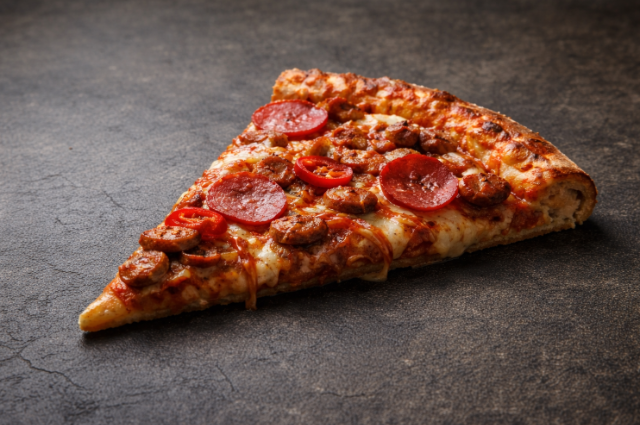
With brands clamouring to get a digital footing in an already crowded market, Hell Pizza opted to use one significantly older, more proven strategy, which is shock. Established in New Zealand, Hell Pizza has created one of the most provocative brand images in contemporary advertising through actively provoking outrage, blasphemy, pain, and suffering, as well as moral uneasiness. Its policy is not indirect and not apologetic. Hell Pizza operates on a modest ground, which is to offend, take control, and turn controversy into sales.
Hell Pizza is essentially a fast-food chain with a horror theme that believes in branding, which functions as performance art. All touchpoints are dominated by death, fire, skeletons, and the afterlife. Its menu has seen a notorious influence of the Seven Deadly Sins by turning abstract moral inadequacies into consumable pleasures. Lust is turned into a pizza overloaded with meat, Greed offers too many toppings, and Gluttony challenges people to eat too much. Even the naming system supports the idea of excess and taboo, by naming pizzas Pandemonium or Mordor, taking images of hellscapes and fantasy worlds, which are associated with chaos and doom.
This is a dedication to the theme much beyond menu design. Hell Pizza is not only a food store but a store of transgression. The black packaging, cynical humour, and rooting in religious symbolism give it a brand image that openly defies moral limits. Hell Pizza relies on backlash where most brands would have been scared.
The most notorious view of this philosophy was in 2014, with the Rabbit Skin billboard. As a promotion for a wild rabbit pizza, the company also installed a huge outdoor advertisement using hundreds of real rabbit skins. The catchphrase was literally savage: Rabbit Pizza. Made from real rabbit. Like this billboard.” The response of the people was swift and violent. Animal rights groups attacked it as grotesque, parents objected to the fact that children were made to view dead animals, and PETA attacked the campaign publicly.
Hell Pizza knew it was going to be outrageous, and it responded appropriately to it, instead of ceding on it. They claimed that rabbits were an invasive species in New Zealand and destroyed the native ecosystems and that they were environmentally responsible by eating them. They explained that the skins were purchased in a professional tannery, and were by-products rather than animals that were murdered in order to advertise them. It did not lead to reputational collapse but commercial success. The pizza was sold in less than three weeks and provided the company with the highest sales record in almost twenty years. The moral outrage again was turned into direct profit.
Even pain has been transformed into a sales instrument. The notorious Pizza Roulette brand turned the common meals into Russian roulette. Customers may order a roulette pizza in which a single randomly chosen slice has two drops of Blair 3 am Reserve chilli extract, a sauce with an estimated two million units of Scoville Heat Units, which is on par with police pepper spray. The sauce was non-visible such that a person at the table would automatically feel burning, sweating, dizziness and panic to extreme levels. The cruelty was the point. It has made a spectacle of consumption and entertainment of suffering.
Hell Pizza does not just satirise food but also finance and legality. One of its most controversial campaigns, AfterLife Pay, satirized the emergence of the debt culture of buy now, pay later. The customers to be selected were given the option of ordering pizza instantly and paying after they died. This was not symbolic, the participants signed legally binding codicils to their wills, which ordered their estates to pay their bill after they died. The campaign was deliberately and ludicrously constrained: in New Zealand and Australia, it was restricted to 666 customers each: a black mirror pointed at the consumer debt structures that naturalize unlimited deferral of payment.
The brand has always been surrounded by controversy. In 2006, Hell Pizza sent more than 170,000 promotional letters with branded condoms as a part of a campaign in association with their Lust pizza. Since postal delivery did not require any age verification, children got them, which caused an uproar among parents and religious groups. In 2008, the company got into geopolitical outrage by putting an image that showed Adolf Hitler holding a slice of pizza and quotes of dictators such as Stalin and Mussolini. The withdrawal of the campaign was under international condemnation.
Even the religious holidays were not spared. In 2011, Hell Pizza sold hot cross buns that were not cross-marked but with an inverted pentagram on Easter 2011. The slogan — “For a limited time. A little like Jesus. — led to the filing of close to two hundred charges of blasphemy. Nonetheless, the campaign was successful due to the publicity.
In addition to advertising, Hell Pizza transforms logistics into theatre. In its delivery service, it utilised restored 50s and 60s funeral hearses, but fitted with coffin-shaped warming ovens. The customers see drivers of a hearse open the rear of the vehicle, pull out a coffin and open the lid to show hot pizza. The company has even gone as far as hiring an armoured military vehicle to block the storefronts of its rivals in the event of special stunts and declaring war on its competitors by force of spectacle instead of legal proceedings.
The mythology of the brand is strengthened by staff culture. The employees have black uniforms that are decorated with skeletons, hellish slogans and 666. On special occasions, the drivers are seen in costume as demons or the Grim Reaper and turn the otherwise ordinary delivery work into a performance.
The success of Hell Pizza does not come about because it does not know where to draw the line; it knows the boundaries well. Each controversy is computed. Every apology is absent. The brand succeeds since it has learned a fundamental reality of the modern media: outrage spreads faster than praise and controversy provides free publicity even the biggest marketing budget can never afford. Hell Pizza is not just a seller of food. It is selling the excitement of breaking boundaries - and challenging the consumers to laugh at it.
. . .
References:
- Hell Pizza. (2014). Hell Pizza rabbit billboard campaign explanation. Hell Pizza Official Website / Press Statements.
- Hell Pizza. (2019). Plant-based burger pizza campaign. Hell Pizza New Zealand Marketing Archive.
- Holt, D. (2002). Why do brands cause trouble? A dialectical theory of consumer culture and branding. Journal of Consumer Research, 29(1), 70–90.
- Klein, N. (2000). No logo: Aiming at the brand bullies. Picador.
- New Zealand Advertising Standards Authority. (2006–2014). Rulings on Hell Pizza advertising complaints. ASA Case Reports.
- PETA. (2014). Statement on Hell Pizza rabbit skin billboard. People for the Ethical Treatment of Animals Press Release.
- Pollay, R. W. (1986). The distorted mirror: Reflections on the unintended consequences of advertising. Journal of Marketing, 50(2), 18–36.
- Sandikci, Ö., & Ekici, A. (2009). Politically motivated brand rejection. Journal of Business Research, 62(2), 208–217.
- The Guardian. (2014). New Zealand pizza chain criticised over rabbit skin billboard. The Guardian International Edition.
- Waller, D. S. (2005). A proposed model of consumer reaction to offensive advertising. Journal of Promotion Management, 11(2–3), 165–179.