
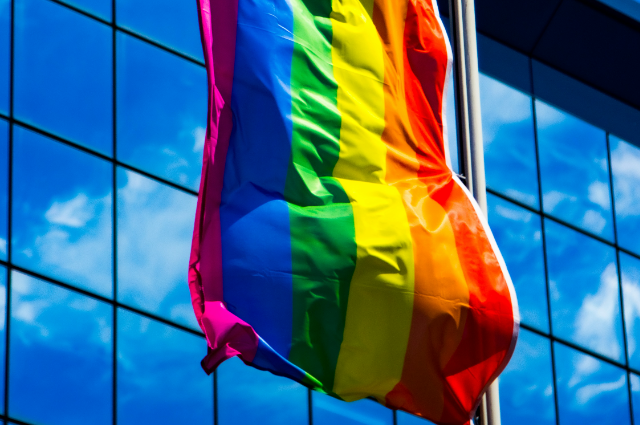
Pride Month is associated with a moderate change in culture and advertising every year. Corporate logos turn rainbow, brand messages start focusing on inclusion at a moment, and businesses are also fighting to be considered as an ally of the LGBTQ+ community. Although such visibility might seem a positive factor, it has led to increasing criticism. According to many activists and scholars, a lot of this support is just superficial, as it is driven by profit as opposed to concern. This is referred to as rainbow capitalism, a trend in which companies can make a monetary gain by LGBTQ+ identity even though they do not provide real or sustained aid.
Rainbow capitalism is the commercialization of LGBTQ+ symbols, language, and struggles to make money. It is based on a great deal of invisibility coupled with irresponsibility. Representation in media is important, but when it is seasonal, performative, and non-linked to structural change, then it is problematic. As soon as Pride is over, lots of companies secretly drop rainbow branding and get back to business as usual, which can be interpreted as an indication that inclusion remains a trend and not a value.
Performative allyship is one of the most widespread characteristics of rainbow capitalism. Companies claim to be publicly linked to LGBTQ+ causes and do not protect queers in their organisations. Others do not even have inclusive policies in the workplace, do not have gender-neutral facilities, or do not provide trans employees with healthcare benefits. Others sell Pride merchandise and give to political actors or institutions that deny LGBTQ+ rights. It is this contradiction that reveals the disconnection between corporate messaging and corporate behaviour.
Advertising is at the center of the perpetuation of rainbow capitalism. Pride campaigns are usually well planned to attract progressive buyers without intimidating the existing power systems. Often, the image of queerness promoted by brands is short and sterilised and can be sold without difficulties. This image is usually based on cisgender and conventionally attractive gay couples and excludes trans individuals, queer individuals of colour, disabled LGBTQ+ people, and individuals of lower social classes. Consequently, visibility is selective and not inclusive.
Commodification of identity is one more big issue. Pride was not originally a corporate-sponsored event. It arose out of opposition to police brutality, discrimination, and lack of social inclusion. Turning Pride into a marketing opportunity, companies deprive it of its political and historical meaning. Rainbow-branded goods and slogans make years of hard work aesthetic to be consumed. The identities of LGBTQ+ people are also commodified in this process instead of being experienced.
The false belief of social progress is also brought about by rainbow capitalism. Having giant organizations merrymakers Pride openly can give significant credibility to the assumption that LGBTQ+ equality has already accomplished. This is a false and harmful story. The LGBTQ+ people are still discriminated against, subject to violence, and legally unequal in most societies. The problems of hate crimes, homelessness among the queers, and limited access to healthcare are still common. Corporate Pride activities seldom pay attention to these realities as they tend to interrupt the positive image that brands strive to establish.
The problem is even more complicated with the global perspective. International companies tend to facilitate Pride in places where queer freedom is a secure business, whereas staying silent in places where queer cultures are criminalised. Most companies prefer to adopt a neutral stance instead of engaging in the process to speak against injustice with the help of their influence. Such selective activism underlines that corporate allyship is usually conditional but not principled.
Rainbow capitalism has been aggravated by social media. Instagram, TikTok, and X are the ones that enable brands to do allyship in real time by using hashtags, filters, and posts about Pride. Even though these platforms can give LGBTQ+ voices, it promotes shallow interaction. A rainbow logo or Pride caption can help to gain likes and applause without having to do meaningful things. Allyship is quantified in terms of the metrics of visibility and engagement as opposed to long-term change.
This inconsistency is very alienating to the LGBTQ+ viewers. The fact that one is as well as not in the structure is a very bad signal; queer identities are not necessarily safe as consumers, but not necessarily safe as individuals. It is this strain that is central to rainbow capitalism. It enjoys the visibility of queer without the responsibility of being queer.
Nevertheless, the rainbow capitalism should not be criticized at the expense of not involving corporations in Pride altogether. Visibility could be significant in combination with accountability and consistency. Other organisations are showing real commitment by instituting policies of inclusiveness at the workplace, financing LGBTQ+ led groups, becoming a member of advocacy organizations, and making condemnations of discrimination even outside of Pride Month. Such activities are an allyship that goes beyond marketing.
Media and communication-wise, audiences are becoming more and more critical. Customers are now asking questions about the profitability of Pride, how corporations treat LGBTQ+ workers, and whether corporate values match corporate behavior. The activism of social media has facilitated the process of revealing hypocrisy and seeking transparency. This puts a strain on brands to stop making empty gestures.
Rainbow capitalism is challenged with the help of media literacy. The ability to know how advertisement uses emotion, identity, and symbolism enables viewers to withstand manipulation. This consciousness makes individuals invest in queer-owned enterprises and grassroots organisations in which funds directly serve the population instead of corporate stockholders.
Reproach of the Pride does not imply the denial of celebration and joy. Rather, it is denying the ability to celebrate instead of justice. Pride may be rejoicing, but still political. It will be able to embrace allies but focus on LGBTQ+ voices and plights. Above all, it can still be a resistance venue instead of a consumer-driven venue.
To summarize, rainbow capitalism reveals the conflict between financial profit and the true friendship of corporations. Although rainbow branding might gain exposure, it does not have substance, responsibility, or commitment. The real LGBTQ+ community needs to be supported regularly, actively, and with a willingness to act ethically and be able to champion equality outside of the advertising efforts. Rainbow capitalism will persist in putting more emphasis on profit over people until corporations act in a way that is consistent with what they say.
. . .
References:
- Duggan, L. (2002). The new homonormativity: The sexual politics of neoliberalism. In R. Castronovo & D. Nelson (Eds.), Materializing democracy: Toward a revitalized cultural politics. Durham: Duke University Press.
- Gill, R. (2007). Gender and the media. Cambridge: Polity Press.
- Hennessy, R. (2000). Profit and pleasure: Sexual identities in late capitalism. New York: Routledge.
- Kates, S. M. (2004). The dynamics of brand legitimacy: An interpretive study in the gay men’s community. Journal of Consumer Research,
- Sender, K. (2004). Business, not politics: The making of the gay market. New York: Columbia University Press.
- Tsai, W. H. S. (2011). How minority advertising works: Understanding the impact of gay-themed advertising on brand perceptions. Journal of Advertising,
- Ward, J. (2020). The tragedy of heterosexuality. London: Allen Lane.