
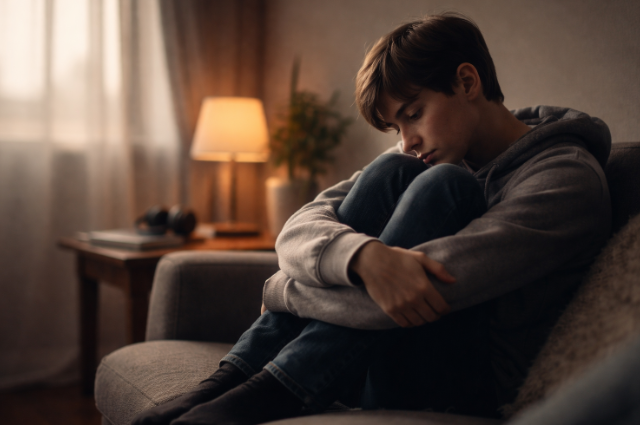
Imagine that autism is another operating system of the human brain. With the majority of the population being Windows users, an autistic patient could be a macOS user. Both systems are neither broken, damaged, or incomplete. Their only difference is that they are designed differently, have different shortcuts, defaults and processing information. The actual issue arises when the world is created nearly operating system all the way, and the other one must always make the adjustments. This contrast is made particularly evident when we discuss the social interaction and the reason why, to a great number of autistic individuals, hanging out is not a pleasure, but a chore.
This experience can be explained with the assistance of such a concept as a social battery. And all of us have an extent to which we can conduct social interactions before we become fatigued. That battery can, however, burn out much faster and with a lot of intensity in the case of autistic people. This is not because they do not like people or because they are antisocial. The reason is that social spaces require an amount of sensual, emotional, and mental work that is usually not detectable by other individuals.
A difference in what can be called another volume control in the brain is one of the factors. The average brain filters out the background noise and sensory stimuli automatically without the need to adopt autistic behaviour. A ticking clock fades away. A murmuring light is barely audible. In the brain of an autistic person, such a filter is usually different. It may include sounds, textures, lights, and smells in all their full volumes. A refrigerator that is humming resembles a jet engine. A piece of clothing's label may be as scratchy as sandpaper. The light shining can be physically painful. This is referred to as sensory overload.
It is particularly exhausting when sensory overload occurs in a social context. Think how hard it is to concentrate on something you are talking about, and your body is also handling dozens of conflicting sensations at the same time. The condition of the surroundings can overload the nervous system even in cases where the people are pleasant, and the contact is fun. There are also cases of autistic individuals who aim at high levels of sensory stimulation, e.g. rocking, spinning, or tapping, to feel grounded. These problems are not accidental or chaotic; they are coping mechanisms of surviving in a world that sometimes seems deafening or very rough.
There is another veil of exhaustion associated with social translation. There is a lot of social interaction, and it is based on unwritten rules. Facial expressions, sarcasm, implied meanings, eye contact, tone of voice and small talk are all contributory. These rules are acquired by most people as they grow up. Autistic people often don’t. Rather, most of them need to be taught them at some level of awareness and in some cases, by observing, by trial and error or by being taught.
This implies that one is always with their calculations when socialising. So what does this individual intend to say? Is this a joke or a serious comment? How much time is required to maintain an eye-contact? Is my response appropriate? This is the process of translation, which demands acutely keen attention. In the long run, it becomes tiresome. Several autistic individuals appreciate straight talking and telling as it eliminates uncertainty and lessens the process involved in decoding. Nevertheless, this bluntness may be misinterpreted in a society where politeness is highly valued over being clear.
This kind of exhaustion is not only theoretical. Even autistic individuals who appear confident, fluent and successful experience it. Temple Grandin, a well-known autistic professor and autism advocate, has explained that prolonged social interaction, such as conferences and meetings, is deeply draining for her. She describes how she must consciously process facial expressions, tone of voice, background noise and sensory input all at once. After such interactions, she often needs extended periods of solitude in quiet and familiar environments to recover. Her experience shows that social withdrawal is not about disinterest or lack of empathy, but about the neurological cost of constant social translation in environments designed for neurotypical interaction.
The social translation work is very taxing on the social battery. Even a simple talk can make one exhausted mentally. This fatigue is not an expression of weakness. It is a logical outcome of the long-term cognitive work in an environment that would not correspond to the way the brain works on information.
Monotony and predictability are also important. The world may be disorderly and unpredictable, which puts a person under a constant load. Routine offers many autistic individuals security and comfort as it brings a lot of uncertainty to their lives. Being well-informed is a way of saving on mental energy. It is in this framework that most people develop special interests, intense, perceptive passions, which are a source of happiness, tranquillity, and a feeling of being competent.
These special interests are mistaken to be obsessions, yet they are a strength. They enable autistic individuals to learn profoundly, become professionals and relate with others in a meaningful manner. Nonetheless, activities that interfere with a ritual or distract a person from a particular fascination may be disconcerting instead of invigorating. Once more, the social battery depletes not due to an unpleasant interaction, but due to a transition to the unregulated condition.
It is also important to learn that there is no spot on the spectrum of autism between the low-functioning and the high-functioning. Such a system is outdated and toxic. It is more appropriate to describe autism as a spectrum that resembles a colour wheel or a soundboard, in which various sliders are applied to communication, sensory sensitivity, motor abilities, and emotional control. A single individual may be very talkative but noise sensitive. The other one may be non-verbal but very empathetic. They co-exist side by side with strengths and challenges.
It is due to this that assumptions are not always correct. A person who can be perceived as confident might be socially drained. The non-party person might be a success in one-on-one discussions. An exhausted social battery is not an indication of uncaringness or disinterest. It usually implies that the individual has to be able to rest by recharging his or her nervous system.
Empathy is promoted by the knowledge of the social battery. It makes us remember that being alone is not being rejected and boundaries are not attacks on us. The ability to create less noisy environments, speak with clarity, adhere to rituals, and allow individuals to choose not to without feeling guilty is a way to make social environments more inclusive.
It is not necessary to work all the time, hanging out. Once we do not hold everyone to the same operating system, social interaction will be more about making people understand each other than trying to make them adapt. Social depletion is not a vice. It is merely a message, requesting to listen.
. . .
References:
- American Psychiatric Association. (2013). Diagnostic and statistical manual of mental disorders (5th ed.). Washington, DC: APA.
- Baron-Cohen, S. (2008). Autism and Asperger Syndrome. Oxford: Oxford University Press.
- World Health Organisation. (2019). International Classification of Diseases (ICD-11). Geneva: WHO.
- Kapp, S. K. (2019). Autistic Community and the Neurodiversity Movement: Stories from the Frontline. Singapore: Palgrave Macmillan.