
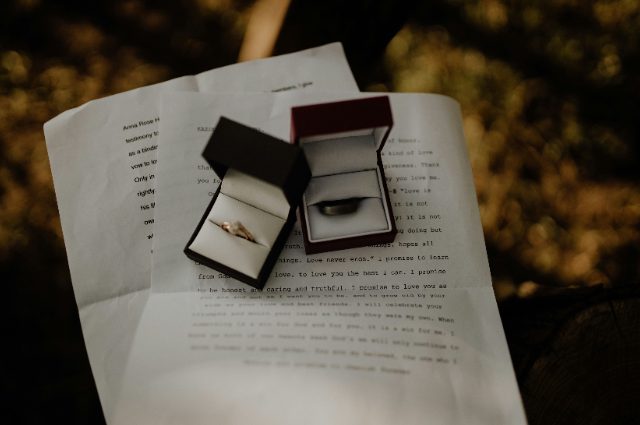
The marriages between Lavenders are placed in a rather awkward threshold of choice and coercion. They are not completely liberating or repressive. They are rather a social workaround, an improvised reaction to the systems that reward non-conformity. The question of whether lavender marriages are a survival or submission is thus a question that grapples with another more profound question: the degree to which there is choice when society dictates the conditions on how to live with acceptability?
Historical record: It was not passion that led to the creation of lavender marriages, but rather it was fear. In Hollywood of the 1920s-50s, the idea could not be defined outside of capitalism. Their public image of stars was the asset of studio executives, filmed by the morality clauses capable of ruining careers in a single night. To queer actors, marriage was not personalized but professionalized. A marriage between Rock Hudson and Phyllis Gates is not mentioned as a love affair, but as a well-planned PR trick, an intimate sacrifice required by a business that benefited from the heterosexual illusion of this man. Marriage in this case was a matter of survival and a survival that involved immense self-denial.
The moral dilemma of the situation involves duress consent. The two parties were technically in agreement. In reality, the decision was made between obedience and career destruction. Submission starts posing as an agency, as long as the alternative is exile.
This conflict is further heightened by the fact that when we shift further East, specifically to modern-day China, which is currently the most systematized lavender marriage market in the world. These unions are called xinghun or formality marriage and are not as much influenced by religion or the law as they are by Confucian filial piety. The ethics of obliging to continue the family bloodline through marriage is positioned as a responsibility towards parents and not as a choice. To be a failure is not to be a rebellious individual; failure is seen as the betrayal of ancestors.
Productivity is what is unique to China. Specialized websites pair gay men with lesbian women, and the relationships are usually cemented by contracts that are more corporate in nature. Clauses are governing parental visits, financial, and even reproduction by use of IVF. This seems idealistic on the surface, even empowering. Negotiations are made openly, and the parties are aware of each other and their interests.
Efficiency is not, however, equality with freedom. As millions are driven to contractual marriages due to fear of disgrace in their families, the ethical issue of deception is no longer one of the individual level, but rather of the collective level. The issue is not whether such marriages would work, but why they are even necessary in the first place. Here, survival has been systematized, rationalized, and institutionalized; however, it is based on being submissive to lineage instead of being submissive to self.
India has a different tone of emotion. Lavender marriages are mostly underground and managed by whisper networks and coded groups. Efficiency is not the driver, but safety. To most queer people and particularly women, marriage is their disguise against violence, corrective rape, or social ostracism forever. In contrast with the Chinese clarity of transaction, the Indian one is full of fear, guilt, and emotional involvement. Partners can love each other, but not in a romantic manner, but as partners who live together.
This presents an agonizing ethical problem. Is it morally neutral when one does not have any other defense against harm except this? The denunciation of lavender marriages in such situations threatens moral purity in the lived reality. Even imperfect strategies of survival cannot be evaluated out of the systems in which they are necessitated.
Ironically, the term has started to be rebranded totally by the West, which is the origin of the term. Vitality Within the US and the UK, Gen Z is reviving lavender marriage as a response to end-stage capitalism rather than a form of closet. Economic precariousness in the form of increased rent, student debt, and healthcare precarity has turned romance into an economic impossibility. In reaction, the youth are talking of platonic marriages- best friends marrying as a tax break, co-residency, and legal status as next-of-kin.
This transition is morally interesting. In this case, the marriage is not a question of concealing sexuality, but denying the romantic ideal. Gen Z eliminates the shame element by recasting these unions as more of a platonic life partnership and injecting them with purpose. It is not submissiveness to norms, but a silent revolt to the notion that romantic love is the only legitimate source of commitment.
Even this version, however, is not devoid of criticism. As the economic structures compel individuals to formalise friendships to survive, this implies a larger failure in society. The marriage institution turns into a leverage to gain stability as opposed to intimacy. Freedom of choice- but with limited economic parameters.
In all cultures, terminology indicates these shades. Beard is a slang term used in the US and the UK that accentuates deceit, which is frequently one-sided. In France, the mariage blanc emphasizes the lack of something sexless, empty, neutral. The East Asian contract marriages presuppose the transaction ahead of emotion. The words used in every term depict the things that a society finds most uneasy: lies, intimacy, duty, or deviation.
Therefore, is it survival or submission in lavender marriages?
The solution is both disturbingly no. They are practices of fighting back against instant evil and concurrent cries of submission to oppressive conventions. They defend people, and at the same time, they uphold the systems that threaten them. It is this duality that causes them to be considered ethically complex and not morally simple.
Finally, the presence of lavender marriages is not a criticism of people who get into the marriage, but rather the culprits who do not create the situations that require such a marriage. Ethical performance is achieved when honesty is penalized. Romance is superseded by pragmatism in the case of love that is dangerous. Same sex marriages are failures of boldness; they are signs of structural unbearability.
Maybe the most ethical approach is not, however, to condemn such marriages, but to doubt the circumstances that render survival impossible with authenticity. Lavender marriages will not stop being a scandal, but as a strategy until our societies can allow people to live without losing safety, family, and livelihood.
. . .
References:
India: The "Shield" (Safety, Pressure & Legal)
- Lavender Marriages in India & The "Baby Trap"
- What is a Lavender Marriage, and Why Is it Still Popular in India? – The Swaddle
- Legal Complexities & Divorce Challenges
- Sec 377 defanged, many homosexuals trapped in hetero marriages take divorce route out – Times of India
- Lavender Marriages and the Conundrum of Marriage Laws in India – Journal of Legal Research and Juridical Sciences
- Gen Z Rebranding & Risks in India
- Lavender Marriages in India, Rebranded! – Theraverse
China: The "Contract" (Xinghun & Filial Duty)
- The Rise of Cooperative Marriage (Xinghun)
- A Different Way to Tie the Knot: The Rise of Xinghun Marriages in China – The Yale Globalist
- The Tech & Apps (Chinagayles)
- China's Bizarre Fake Marriage Phenomenon Reveals the Tragic State of LGBT Rights – Mic
- Ad Analysis & Gender Roles
- Two Gay Men Seeking Two Lesbians: An Analysis of Xinghun Ads – ResearchGate / Southern Illinois University
Western/Gen Z: The "Life Hack" (Economics & PLPs)
- Platonic Life Partnerships (PLPs)
- The Rise of Platonic Life Partnerships: The Future of Love or Just Friendship 2.0? – Daniel Dashnaw / Couples Therapy
- Gen Z Economic Factors
- Why Gen Z Is 'Rejecting Traditional Relationships' – Newsweek
History: The "Career Move" (Hollywood & Origins)
- Origin of the Term & Morality Clauses
- What Is a Lavender Marriage? Meaning and History – The Knot
- Rock Hudson & The Studio System
- What Is a 'Lavender Marriage,' Exactly? – Parade
General/Global Context
- Wikipedia Overview
- Lavender Marriage History & Global Context – Wikipedia