
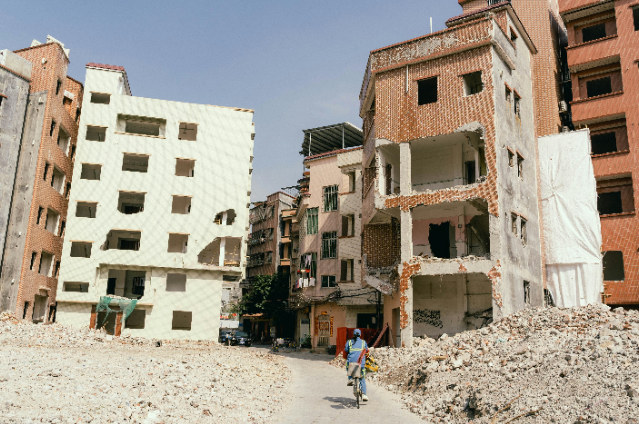
The rhythm of post-apocalyptic stories has been the same for decades: the world ends, society is destroyed, and the story has chained its focus on survival. There must be food, and there must be enemies, and suspend morality long enough to live through another day. The appeal of these stories was that they reduced man to his lowest base instincts. However, this has not been the case in recent years. To support the emotional and intellectual pressure of contemporary speculative fiction, one needs to survive. There is a new stage of narration, a stage that may be referred to as the second story. This is the narrative that starts when survival is the order of the day, and real crisis is no longer surviving but how to live together in the world once again.
This change onward is indicative of a greater apprehension among modern viewers. The terror is not just a disaster, but the end of the disaster. Climate change, pandemics, political unrest, and overreach by technology have all made the idea of collapse a possibility. Consequently, post-apocalyptic fiction has been expanded over time by no longer thinking about the end of the world but questioning the resurrection of society. It is no longer about personal survival but about communal restoration, no longer about individual righteousness but about communal self-determination, no longer about individual heroes but about vulnerable groups of people bargaining over new social transgressions.
The main theme of the crisis of the second story is a narrative realization that the world is not eternal, but society is. As soon as characters get to know how to hunt, hide, or fight, the actual conflicts appear. Who makes the rules? Whose lives matter? What is the application of justice without institutions? Such questions are much more complicated than outwitting the danger, and these are the reflections of the unsettled tensions of the modern world. Post-apocalyptic fiction no longer serves as a fantasy of rugged individualism but rather serves as a space to try out political and cultural experiments.
An evident instance of this narrative shift is the example of The Last of Us, especially the television adaptation of it. In the original video game, much attention is paid to the survival of a character and the emotional connection. Joel is travelling with his own loss in his heart, and the world is made to look like a hostile terrain, mostly a landscape of ruins, where connections with people are perilous and in many instances deadly. Although episodes of community are a welcome break, they are short-lived, weak, and are, in the end, secondary to the personal cause of Joel to save Ellie. In the game, survival is a personal and lonely process.
The television adaptation, on the other hand, widens the story lens. Although it still carries the emotional essence of the relationship between Joel and Ellie, it takes much time to explore other approaches to survival by way of community. The episodes about self-sustaining communities, totalitarian quarantine zones, and revolutionary resistant movements show that the world is no longer determined only by anarchy. Rather, the series raises the question of whether rebuilding a society is necessarily doomed to oppression or whether shared order is better than individual freedom. The apocalypse does not focus so much on the infected monsters but rather on human systems of power.
This contrast is what gives a shift to the first story and the second one. In part one, the threat is external and apparent. In the second story, danger is ideology. Communities have to decide on whether to be secure or free, compassionate or controlling. It is no longer about how to survive the apocalypse, but what sort of world is worthy of even existing? The television adaptation of The Last of Us gives into this tension and employs world-building to mirror the morally ambiguous, as opposed to making survival a heroic endeavor.
One can see the same development of the narrative in another successful streaming adaptation, Silo. The reason first seems to lie in the principle of survival when it is about humanity's survival as it exists underground and guarded against a toxic world above. However, as the story progresses, it is apparent that survival is already secured. The actual battle is in the secrecy, the rule, and the eradication of history. This silo is not fighting to survive; it is fighting to be submissive. Power is not preserved by the use of brute force alone, but through narrative control, the use of collective memory that is purposefully manipulated.
In Silo, the reconstruction has already taken place, but it has formed a dismal and delicate society. The conflict is brought about by the fact that it is impossible to survive without truth and not to stagnate. The novel is a critique of the fact that order is inherently good and that, in order to rebuild society, it is the transparency, flexibility, and ability to share meaning that are needed. It is a departure from the classical post-apocalyptic storytelling where authority figures are typically void, and anarchy is the order of the day. There is authority in the second story, and the issue is that that is the problem.
The fact that these stories gained such popularity points to the fact that the culture has become weary of survival fantasy. People do not want to hear any more about the stories in which the isolation and brutality of the character are praised. Rather, they are attracted to stories that embrace interdependence. The second narrative is an expression of a common awareness that human beings are not simply victims of disasters; they are arranging themselves around them. The process of rebuilding is dirty, political, and morally corrupt, though it remains inevitable. The post-apocalyptic fiction is now facing the unfortunate reality that society cannot simply become better when it collapses; it tends to recycle the old forms of inequalities.
Another myth that has been challenged by this story is that of the single savior. Individual heroism is not enough in the second-story narrations. Change involves unanimity, bargaining/negotiation, and at times, compromise. Characters will also have to deal with the results of being a leader, the price of disobedience, and the moral burden of making decisions on behalf of others. The apocalypse has become a mirror, and what the human race loses is reflected therein, that which they bring along with them.
Finally, the crisis of the second story shows that speculative fiction has matured. Post-apocalyptic stories have been more politicized and culturally aware by going beyond survival. They pose more difficult questions, do not take answers easily, and admit that the end of the world is not the end of human responsibility. Restoration is not a promising epilogue in these stories; it is the conflict. And in a world that is already grappling with systemic breakdowns, that focus is not only relevant, but it is needed.
. . .
References:
- Berger, James. After the End: Representations of Post-Apocalypse.
- University of Minnesota Press, 1999.
- Mittell, Jason. Complex TV: The Poetics of Contemporary Television Storytelling.
- New York University Press, 2015.
- HBO. The Last of Us (Television Series).2023
- Howey, Hugh. Wool.
- Simon & Schuster, 2011.