
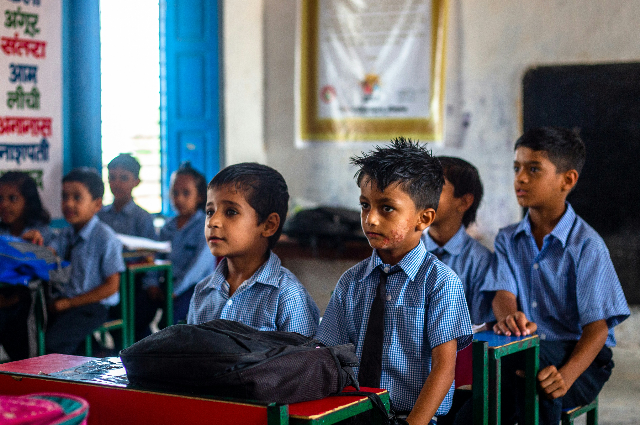
Government schools in the Simanchal region of Bihar—covering the districts of Purnea, Katihar, Araria, and Kishanganj—are facing a crisis of governance and educational quality. Although these schools are intended to provide free and fair education under constitutional and legal frameworks, corruption, administrative inefficiency, inadequate infrastructure, and weak teacher accountability have severely limited their effectiveness. As a result, formal classroom education has declined, learning outcomes stay poor, and private coaching centres have increasingly replaced schools as the primary sites of learning. This paper critically examines the structural causes behind the decline of government schools in Simanchal and analyses the social, economic, and educational consequences of the growing dependence on private coaching. The study argues that this shift is a gradual transformation of education from a public good into a market-based service, which disproportionately disadvantages poor and marginalised communities. The paper concludes by emphasising the urgent need for systemic reforms aimed at restoring transparency, accountability, and learning quality in government schools.
Education is widely regarded as the foundation of social development, economic progress, and democratic participation. In India, this understanding is reflected in constitutional provisions and legislative measures, particularly Article 21A of the Constitution and the Right to Education Act, 2009, which guarantee free and compulsory education for children between the ages of six and fourteen. Government schools are the primary institutions through which this promise is meant to be realised, especially for children belonging to economically weaker and socially marginalised communities.
In regions such as Simanchal in Bihar, government schools carry an even greater responsibility. Due to widespread poverty and limited access to private educational institutions, these schools are often the only available means of formal education. However, despite increased enrolment and multiple government schemes, government schools in Simanchal have failed to provide meaningful education. In many cases, schools exist physically and administratively, but teaching and learning remain weak or inconsistent.
This paper explores how corruption and weak administration have contributed to the decline of government schooling in Simanchal and how this decline has encouraged the growth of private coaching centres as alternative spaces of learning. The study seeks to move beyond surface-level explanations and examine education failure as a structural and governance-related issue rather than an individual one.
Regional Background: Simanchal, Bihar
Simanchal is in the northeastern part of Bihar and consists of four districts: Purnea, Katihar, Araria, and Kishanganj. The region is marked by prominent levels of poverty, low literacy rates, and limited access to quality public services. Agriculture and informal labour form the main sources of livelihood, and seasonal migration to other states is common due to the lack of local employment opportunities.
Educational indicators in Simanchal remain below both state and national averages. Literacy rates, particularly among women and rural populations, are low, and school dropout rates stay high. Social and linguistic diversity adds another layer of complexity, as many children come from backgrounds where the language of instruction differs from the language spoken at home.
In this context, government schools are expected to play a crucial role in promoting inclusion and social mobility. When these schools fail, the impact is not limited to education alone; it affects health, employment, gender equality, and long-term development. Understanding the regional context is therefore essential to understanding the depth of the educational crisis in Simanchal.
Corruption and Weak Administration in Government Schools
Corruption is a major factor undermining the functioning of government schools in Simanchal. Financial resources distributed for school infrastructure, classroom maintenance, teaching materials, uniforms, scholarships, and welfare schemes are often mismanaged or diverted. Audit reports and investigative journalism have repeatedly pointed to irregularities in fund use, poor record-keeping, and a lack of transparency at the school and block levels.
Weak administrative oversight allows such practices to continue without meaningful consequences. School inspections are often irregular or superficial, and reports highlighting problems often do not result in corrective action. In many cases, schools appear functional on official records while lacking basic facilities or regular teaching in practice.
Administrative inefficiency also affects planning and coordination. Delays in fund release, lack of coordination between departments, and poor data management further weaken the education system. As a result, corruption and weak administration together create an environment in which government schools are unable to fulfil their educational mandate.
Teacher Accountability and the Quality of Teaching
Teachers are the most critical element of any education system, and their role becomes even more important in disadvantaged regions like Simanchal. However, teacher accountability remains a sincere concern in government schools across the region. Issues such as absenteeism, irregular classroom engagement, and limited instructional effort are widely reported.
In many schools, a small number of teachers handle multiple classes across different grade levels. This results in overcrowded classrooms, reduced instructional time, and minimal individual attention to students. Monitoring mechanisms exist in theory, but enforcement is often weak due to administrative negligence or local pressures.
The lack of continuous professional development further affects teaching quality. Teachers often receive limited training and little academic support, making it difficult for them to adapt teaching methods to diverse learning needs. Without regular evaluation and support, teaching practices stay stagnant, directly affecting student learning outcomes.
Infrastructure and Learning Conditions
The physical condition of government schools in Simanchal significantly affects students’ ability to learn. Many schools run in poorly constructed or damaged buildings, with insufficient classrooms and inadequate seating arrangements. In some cases, classes are conducted in temporary structures or open spaces, especially during periods of overcrowding.
Access to basic facilities such as clean drinking water and functional toilets remains limited in many schools. The absence of separate sanitation facilities for girls has been linked to higher absenteeism and dropout rates, particularly at the upper primary and secondary levels. Poor infrastructure not only discourages attendance but also affects students’ health, dignity, and motivation.
In addition to physical infrastructure, learning resources such as libraries, laboratories, and teaching aids are often missing or underutilised. The absence of such resources limits students’ exposure to experiential and practical learning, further weakening educational quality.
Decline of Formal Education and Learning Outcomes
Formal education requires regular classes, structured curriculum delivery, and effective assessment. In Simanchal, these elements are often absent or poorly implemented. Classes are often irregular, school hours are shortened, and syllabus completion is rare. Students are often promoted to higher grades without mastering basic literacy and numeracy skills.
Learning assessments consistently show low levels of reading and mathematical ability among students enrolled in government schools. Many children struggle to read simple texts or perform basic arithmetic even after several years of schooling. This gap between enrolment and learning highlights a fundamental failure of the education system.
The decline of formal education has long-term implications. When students progress through the system without buying basic skills, they are ill-prepared for higher education, vocational training, or employment. This weak foundation contributes to continued poverty and limited social mobility.
Growth of Private Coaching and the Changing Nature of Education
As confidence in government schools declines, private coaching centres have appeared as alternative spaces of learning across Simanchal. These centres offer exam-oriented instruction and promise better academic performance, attracting students from government schools who feel that classroom teaching is insufficient.
In many cases, students attend government schools primarily to fulfil attendance requirements and obtain certificates, while actual learning takes place in private coaching classes. This dual system reflects a significant shift in education, where public institutions exist formally but learning is increasingly privatised.
The growth of private coaching has transformed education into a market-based service. Families, including those with limited income, spend a massive part of their earnings on coaching fees. Students who cannot afford such services are left behind, deepening educational inequality and social division.
Social and Economic Consequences
The decline of government schooling and the rise of private coaching have serious social and economic consequences for Simanchal. Educational inequality has increased, as access to quality learning now depends on a family’s ability to pay. Poor households face financial stress as they distribute limited resources to education-related expenses.
High dropout rates stay a concern, particularly among students who do not see value in attending poorly functioning schools. Boys often enter informal labour markets at an early age, while girls face increased risk of early marriage and domestic responsibilities. These patterns reinforce cycles of poverty and gender inequality.
The failure of public education also erodes trust in government institutions. When citizens perceive that public schools exist only in name, confidence in governance and democratic processes weakens. Over time, this loss of trust undermines social cohesion and regional development.
Government Initiatives and Their Limitations
The Bihar government has introduced several schemes to improve access to education, including free textbooks, uniforms, midday meals, bicycles for girls, and scholarship programs. These initiatives have contributed to increased enrolment and improved attendance, particularly among disadvantaged groups.
However, these programs have not resulted in significant improvements in learning outcomes. The focus on quantitative indicators such as enrolment and attendance has often come at the expense of qualitative improvements in teaching and learning. Without strong governance, effective monitoring, and teacher accountability, welfare-oriented schemes alone cannot address the structural problems facing government schools.
Government schools in Simanchal, Bihar, are experiencing a deep and persistent crisis driven by corruption, weak administration, poor infrastructure, and limited teacher accountability. While policies and programs have expanded access to education, they have failed to ensure meaningful learning. As a result, private coaching centres have appeared as parallel systems of education, transforming learning from a public right into a private commodity.
This situation contradicts the constitutional promise of free and equal education and places an unfair burden on poor and marginalised families. Restoring the effectiveness of government schools in Simanchal requires systemic reforms focused on transparency, accountability, infrastructure development, and learning outcomes. Without such reforms, public schooling in the region will continue to exist in form rather than substance, limiting the life chances of future generations.
Here are the ten most valuable, credible, and PhD-appropriate references for your research on government schools, corruption, and educational decline in Simanchal (Bihar). These are authoritative and widely accepted in academic and policy research:
References:
- ASER Centre. (2018–2023). Annual Status of Education Report (ASER). New Delhi: Pratham Education Foundation.
- Comptroller and Auditor General of India. (Various Years). Audit Reports on School Education in Bihar. New Delhi: Government of India.
- Census of India. (2011). Primary Census Abstract: Bihar. Government of India.
- Ministry of Education, Government of India. (2020). National Education Policy (NEP) 2020. New Delhi.
- Ministry of Education, Government of India. (2018–2024). Samagra Shiksha Abhiyan: Framework and State Reports. New Delhi.
- National Institute of Educational Planning and Administration (NIEPA). (Various Years). State Education Reports: Bihar. New Delhi.
- Right to Education Act. (2009). The Right of Children to Free and Compulsory Education Act. Government of India.
- Down To Earth. (2023). Government Schools in Bihar at Risk of Being Replaced by Tuition Centres. New Delhi.
- The Indian Express. (2023). Infrastructure Deficits and Learning Crisis in Bihar Government Schools. New Delhi.
- World Bank. (2018). World Development Report: Learning to Realise Education’s Promise. Washington, DC.