
Money is one of the most important parts of our daily lives. We use it to buy food, clothes, books, and almost everything we need to live. It is present everywhere—sometimes in the form of coins and paper notes, and sometimes as numbers on a mobile screen. Even though we use money every day, many people do not stop to think about what money really is and how it came into existence.
If we look closely, money is not just a physical object. It is not only paper or metal. In reality, money is based on a powerful idea—trust. We accept money because we believe that others will accept it too. When we earn money, we trust that it will help us buy things in the future. Without this trust, money would have no value.
The story of money is also the story of human progress. It shows how people learned to cooperate, trade, and build strong societies. From simple exchanges in ancient times to complex digital systems today, money has changed along with human needs. Each stage of its development solved problems of the past and created new opportunities for the future.
This article explains how money began, how it developed over time, and how trust has always played a central role in its journey. It takes us from the early barter system to modern digital currencies and helps us understand how money has shaped the world we live in today.
Life Before Money: The Barter System:
In the earliest days of human society, there was no money. People lived in small communities and produced things according to their needs. Farmers grew crops, hunters caught animals, and craftsmen made tools. When someone needed something they did not have, they exchanged goods directly with others. This system is known as the barter system.
Barter was simple in theory. For example, a farmer could exchange wheat for milk from a herder, or a potter could trade pots for vegetables. This method worked well in small communities where people knew each other and their needs were limited.
However, as time passed, problems began to appear. One of the biggest problems was what economists call the “double coincidence of wants.” This means that both people involved in the trade must want what the other person has. For example, if a farmer wanted shoes, he had to find a shoemaker who wanted wheat. If the shoemaker wanted something else, like meat, the exchange could not happen.
Another major problem was deciding the value of goods. How much wheat is equal to one pair of shoes? There was no standard system to measure value, which often led to confusion and disagreement. People also found it difficult to store value. Some goods, like fruits and vegetables, could spoil quickly, making them unsuitable for long-term exchange.
As societies grew larger and trade expanded beyond small villages, barter became even more difficult. People started trading with strangers, and trust became weaker. It was not easy to rely on unknown people. All these problems created the need for a better system—something that everyone could accept as a common medium of exchange.
This need led to the development of money.
The Emergence of Commodity Money:
To overcome the limitations of barter, people began to use certain items as money. These items had value in themselves and were widely accepted by society. This form of money is known as commodity money.
Different regions used different commodities depending on what was available and valuable in their area. In coastal regions, people used cowrie shells. In colder areas, animal skins and furs were common. In some places, people even used stones or feathers. One of the most important commodities used as money was salt.
Salt was extremely valuable in ancient times because it was necessary for preserving food. Without salt, food could spoil quickly, especially meat. Because everyone needed salt, it became a trusted form of exchange. In fact, the word “salary” is believed to come from the Latin word “salarium,” which is related to salt.
Commodity money made trade easier because people no longer needed to find someone who wanted exactly what they had. They could exchange their goods for a commonly accepted item and then use that item to buy something else.
However, commodity money also had its limitations. Many commodities were bulky and difficult to carry. Some items, like salt, could dissolve or lose value over time. Others, like shells, could break or become too common, reducing their worth.
As trade expanded further, people realised they needed something more durable, portable, and reliable. This led to the use of metals, especially gold and silver, which marked the next important stage in the evolution of money.
The Development of Coins and Standardised Currency:
The use of metal as money was a major turning point in history. Metals like gold and silver were rare, durable, and easy to shape. They did not spoil or lose value easily, making them ideal for use as money.
At first, people used metal in the form of lumps or bars. They would weigh the metal during transactions to determine its value. However, this process was slow and could lead to cheating if the metal was not pure.
To solve this problem, the first coins were introduced around 2,700 years ago in a region called Lydia. These coins were made of precious metals and were stamped with a symbol by the ruler or authority. This stamp guaranteed the weight and purity of the metal.
Coins made trade much easier and faster. People no longer needed to weigh metal or test its quality. They could simply use coins with confidence, knowing their value was guaranteed.
The use of coins also helped governments collect taxes and pay soldiers. This allowed empires like Greece and Rome to grow and manage large territories. Trade expanded, markets developed, and cities became more prosperous.
Most importantly, coins strengthened trust in the system. People trusted the authority that issued the coins. As long as the authority was strong and reliable, the value of coins remained stable.
However, as trade increased and wealth grew, carrying large amounts of coins became difficult and risky. Merchants needed a safer and more convenient way to handle money. This need led to the invention of paper money.
The Rise of Paper Money and Banking Systems:
Paper money was first developed in China over a thousand years ago. Merchants who dealt with large transactions found it difficult to carry heavy metal coins. To solve this problem, they began depositing their coins with trusted individuals or institutions.
In return, they received a paper receipt that represented the value of their deposit. This receipt could be used to make payments instead of carrying coins. Over time, people started accepting these paper notes as money.
This was a revolutionary idea. Paper money was light, easy to carry, and convenient to use. It allowed people to handle large amounts of wealth without a physical burden.
As trade grew, banks were established to manage money. Banks provided safe storage for deposits and issued notes that could be used for transactions. They also began lending money to individuals and businesses.
When banks gave loans, they charged interest, which allowed them to earn profit. This system encouraged economic growth. People could start businesses, build homes, and invest in new opportunities with borrowed money.
However, the success of paper money and banking depended heavily on trust. People had to believe that banks would return their money when needed. If trust was lost, it could lead to panic and financial crises.
To maintain stability, governments started regulating banks and controlling the supply of money. This led to the development of more organised financial systems.
The Gold Standard and the Shift to Fiat Money:
For many years, countries followed the Gold Standard. Under this system, paper money was directly linked to gold. People could exchange their money for a fixed amount of gold, which gave money a stable value.
Gold was trusted because it was rare and could not be easily produced. This made the monetary system reliable and helped international trade grow.
However, the Gold Standard had limitations. It restricted the ability of governments to increase the money supply. During times of crisis, such as wars or economic depressions, countries needed more money than their gold reserves allowed.
As a result, many countries abandoned the Gold Standard and moved to a system called fiat money. Fiat money is not backed by gold or any physical commodity. Its value comes from the trust people have in the government.
Today, most currencies in the world are fiat money. Governments and central banks manage the supply of money to keep the economy stable.
Although fiat money offers more flexibility, it also requires strong trust in the system. If people lose confidence in the government or the economy, the value of money can decrease.
The Digital Revolution and the Future of Money:
In the modern world, money is becoming increasingly digital. Many people no longer use cash. Instead, they use debit cards, credit cards, and mobile payment apps.
Digital money is fast, convenient, and efficient. It allows people to send and receive money instantly, even across countries. Most transactions today happen electronically.
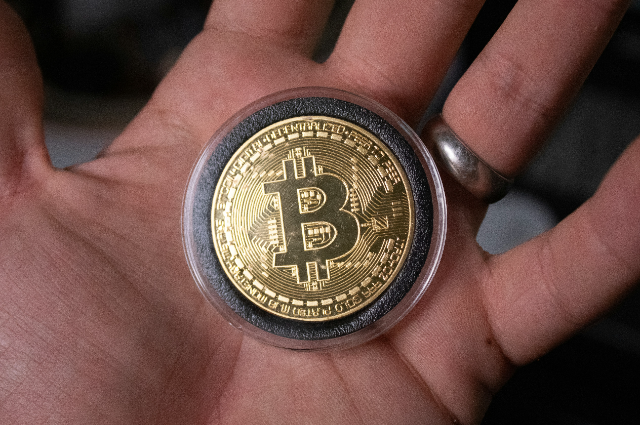
A new form of money called cryptocurrency has also emerged. Cryptocurrencies use advanced technology to operate without central control. They rely on systems like blockchain to ensure security and transparency.
The digital age has changed the way we think about money. It is no longer something we can always see or touch. It exists as data in computers and networks.
Despite these changes, the basic principle remains the same. Money still depends on trust—whether it is trust in banks, governments, or technology.
The history of money is a journey of human trust and innovation. From simple barter exchanges to complex digital systems, money has evolved to meet the needs of society.
At every stage, trust has been the foundation. People trusted each other, then commodities, then governments, and now digital systems. Without trust, money would lose its meaning and value.
Money has made life easier by enabling trade, encouraging growth, and connecting people across the world. It has played a key role in building modern civilization.
As we look to the future, money will continue to evolve. New technologies will bring new forms of currency. However, the success of any system will always depend on trust.
In the end, money is not just about wealth. It is about relationships, cooperation, and belief in a shared system. It is truly a story of trust that continues to shape our world.
References:
- NCERT Economics (Class 10)
- Reserve Bank of India (RBI) Publications
- Encyclopaedia Britannica – History of Money
- Investopedia – Money and Banking Concepts
- Niall Ferguson, The Ascent of Money
- World History and Economic Studies Sources