
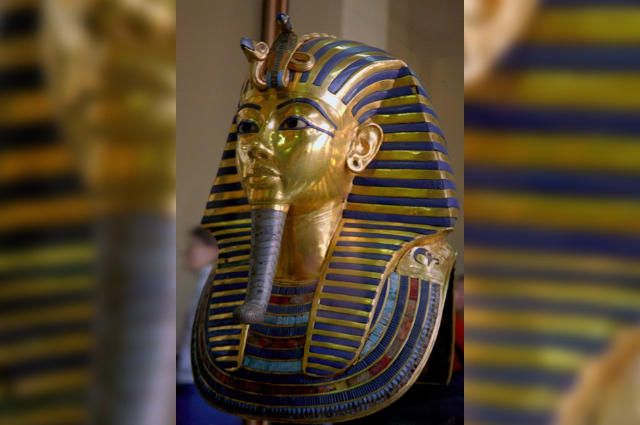
The story of the “Curse of the Pharaoh” is one of the most famous and fascinating mysteries in history. It is closely connected to the tomb of the young Egyptian king Tutankhamun, whose grave was discovered in 1922 after remaining hidden for more than 3,000 years. This discovery amazed the entire world because it revealed a treasure-filled tomb that was almost untouched by time. Inside were golden objects, statues, jewelry, and many valuable items that showed the greatness of ancient Egypt.
However, the excitement of this discovery soon turned into fear. After the tomb was opened, many strange events began to happen. Some people connected to the tomb died suddenly, while others became seriously ill. There were also unusual reports, such as sudden power failures and mysterious animal deaths. These incidents made people believe that a powerful curse had been placed on the tomb to protect it from anyone who tried to disturb it.
Newspapers and media played a big role in spreading this belief. They published dramatic stories and frightening headlines, making the idea of the curse even more popular. People around the world became curious and scared at the same time.
But was this curse real, or was it just a story created by fear and imagination? In this article, we will carefully explore the truth behind this mystery using simple explanations, historical facts, and scientific reasoning.
The Discovery of Tutankhamun’s Tomb: A Historic Achievement
The discovery of the tomb of Tutankhamun is considered one of the greatest achievements in archaeology. In 1922, a British archaeologist named Howard Carter made this incredible discovery after many years of hard work and patience. He was supported financially by Lord Carnarvon, a wealthy British nobleman who believed in Carter’s efforts.
For a long time, many experts thought that all the tombs in Egypt’s Valley of the Kings had already been discovered. But Carter did not give up. After years of searching without success, he finally found a hidden staircase under the sand. This staircase led to a sealed door that had royal symbols on it, indicating that it belonged to a king.
When the tomb was finally opened, Carter saw a sight that amazed him. The tomb was filled with thousands of objects, including a golden death mask, jewelry, statues, and a coffin made of solid gold. These items were more than 3,000 years old and were still in very good condition. Carter famously described the moment by saying he saw “wonderful things.”
This discovery helped historians learn a lot about ancient Egyptian culture, religion, and lifestyle. It also made Tutankhamun one of the most famous pharaohs in history. However, this great discovery soon became linked with a mysterious and frightening story—the curse of the Pharaoh.
The Birth of the Curse: How Fear Began
Soon after the tomb of Tutankhamun was opened, stories about a curse began to spread. Some people claimed that there was a warning written on the tomb, saying that death would come to anyone who disturbed the Pharaoh’s rest. Although there was no real proof of such a warning, the idea quickly became popular.
The situation became more serious when Lord Carnarvon died a few months after the discovery. He had been bitten by an insect, and the wound became infected, leading to his death. Around the same time, strange stories appeared, such as a sudden power cut in Cairo and the death of his pet dog in England.
These events seemed mysterious and frightening, so people started believing that the curse was real. Newspapers published dramatic headlines, calling it “The Curse of the Pharaoh.” Writers and journalists added more details to make the story more interesting, even if those details were not true.
Fear and imagination played a big role in spreading this belief. People in those days did not have enough scientific knowledge to explain such events, so they believed in supernatural powers. As more stories were added, the idea of the curse became stronger and more widely accepted.
Scientific Explanations: The Truth Behind the Mystery
When scientists studied the so-called curse, they found that there were logical and scientific explanations for most of the events. One important reason was the presence of harmful bacteria and fungi inside ancient tombs. These tombs had been sealed for thousands of years, allowing dangerous microorganisms to grow inside them.
When people entered the tomb, they were exposed to these microorganisms. One such fungus, called Aspergillus, can cause serious lung infections. In the early 1900s, medical science was not very advanced, and antibiotics were not available. This meant that even a small infection could become life-threatening.
For example, Lord Carnarvon died because of an infected insect bite. Today, such a condition could be treated easily, but at that time, it was very dangerous.
Scientists also found that many of the deaths were simply coincidences. People naturally die due to age, illness, or accidents. However, because these deaths happened after the tomb was opened, they were linked to the curse.
Research studies later proved that there was no unusual pattern in these deaths. The idea of a curse was not supported by scientific evidence. Instead, it was a combination of natural causes and human misunderstanding.
The Role of Media: Creating a Global Myth
The media played a very important role in making the story of the Pharaoh’s curse famous. Newspapers in the early 20th century wanted to attract readers, so they published exciting and dramatic stories. They often exaggerated facts or included information that was not true.
For example, the famous curse warning was likely not real. Historians later discovered that no such inscription existed in the tomb. It was probably created by writers or journalists to make the story more interesting.
People are naturally attracted to mystery and fear. When they hear about strange events, they try to find dramatic explanations. The media used this human nature to make the story more popular.
As more newspapers published similar stories, the idea of the curse became stronger. Even educated people began to believe in it. Over time, the story spread across the world and became one of the most famous myths in history.
This shows how powerful media can be. It can shape people’s beliefs and turn simple events into something mysterious and frightening, even without real evidence.
The Real Story of Tutankhamun: A Human, Not a Curse
King Tutankhamun was not a powerful ruler during his lifetime. He became king at a very young age and ruled for only a short period. He died when he was about 18 or 19 years old.
Modern research has shown that he suffered from several health problems. He had genetic disorders, difficulty walking, and diseases like malaria. These health issues likely caused his early death.
After his death, his name was almost forgotten. Later rulers removed his name from history, which is why his tomb remained hidden for thousands of years.
Interestingly, Howard Carter, the man who discovered the tomb, lived for many years after opening it. This clearly shows that the curse did not affect everyone.
Today, Tutankhamun is remembered as one of the most famous pharaohs, not because of a curse, but because of the discovery of his tomb. His story reminds us that behind every mystery, there is often a simple human truth.
Conclusion: Separating Myth from Reality
The story of Tutankhamun’s curse is a powerful example of how fear, imagination, and media can create a global myth. While the events may seem mysterious, most of them have simple and logical explanations. Science has shown that there was no real curse, only natural causes and coincidences.
The role of media and human fear made the story more dramatic and popular. Today, this story teaches us an important lesson: we should think logically, question what we hear, and always look for evidence before believing something.
In the end, Tutankhamun is remembered not for a curse, but for the incredible discovery that brought his story back to life after thousands of years.
References:
- Howard Carter – The Tomb of Tutankhamun
- Joyce Tyldesley – Tutankhamun: The Search for an Egyptian King
- British Medical Journal (2002 Study)
- National Geographic – Tutankhamun Articles
- BBC History – Pharaoh’s Curse Analysis