
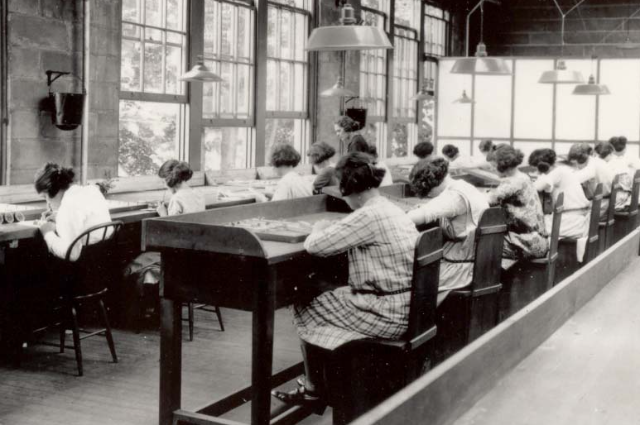
History is filled with stories of courage born from suffering, but few are as heartbreaking and inspiring as the story of the Radium Girls. In the early twentieth century, hundreds of young women worked in factories painting watch dials with glowing radium paint. They believed they had found modern, respectable jobs during a time when employment opportunities for women were limited. However, the very substance that made the dials shine in the dark slowly poisoned their bodies. What began as a symbol of scientific progress soon turned into a nightmare of illness, pain, and death.
Despite facing powerful companies, public disbelief, and devastating health conditions, these women refused to remain silent. Their bravery transformed labour laws, workplace safety standards, and the rights of workers across America. The story of the Radium Girls is not only a tale of tragedy but also a powerful example of resilience, justice, and the strength of ordinary people fighting against injustice.
The Rise of Radium and the New Job Opportunities
During the 1910s and 1920s, radium was considered a miracle element. Its glowing properties fascinated the world, and many people believed it had magical health benefits. Companies used radium in medicines, cosmetics, toothpaste, and especially in luminous paint for watches and military instruments.
Factories began hiring young women to paint tiny watch dials with this glowing paint. These workers became known as the “Radium Girls.” The job was attractive because it paid far better than most jobs available to women at that time. The factories were clean, modern, and considered respectable workplaces.
To create fine brush points for detailed painting, supervisors instructed the women to shape their paintbrushes using their lips after every stroke — a technique known as “lip, dip, paint.” Day after day, the women unknowingly swallowed dangerous amounts of radioactive material while believing it was completely harmless.
The Silent Poison Slowly Destroyed Their Bodies
At first, the glowing paint seemed harmless and even exciting. Some workers playfully painted their nails, dresses, or teeth with radium because the glowing effect looked beautiful in the dark. No one warned them about the deadly danger hidden inside the substance.
After several years, however, strange illnesses began appearing among the workers. Their teeth loosened and fell out. Their jaws developed painful infections and literally began decaying. Many women suffered from severe anaemia, bone fractures, exhaustion, and terrible pain throughout their bodies.
Doctors were confused by these unusual symptoms. Some women became so weak that they could barely walk. Others died at very young ages. The horrifying condition later became known as “radium jaw,” caused by radiation destroying the bones from inside the body.
While the women suffered, the factory owners continued denying responsibility and insisted that the workplaces were safe.
The Companies Knew the Truth
As more workers became ill, investigations revealed something deeply disturbing. Scientific studies had already shown that radium was dangerous. Male scientists working in laboratories handled the substance with protective equipment such as gloves and masks.
Yet the factory girls received no protection at all. Worse still, they were encouraged to continue pointing their brushes with their lips despite the risks. The companies hid medical evidence and attempted to silence concerns to protect their profits and reputation.
Some doctors hired by the companies falsely blamed the women’s illnesses on other diseases. In several cases, death certificates were manipulated to avoid connecting the deaths to radium poisoning.
The Radium Girls were not only victims of a deadly substance but also victims of corporate greed and dishonesty.
The Brave Legal Battle for Justice
Despite their worsening health, several women decided to fight back. One of the most famous among them was Grace Fryer, a former dial painter whose body had been severely damaged by radium exposure.
Finding a lawyer willing to challenge powerful corporations was extremely difficult. The companies had wealth, influence, and teams of legal experts. Meanwhile, the women were physically weak and financially struggling.
After years of effort, the Radium Girls finally brought their case to court. Their trial attracted national attention because it exposed the shocking treatment of factory workers and the hidden dangers of industrial chemicals.
Even while suffering immense pain, the women courageously testified against the companies. Some were so weak they could barely raise their hands to swear the oath in court.
Their determination touched the hearts of people across the country and turned the case into a symbol of workers’ rights and female courage.
A Victory That Changed History
Although many of the women died before fully enjoying justice, their fight produced historic change. The companies were forced to provide financial compensation to affected workers and acknowledge responsibility for the poisonings.
More importantly, the Radium Girls’ case led to major reforms in workplace safety laws. Governments and industries began introducing stricter regulations to protect workers from dangerous chemicals and unsafe conditions.
Their struggle also helped establish the principle that employers could be held legally responsible for occupational diseases. This became a turning point in labour rights history and influenced future protections for millions of workers around the world.
The courage of these women proved that even ordinary workers could challenge powerful corporations and force society to confront injustice.
The Lasting Legacy of the Radium Girls
The story of the Radium Girls remains deeply important even today. It reminds us that scientific progress without ethics can become dangerous. It also shows how greed and negligence can destroy innocent lives when human safety is ignored for profit.
At the same time, their story is one of extraordinary bravery. These young women, many of whom were barely in their twenties, stood against powerful industries despite their suffering. Their voices created lasting change that protected future generations.
Today, the Radium Girls are remembered not only as victims but also as heroes who sacrificed their health and lives so that others could work in safer conditions. Their struggle continues to inspire activists, workers, historians, and women around the world.
The tragedy of the Radium Girls is one of the darkest chapters in industrial history, yet it is also one of the most inspiring stories of courage and justice. What began as a promising opportunity for young women turned into a horrifying disaster caused by corporate negligence and hidden truths.
Despite unbearable suffering, the Radium Girls refused to remain silent. Their legal battle transformed labour laws, improved workplace protections, and exposed the dangers of unchecked industrial practices. Through pain and sacrifice, they changed history forever.
Their story teaches humanity an unforgettable lesson: progress should never come at the cost of human life, and even the weakest voices can create powerful change when they stand together for truth and justice.
References:
- The Radium Girls by Kate Moore
- Historical accounts of radium dial factories in the United States during the 1910s–1920s.
- Court cases and labour rights reforms connected to occupational safety laws.
- Biographical records of Grace Fryer and other factory workers.