
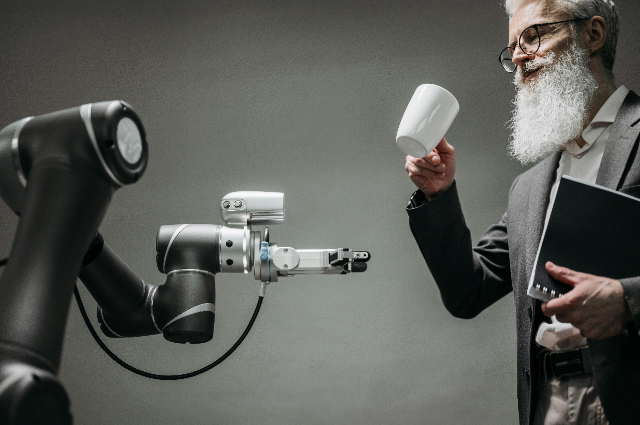
A Question of the Modern Age:
In the modern world, technology is changing very fast. Machines are becoming smarter, faster, and more powerful. Robots can now do many tasks that were once done only by humans. They can work in factories, answer customer calls, drive cars, and even help doctors in hospitals. Because of these changes, a big question has come into people’s minds: Will robots replace human jobs?
This question creates fear and confusion. Many people worry that robots will take away jobs and leave humans unemployed. Workers, students, and even professionals feel insecure about their future. At the same time, others believe that robots will help humans, not replace them.
This topic is very important because work is not only a way to earn money. It gives people dignity, purpose, and identity. Losing jobs can affect families, society, and mental health. That is why this issue needs deep thinking.
This article discusses whether robots will truly replace human jobs or only change the way humans work. It explains the role of robots, their advantages, their limits, and how humans can prepare for the future. The language is kept very simple so that everyone can understand.
Understanding Robots and Artificial Intelligence:
To understand this topic, we must first understand what robots really are. A robot is a machine designed to do specific tasks automatically. Some robots work with physical bodies, like machines in factories. Others work in software, like computer programs that answer questions or analyse data.
Artificial Intelligence, or AI, is the brain behind many modern robots. AI allows machines to learn from data, recognise patterns, and make decisions. Because of AI, robots can now do more complex tasks than before.
In the past, machines could only do simple, repeated work. They followed fixed instructions. Today’s robots can adjust, improve, and learn. This makes them very useful in industries like manufacturing, healthcare, banking, and education.
However, robots do not think like humans. They do not have emotions, feelings, or personal understanding. They work only based on data and programming. This difference is very important when we talk about replacing human jobs.
Robots are tools created by humans. They depend completely on human intelligence for design, control, and improvement.
Jobs That Robots Are Already Replacing:
Indeed, robots have already replaced some human jobs. This is mostly happening in areas that involve repetitive, boring, or dangerous work.
In factories, robots assemble cars, pack goods, and handle heavy materials. These jobs were once done by human workers. Robots can work faster, longer, and without getting tired. They also reduce accidents in risky environments.
In offices, software robots handle tasks like data entry, billing, and customer service. Many companies use automated systems to answer calls and emails. This reduces the need for human workers in basic roles.
In banks, ATMs and online banking have reduced the need for clerks. In shops, self-checkout machines have reduced cashier jobs. In transport, self-driving technology is slowly developing, which may affect drivers in the future.
These changes show that robots do replace some jobs, especially those that are routine and rule-based. This creates fear among workers who depend on such jobs for income.
However, history shows that technology has always replaced some jobs while creating new ones. When machines came during the Industrial Revolution, many jobs disappeared, but many new jobs were also created.
Jobs That Robots Cannot Easily Replace:
While robots are powerful, they have clear limits. There are many jobs that robots cannot easily replace because they require human qualities.
Jobs that need creativity are very hard for robots. Artists, writers, musicians, designers, and filmmakers use imagination and emotion. Robots can assist, but they cannot truly create original art with human feeling.
Jobs that need emotional intelligence are also safe. Teachers, counsellors, nurses, social workers, and psychologists deal with human emotions. They listen, understand feelings, and build trust. Robots cannot truly care or show empathy.
Leadership and decision-making roles also need human judgment. Managers, leaders, and entrepreneurs make decisions based on values, experience, and understanding of people. Robots can provide data, but humans must decide.
Jobs that require flexibility and moral thinking are difficult for robots. Humans can handle unexpected situations, ethical problems, and complex social issues. Robots follow rules but cannot understand moral responsibility.
Even in technical fields, humans are needed to design, control, and repair robots. Technology creates demand for new skills.
This shows that robots may replace tasks, but not the human essence of work.
How Robots Are Changing Jobs, Not Ending Them:
Instead of completely replacing humans, robots are changing the nature of jobs. Many jobs today are different from what they were in the past.
In factories, humans now work alongside robots. Robots do heavy or repetitive tasks, while humans control, monitor, and manage them. This makes work safer and more efficient.
In offices, software tools help humans work faster. Accountants use software, doctors use machines for diagnosis, and teachers use digital tools for teaching. Humans are still needed, but their roles have evolved.
New jobs have been created because of robots. Jobs like robot engineers, AI specialists, data analysts, and cybersecurity experts did not exist before. Technology creates new opportunities for skilled workers.
The problem is not robots themselves, but the speed of change. Many workers do not get enough time or training to adapt. This creates unemployment and fear.
If education and training systems improve, people can move from old jobs to new ones. Lifelong learning becomes very important in the modern world.
Social and Economic Impact of Robots:
The rise of robots has serious social and economic effects. If robots replace too many jobs quickly, income inequality may increase. Rich companies may benefit more, while workers suffer.
Unemployment can lead to poverty, stress, and social unrest. People who lose jobs may feel useless and depressed. This can affect families and communities.
At the same time, robots can increase productivity. They can reduce costs and make goods cheaper. This can improve living standards if benefits are shared fairly.
Governments have an important role to play. They must create policies to protect workers, provide training, and ensure fair distribution of benefits. Education systems must focus on skills that robots cannot replace.
Some experts suggest ideas like shorter work hours, new job sectors, or a basic income to handle job changes. These ideas show that society must adjust to technological growth.
Technology should serve humanity, not harm it. Human values must guide technological progress.
Preparing Humans for a Robot-Driven Future:
The future will include robots, whether we like it or not. The question is how humans prepare for it.
Education must change. Instead of only memorising facts, students should learn critical thinking, creativity, communication, and problem-solving. These skills make humans valuable.
People must accept lifelong learning. Skills learned once may not be enough for an entire career. Learning new skills helps people stay relevant.
Ethical control of technology is also important. Humans must decide how robots are used. Robots should not be allowed to harm human dignity or freedom.
Most importantly, humans must remember their unique strengths. Compassion, imagination, wisdom, and moral thinking cannot be replaced by machines.
If humans guide technology wisely, robots can become helpers, not enemies.
Robots will not completely replace human jobs, but they will surely change the way humans work. Some jobs will disappear, many will change, and new ones will appear.
Repetitive jobs and routine are most at risk. Jobs that need creativity, emotion, ethics, and human understanding are safer.
The real challenge is not robots, but preparation. If society invests in education, training, and fairness, humans and robots can work together.
Robots are tools, not masters. The future of work depends on human choices.
Robots may replace some jobs, but they cannot replace humanity.
. . .
References:
- World Economic Forum – The Future of Jobs Report
- International Labour Organisation (ILO) – Automation and Employment
- Encyclopaedia Britannica – Robotics and Artificial Intelligence
- Yuval Noah Harari – 21 Lessons for the 21st Century
- MIT Technology Review – Robots and the Future of Work
- Oxford Economics – How Robots Change the World