
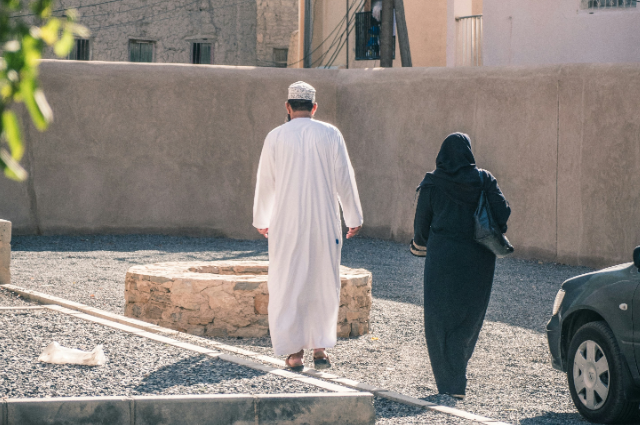
Photo by Ruben Hanssen on Unsplash
As a central social institution, marriage in Islam is deliberately structured to be simple, accessible, and ethically grounded, ensuring that individuals from economically modest backgrounds can enter into it with dignity. Rooted in principles of mutual responsibility, emotional companionship, and social harmony, Islamic marriage is envisioned as a moral partnership that strengthens both the family unit and the broader society.
However, in several regional contexts, most notably in Simanchal, a subregion of Bihar, the institution of marriage among the Muslim community has undergone significant transformation due to the interaction between religious ideals and entrenched local customs. Contrary to the commonly held perception that marital burdens disproportionately affect women alone, prevailing norms in Simanchal impose substantial social, economic, and psychological pressures on both brides and grooms. These practices lack legitimacy within Islamic teachings, yet persist as powerful social conventions.
Over time, such culturally embedded practices have become normalized and assimilated into what is often mistakenly perceived as an “Islamic” marital framework. Resistance remains limited due to concerns surrounding social honor, conformity, and fear of communal alienation. The endurance of these practices has resulted in escalating marriage expenses, heightened familial anxiety, delayed marriages, domestic conflict, and inter-family disputes.
This paper critically examines the marriage system prevalent among the Muslim community in Simanchal, with particular emphasis on culturally inherited practices that complicate marital arrangements and deviate from Islamic ethical foundations. Drawing upon Islamic moral philosophy alongside sociological analysis, the study demonstrates how these customs, extending beyond the conventional discourse on dowry, have intensified marital challenges for middle-class families. It concludes by interrogating the social consequences of these entrenched norms and exploring the prospects for reform within contemporary Simanchal Muslim society.
Islam presents itself as a comprehensive moral, legal, and social system that offers guidance for all dimensions of human life, encompassing spiritual conduct, ethical behavior, social relations, and institutional arrangements. Rather than separating religious belief from everyday social practice, Islamic teachings integrate moral principles into social life, provided such practices do not contradict foundational ethical norms. Central to this framework is the principle of ease, intended to ensure that religious obligations promote dignity and social balance rather than hardship or exclusion.
Within this integrated moral vision, marriage occupies a pivotal position as a foundational social institution. Islamic teachings conceptualize marriage as a dignified, simple, and accessible union, deliberately structured to accommodate individuals across economic and social strata. By limiting material requirements and discouraging ceremonial excess, Islam seeks to protect marriage from becoming a site of economic exploitation or social competition. Marriage is thus envisioned as a moral partnership grounded in responsibility, emotional companionship, and social stability.
Despite the universality of Islamic marital principles, their lived expression varies across societies due to historical, cultural, and economic influences. In many contexts, local customs coexist with religious norms without producing ethical tension. In others, however, culturally embedded practices gradually acquire normative authority and begin to distort religious ideals. The case of Simanchal, a geographically and culturally distinct subregion of north-eastern Bihar, offers a particularly instructive example of this process.
Simanchal, comprising the districts of Kishanganj, Katihar, Purnia, and Araria, is characterized by a Muslim-majority population alongside several historically marginalized communities. Persistent underdevelopment, low literacy rates, limited access to religious and contemporary education, and chronic economic vulnerability have shaped social life in the region. These structural conditions have not only reinforced economic insecurity but have also facilitated the entrenchment of socio-cultural practices lacking grounding in Islamic ethical or legal teachings.
Within this context, marriage among the Muslim community in Simanchal has increasingly evolved into a socially and economically burdensome institution. A range of practices—frequently misrepresented as religious obligations—now dominate marital arrangements, imposing financial, social, and psychological pressures on both the bride’s and the groom’s families. Over time, these practices have become normalized through appeals to honor, conformity, and communal expectation, rendering resistance socially costly.
Despite the severity of these issues, Simanchal remains largely absent from academic discourse. Scholarly engagement with the region’s social life and marital institutions is strikingly limited. As a researcher originating from this region, this study seeks to address this gap by critically examining marriage practices among Simanchal’s Muslim community through the combined lenses of Islamic moral philosophy and sociological analysis.
The paper is organized into five sections. The first examines marriage-related practices imposed upon the groom’s side. The second analyzes expectations and pressures placed upon the bride’s family. The third explores broader social consequences. The fourth advances a reform-oriented analysis grounded in Islamic jurisprudence. The paper concludes with reflections on the prospects for ethical and social reform.
Cross-Reference with Islamic Jurisprudence: A Reform-Oriented Analysis
From the standpoint of Islamic jurisprudence (fiqh al-nikāḥ), the marital practices prevalent in Simanchal represent a clear departure from the ethical and legal framework established by Islam. Classical Islamic law deliberately minimizes material obligations associated with marriage to prevent hardship, exploitation, and social inequality. The Qur’anic and Prophetic vision emphasizes moral responsibility, mutual consent, and social ease rather than ceremonial excess or competitive display.
Islam mandates only a limited set of requirements for the validity of marriage: the free consent of both parties (ijab and qabul), the presence of witnesses, and the payment of mahr by the groom to the bride. Mahr is conceived as a right of the bride and a symbol of dignity and financial autonomy, not as a transactional cost imposed upon families. Additional financial expectations, whether in the form of dowry or ritualized extractions, lack juridical legitimacy.
Prophetic traditions consistently emphasize simplicity and discourage excessive expenditure. Within Islamic ethical reasoning, practices such as compulsory feasts, monetized rituals, and socially enforced gift exchanges constitute culturally constructed innovations that contradict the higher objectives of Islamic law (maqāṣid al-sharī‘ah), particularly the preservation of wealth, dignity, and social harmony.
In Simanchal, however, culturally inherited customs have acquired normative authority and are frequently misrepresented as religious obligations. This conflation of culture with religion has weakened ethical accountability and transformed marriage into an arena of economic coercion and public performance. A reform-oriented response requires the conscious disentanglement of religion from oppressive custom, the reassertion of mahr as the sole legitimate financial obligation, and collective resistance to practices that generate hardship.
Comparative Analytical Framework: Bride and Groom Practices
A comparative examination of marital practices affecting both brides and grooms in Simanchal reveals a shared structural logic of economic extraction, social pressure, and ritualized obligation. While the forms of burden differ, the underlying dynamics remain similar, exposing marriage as a bilateral site of exploitation rather than a unidirectional one.
On the bride’s side, families face intense pressure to meet dowry demands encompassing cash, vehicles, household goods, and other material assets. These expectations are frequently enforced through emotional coercion and post-marital pressure, resulting in debt, asset liquidation, and long-term financial insecurity.
Conversely, the groom’s side is subjected to extended rituals, multi-day feasting, transportation arrangements, ceremonial payments, and repeated hospitality obligations. These expenditures are socially enforced markers of honor and masculine credibility rather than voluntary expressions of generosity.
In both cases, refusal to comply invites stigma, reputational damage, and communal exclusion. Marriage thus functions as a mechanism of social regulation, compelling conformity even at the expense of ethical coherence. From an Islamic ethical standpoint, these practices represent a collective moral failure sustained through social normalization.
This study has demonstrated that marital practices among the Muslim community in Simanchal have been profoundly reshaped by entrenched socio-cultural conventions rather than Islamic ethical principles. While Islam envisions marriage as a simple and morally grounded institution, the lived reality in Simanchal reflects excessive ritualization, financial coercion, and symbolic performance.
The findings reveal a clear disjunction between Islamic jurisprudence and prevailing customs. Practices such as dowry demands, monetized rituals, and compulsory feasting lack religious legitimacy and contradict the higher objectives of Islamic ethics. Sociologically, these practices function as mechanisms of conformity and symbolic power, compelling participation through fear of social exclusion.
The crisis of marriage in Simanchal is systemic rather than gender-exclusive, affecting both brides and grooms through interconnected forms of pressure. Meaningful reform cannot be selective or superficial; it requires a comprehensive ethical reorientation that disentangles religion from oppressive custom and redefines honor in moral rather than material terms.
By foregrounding the lived realities of a region largely absent from academic discourse, this study seeks to initiate critical reflection. The practices examined are socially produced and therefore socially transformable. Reimagining marriage in Simanchal ultimately depends on collective moral responsibility and the recovery of marriage as an institution of dignity, justice, and social well-being.
. . .
References (APA 7th Edition)
- Al-Bayhaqī, A. (2003). Al-Sunan al-Kubrā. Beirut: Dār al-Kutub al-‘Ilmiyyah.
- Al-Ghazālī, A. H. (1993). Iḥyā’ ‘Ulūm al-Dīn. Beirut: Dār al-Ma‘rifah.
- Al-Shāṭibī, I. (2005). Al-Muwāfaqāt fī Uṣūl al-Sharī‘ah. Cairo: Dār Ibn ‘Affān.
- Bourdieu, P. (1986). The forms of capital. In J. Richardson (Ed.), Handbook of Theory and Research for the Sociology of Education.
- Durkheim, É. (1982). The Rules of Sociological Method. New York: Free Press.
- Ibn Qudāmah, A. (1997). Al-Mughnī. Cairo: Dār al-Ḥadīth.
- Veblen, T. (2007). The Theory of the Leisure Class. Oxford: Oxford University Press.
- Weber, M. (1978). Economy and Society. Berkeley: University of California Press.