
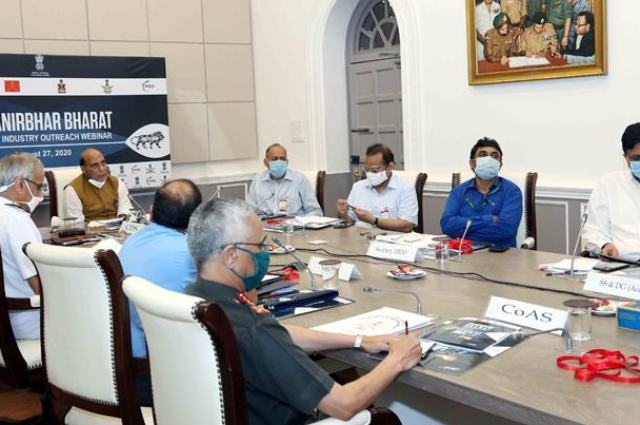
Aatmanirbhar Bharat emerged at a moment of global disruption, framed not as a withdrawal from the world but as an attempt to reconstruct India’s economic foundations with greater internal strength. This article critically examines whether India can realistically achieve meaningful self-reliance in an era defined by interconnected supply chains, geopolitical tensions, and deep structural inequalities. Through a public-intellectual lens, the analysis explores the core elements of the Aatmanirbhar framework—its demographic potential, expanding digital governance, policy momentum, and domestic market depth—while also interrogating the persistent challenges of uneven industrial capacity, skills deficits, regulatory friction, and fiscal constraints. The article argues that self-reliance must be understood not as autarky but as strategic autonomy: the capacity to engage globally from a position of resilience rather than dependence. Ultimately, the study suggests that Aatmanirbhar Bharat is both a promising vision and a difficult pursuit, one that can be realised only through sustained structural reforms, long-term investment, and a steady commitment to aligning ambition with institutional capability.
Every generation inherits a dream from the one before it. Some dreams are whispered, shaped by modest ambition; others are declared from rooftops, echoing across national boundaries. Aatmanirbhar Bharat belongs to the second category. Announced in May 2020, at a moment when the world was gripped by a pandemic and the global economic machine had come to a juddering halt, this vision sought to redefine India’s place in the world. It was not framed as a retreat from globalisation, nor as a fortress mentality that isolates a nation. Instead, it was articulated as a deep structural shift—a project to build inner strength so India can stand taller and bargain harder in a world of shifting power equations.
In its simplest form, Aatmanirbhar Bharat is the promise of a nation telling itself that dependence will no longer be its default mode. In its more complex form, it is a vast re-engineering of institutions, industries, markets, and mindsets. Its five pillars—Economy, Infrastructure, System, Vibrant Demography, and Demand—function like the skeletal framework on which a modern economic body must grow. But the question that hovers persistently around the project is whether such a sweeping transformation can genuinely be achieved in India’s intricate, often contradictory, socio-economic terrain. Can a nation as vast, diverse, and structurally uneven as India reorganise itself into a resilient, technologically capable, globally competitive economy?
This article attempts to answer that question—not through excessive optimism or habitual pessimism, but through a careful engagement with the idea of self-reliance in the 21st century. It explores what Aatmanirbhar Bharat seeks to accomplish, the strengths that make it plausible, the challenges that might disrupt it, and the conditions under which it can become more than a political slogan. In doing so, the article uses a narrative style that blends academic reasoning with reflective analysis, much like a public intellectual speaking to both scholars and citizens.
The Architecture of a Vision: Understanding Aatmanirbhar Bharat
Aatmanirbhar Bharat is often misunderstood as a muscular version of old protectionism. But the initiative, at least in theory, is more nuanced. Rather than locking India away from global trade, it aims to create domestic capabilities strong enough to integrate with global supply chains on favourable terms. The distinction is subtle but profound: isolation weakens, integration strengthens—but only when the nation joining the world stage has something competitive to offer.
The initiative’s five pillars function as conceptual signposts. The Economy pillar envisions a shift from incremental growth to transformative expansion. Infrastructure aims to build a physical and digital backbone capable of carrying a trillion-dollar economy into the future. The System pillar represents governance reforms that seek transparency and efficiency in public institutions. Vibrant Demography focuses on leveraging India’s vast population, not merely as a labour force but as a reservoir of creativity, innovation, and skill. The Demand pillar highlights the need for a strong domestic market to stimulate sustained industrial growth.
Together, these pillars do not form a closed structure but an open architecture—more like scaffolding than walls—guiding India’s ascent without confining it. Yet, turning architecture into action is a long, complicated process. Nations do not transform overnight; they evolve through sustained intention, painful adjustment, and bold experimentation.
The Strengths that Make Self-Reliance Possible
India’s quest for self-reliance does not begin from a position of weakness. In fact, the country enters this journey with several remarkable strengths that make the vision not only desirable but achievable—if harnessed with discipline and clarity.
One of the greatest assets India possesses is its demographic character. With the world’s largest youth population, India is like a river fed by perennial springs—constantly replenished with new thinkers, workers, and innovators. A demographic dividend is not automatic wealth; it is potential energy waiting to be converted into kinetic force. If equipped with the right skills and opportunities, India’s young population can power industries, expand entrepreneurship, and push the country into new technological frontiers.
The second major strength lies in digital governance. Over the past decade, India has quietly built one of the most sophisticated digital infrastructures in the world. Aadhaar, UPI, and the JAM trinity (Jan Dhan–Aadhaar–Mobile) have reshaped service delivery, financial inclusion, and bureaucratic transparency. Digital India is no longer a vision; it is a functioning reality, perhaps one of the few areas where India has overtaken many advanced economies. This digital backbone makes the System pillar of Aatmanirbhar Bharat more than theoretical—it offers practical pathways for efficient governance.
India also enjoys a vast and expanding domestic market. A growing middle class, rising consumption patterns, and increasing urbanisation create fertile ground for industries to scale. Nations like China became manufacturing giants partly because of large internal markets that absorbed early-stage production. India has a similar opportunity—if demand can be matched with competitive supply.
Finally, policy momentum has been strong. Whether it is the Production-Linked Incentive (PLI) scheme, new FDI regulations, MSME support programmes, or defence indigenisation reforms, the government has demonstrated institutional willingness to push self-reliance as a long-term agenda. While policies are not solutions by themselves, they set the stage on which transformation can occur.
The Deep-Rooted Challenges That Complicate the Path
Yet, no honest assessment of Aatmanirbhar Bharat can ignore the formidable challenges that lie ahead. India’s industrial landscape, despite its strengths, struggles with structural weaknesses that cannot be wished away.
One of the most serious issues is uneven industrial capacity. While sectors like pharmaceuticals, renewable energy, IT services, and space technology are globally competitive, many others lag far behind. India still imports critical components—from semiconductors to high-end electronics, from specialised chemicals to defence technologies. No country can be fully self-reliant, but excessive dependence, particularly in strategic areas, exposes vulnerabilities that weaken national resilience.
Another challenge arises from the skills gap. India’s workforce is vast, but skill levels are inconsistent. The mismatch between industry requirements and available skills creates friction that slows industrial expansion. Modern manufacturing requires precision, technological literacy, and innovation-focused thinking—qualities that often require years of investment in education and training.
The MSME sector, which forms the backbone of India’s economy, is simultaneously a strength and a vulnerability. While MSMEs employ millions and generate significant output, they often operate with outdated technologies, low capital investment, and fragmented supply chains. Without modernisation, they cannot compete globally or even domestically against cheaper imports.
Regulatory complexity remains a major obstacle. Despite reforms, India’s ease of doing business is hampered by slow approvals, compliance burdens, and logistical bottlenecks. A nation cannot become self-reliant if businesses spend more time navigating government procedures than creating value.
Finally, fiscal constraints loom large. Building a self-reliant nation requires substantial investment in infrastructure, research, innovation, and industrial capability. India’s fiscal capacity is improving but remains limited. Ambitious visions require deep pockets; policy ambition must align with financial realism.
Self-Reliance in a Globalised World: A Balancing Act
Perhaps the most intellectually challenging aspect of Aatmanirbhar Bharat is reconciling self-reliance with globalisation. The 21st century is defined by deep interdependence. Supply chains stretch across continents, technologies evolve collaboratively, and economic disruptions do not respect borders. In such a world, complete self-sufficiency is neither meaningful nor possible.
Yet, this does not mean self-reliance is an outdated idea. Rather, it must be reinterpreted. True self-reliance is not autarky; it is strategic autonomy. It is the ability to secure critical sectors domestically, negotiate globally from a position of strength, and reduce vulnerability to external shocks. In this sense, self-reliance becomes a shield, not a wall—a protective layer that strengthens engagement, not isolates it.
India’s task, therefore, is to identify which sectors require deep domestic control and which can remain connected to global supply chains. Defence, energy security, pharmaceuticals, food security, and emerging technologies clearly fall into the first category. Consumer goods and certain intermediate products may remain globalised without undermining national resilience.
The question is not whether India should be part of the world—it already is and must continue to be. The question is whether India can engage with the world while ensuring that its core strengths and strategic capabilities remain protected from external volatility.
Possibilities: The Landscape of Opportunity
If challenges form one side of the Aatmanirbhar coin, opportunities form the other. The global geopolitical environment is undergoing rapid shifts. Many countries are diversifying supply chains to reduce dependence on China. India, with its demographic strength, democratic system, expanding market, and rising geopolitical stature, stands to benefit enormously from this shift.
India’s startup ecosystem is booming, particularly in fintech, renewable energy, deep tech, defence innovation, and space technology. These emerging sectors can create entirely new industrial landscapes where India does not need to play catch-up but can lead from the front.
The green transition offers another avenue. India’s rapid expansion of solar energy capacity, interest in hydrogen technologies, and push for clean mobility align perfectly with global climate goals. These sectors can become the foundation of a self-reliant future that is not only economically competitive but environmentally sustainable.
With consistent policy support, India can transform from an assembly-based economy to a production-centred one, graduating further into a design and innovation-led economy. Such a shift would not only reduce external dependence but also improve India’s position in global value chains.
Feasibility: Between Vision and Reality
So, is Aatmanirbhar Bharat achievable? The truthful answer is both yes and no. Yes, if India pursues structural reforms with discipline, invests in long-term capacity-building, streamlines governance, and nurtures innovation. No, if policies remain surface-level, if reforms lose momentum, and if political cycles dilute long-term commitments.
Feasibility depends on India’s ability to modernise its industrial clusters, invest in R&D, upskill its workforce, empower MSMEs, simplify regulations, and maintain diplomatic agility. It also depends on recognising that self-reliance is not an event but a process—an unfolding journey where success is gradual and cumulative.
Self-reliance will not appear suddenly, like a monument rising overnight. It will emerge like a mosaic, piece by piece, through dozens of policies, hundreds of industries, and millions of everyday decisions by businesses, workers, and innovators. The question is not whether India can achieve Aatmanirbhar Bharat instantly—it cannot and should not expect to. The question is whether the nation has the stamina to pursue it across decades with consistency and clarity.
Aatmanirbhar Bharat is one of the most ambitious ideas to emerge in modern India. It reflects a nation’s desire to rise on its own feet, not in anger against the world but in confidence before it. Whether this vision becomes a defining chapter in India’s economic history or fades into a catalogue of half-fulfilled ambitions depends on the country’s ability to balance vision with execution.
The initiative carries immense promise: a stronger domestic manufacturing base, greater technological capability, deeper global integration on India’s own terms, and reduced vulnerability to external shocks. Yet, it also faces significant challenges: uneven industrial development, a vast skills gap, fiscal limitations, bureaucratic friction, and deep structural inertia.
India stands at a crossroads. One path leads to a future where self-reliance is real—hard-earned, imperfect, but transformative. The other path leads to a future where the idea remains rhetorical, beautiful in speech but fragile in action.
The vision is not impossible. But it is not inevitable either. It will require patience like the farmer who waits for the harvest, discipline like the craftsman who shapes a single object for hours, and persistence like the river that carves stone not with force but with time.
The future of Aatmanirbhar Bharat depends on whether India chooses to walk that long road with seriousness, steadiness, and self-belief. If it does, then self-reliance will not merely be a slogan—it will be a reality written into the nation’s economic destiny.
. . .
References:
- Government of India. (2020). Aatmanirbhar Bharat Abhiyaan: Economic Stimulus Package. Ministry of Finance.
- NITI Aayog. (2021). India’s Manufacturing and Self-Reliance Roadmap. Government of India.
- Panagariya, A. (2020). Self-Reliance, Global Value Chains, and India’s Trade Strategy. Columbia University.
- Mehta, P. B. (2020). “Self-Reliance and the Indian State.” The Indian Express.
- Rodrik, D. (2004). Industrial Policy for the Twenty-First Century. Harvard University, Kennedy School.
- Baldwin, R. (2016). The Great Convergence: Information Technology and the New Globalisation. Harvard University Press.
- Bhagwati, J., & Panagariya, A. (2013). Why Growth Matters: Global Lessons for the New Economic Policy. PublicAffairs.
- Kumar, N. (2021). “PLI Scheme and India’s Industrial Competitiveness.” Economic & Political Weekly.
- Basu, K. (2021). “India’s Economic Reform Agenda: The Need for Structural Change.” World Bank Policy Research Papers.
- Krugman, P. (1994). Competitiveness: A Dangerous Obsession. Foreign Affairs.