
They say a nation is judged by how it treats its most vulnerable — but when Anjel Chakma breathed his last in a hospital bed in Dehradun on December 26, 2025, it wasn’t just a young life snuffed out by hate. It was the collective conscience of India that lay wounded. Anjel, a 24-year-old MBA student from Tripura, had stepped out with his younger brother Michael for something as ordinary as shopping. What followed was anything but ordinary. It was a violent reminder that for some Indians, belonging is still conditional.
On the evening of December 9, 2025, in the Selaqui area of Dehradun, Anjel and Michael were allegedly targeted with racial slurs — words casually thrown like stones, sharpened by ignorance. When Anjel stood up for himself and asserted his identity, saying he was Indian and not Chinese, the situation escalated into brutality. Armed with rods and a knife, the attackers assaulted him mercilessly. In that moment, asserting one’s Indianness became a death sentence.
Anjel fought for his life for seventeen days. He lay in a hospital bed with severe head, neck, and spinal injuries, suspended between hope and helplessness. On December 26, he succumbed. His death was not sudden; it was prolonged, painful, and watched by a family who believed education and ambition would protect their son. It did not.
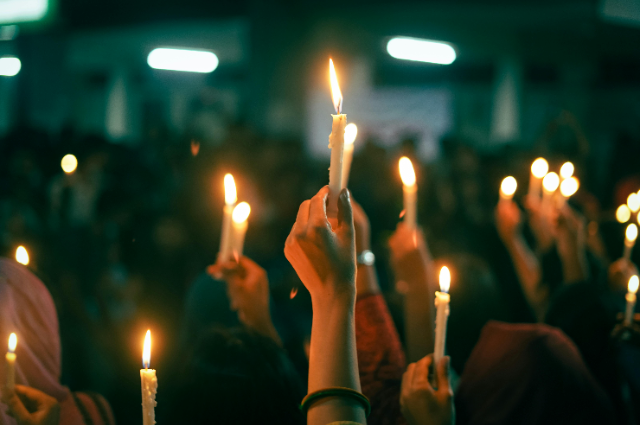
What followed was outrage — not limited to Tripura, but rippling across the Northeast and the rest of the country. Protests erupted, candles were lit, slogans were raised, and a familiar grief resurfaced. For many from the Northeast, this was not a shock but recognition. Recognition of a truth they have lived with for decades — that racism in India is not imported, it is homegrown.
The arrests that followed, including those of minors, and the flight of the prime accused, only deepened public anger. A Special Investigation Team was formed, the National Human Rights Commission intervened, and questions were raised about the safety of students from the Northeast studying in mainland India. But institutional action, while necessary, felt reactive rather than reflective.
Anjel Chakma’s death reopened old wounds. Memories of Nido Tania, beaten to death in 2014 after racial harassment in Delhi, resurfaced with fresh rage. A decade later, the pattern remains disturbingly familiar — racial slurs dismissed as jokes, violence labelled as spontaneous, and justice slowed by denial.
A Public Interest Litigation filed in the Supreme Court demanded that racial slurs and bias-based violence be recognised as specific hate crimes. This demand was not radical — it was overdue. When the law refuses to name racism, it quietly allows it to survive. When systems fail to recognise prejudice at its root, they become complicit in its outcomes.
Political leaders called the murder a national disgrace. Student bodies demanded stricter laws. Citizens asked uncomfortable questions. But beyond statements and speeches lies a deeper issue — the moral failure of a society that still sees Northeastern faces as foreign, exotic, or lesser.
Anjel did not die because of an argument. He died because of an idea — the idea that some Indians are more Indian than others. That belief is poison, and it has been left untreated for far too long.
India prides itself on diversity, yet repeatedly fails those who embody it most visibly. Until racism is confronted honestly — in classrooms, in policing, in politics, and in everyday language — tragedies like Anjel Chakma’s death will not be exceptions. There will be warnings.
Anjel’s final act was not violence, but assertion. He asserted his identity, his dignity, his belonging. That assertion cost him his life. And that is why his death is not just a crime — it is a moral failure that the Indian heartland must confront, acknowledge, and correct before more lives are lost.