
Cities love to call themselves “smart.” Smart lights, smart roads, smart surveillance, smart governance dashboards flashing data that looks impressive on screens. But somewhere between press releases, ribbon-cutting ceremonies, and glossy infrastructure reports, we forgot the most basic requirement of any city — humanity. The Noida techie tragedy is not just another headline that briefly shook social media before being buried under celebrity gossip and political noise. It is a mirror held up to our urban conscience, and the reflection staring back is uncomfortable, cracked, and deeply unsettling.
On what should have been an ordinary morning, a young tech professional stepped out into the city like millions of others do every day. Maybe he was thinking about unfinished code, a meeting he didn’t want to attend, or the weekend he was already craving. Nothing heroic. Nothing reckless. Just routine. A commute so common it barely registers as life anymore. And yet, within moments, a plastic barricade — cheap, hollow, and placed with shocking carelessness — became the final punctuation mark on a life that was nowhere near finished.
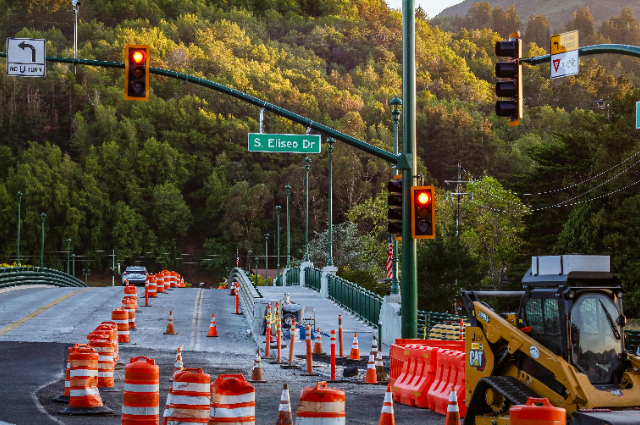
Plastic barricades are marketed as safety tools. They are meant to guide traffic, manage diversions, and protect commuters. That is the theory sold to the public. In reality, across Indian cities, they sit on roads like silent threats. Lightweight, poorly anchored, barely reflective, often placed suddenly without warning signs, lighting, or transition space. They exist less for safety and more for optics — visible enough to claim “precaution,” fragile enough to dissolve responsibility when tragedy strikes.
Physics, however, does not negotiate with negligence. At speed, even plastic turns violent. When urban planning happens on paper instead of pavement, when decisions are rushed, outsourced, and unchecked, people don’t just suffer inconvenience — they lose their lives. The Noida incident exposed this brutal truth with heartbreaking clarity.
This was not an isolated case, nor was it unpredictable. Bengaluru has witnessed multiple deaths caused by unmarked dividers and poorly lit barricades during night drives. In Gurugram, sudden barricading near construction zones has led to fatal crashes later dismissed as “driver error.” Mumbai’s monsoons routinely turn loosely placed barricades into invisible traps, especially for two-wheeler riders navigating flooded streets. Different cities, same pattern. Poor planning. Minimal enforcement. Zero accountability. Families left holding grief instead of explanations.
What makes the Noida techie tragedy especially bitter is its sheer avoidability. There was no dramatic narrative to hide behind. No intoxication reports conveniently leaked. No reckless speeding footage to circulate endlessly. Just infrastructure failing at its most basic duty — not killing the people it claims to protect.
The aftermath followed a script we know too well. Police registered a case. Authorities announced an inquiry. Statements were issued. News vans moved on. Barricades were repainted, not redesigned. No names were mentioned. No long-term reforms were enforced. Accountability dissolved across departments — traffic police, municipal bodies, private contractors — until responsibility became a ghost no one could catch.
Globally, road safety is treated as a public health issue. Barricades are crash-tested. Reflective materials are mandatory. Placement follows visibility studies, not convenience. Accidents are investigated as system failures, not personal mistakes. Here, we do the opposite. We individualise tragedy. We ask why the victim didn’t see the barricade, rather than why the barricade was allowed to exist in that condition at all.
There is a cruel irony in who these victims often are. Engineers. Developers. Analysts. People who spend their lives building systems designed to reduce error, anticipate failure, and optimise safety. And yet they lose their lives to systems so poorly designed they wouldn’t survive a first-year engineering review.
Behind every such death is a family quietly collapsing. Parents who invested everything in education now attend funerals instead of celebrating careers. Friends scroll through unread messages, frozen between disbelief and denial. Colleagues replace Slack statuses with condolences. Life does not stop after death. It unravels slowly and painfully.
As a society, we play our role too. We rage briefly. We share posts. We type angry captions. Then we scroll. Tragedy becomes content. Outrage becomes routine. Silence follows. But silence is not neutral — it is collaboration.
This conversation is not about banning barricades. It is about respecting life enough to design infrastructure that absorbs impact instead of delivering it. About enforceable standards, regular safety audits, reflective materials, proper anchoring, visibility, and accountability that doesn’t evaporate after a press conference. It is about naming officials, not just victims. About consequences that hurt more than apologies.
The price of that plastic barricade was never low. It costs a future. It costs a family’s stability. It cost a city its moral spine. And it exposed how casually we accept preventable death as the price of urban growth.
If we continue building cities that value speed over safety and optics over accountability, we will keep writing obituaries disguised as news reports. The materials may be plastic, but the consequences are permanent.
Roads remember. Barricades don’t care. The question that remains is whether we do — long after the headline fades.
References:
- Reported road accident cases involving plastic barricades and temporary traffic diversions in Noida and Greater Noida (2022–2024), where poorly anchored or unmarked barricades contributed to fatal commuter accidents.
- Urban road safety incident reports from Bengaluru Traffic Police and the Karnataka State Road Safety Authority highlight deaths caused by unlit dividers, poorly marked barricades, and night-time visibility failures.
- NCR construction-zone accident coverage from Gurugram, particularly along NH-48 and arterial city roads, as reported by Hindustan Times and Times of India, citing sudden barricading and lack of reflective signage.
- Monsoon-related road accident analyses from Mumbai, documented by The Hindu (Mumbai edition), Mid-Day, and Scroll. in, focusing on barricade-related two-wheeler and pedestrian fatalities.
- Ministry of Road Transport and Highways (MoRTH) — Road Accidents in India annual reports, identifying poor road engineering, improper traffic control devices, and inadequate signage as major contributors to road deaths.
- World Health Organisation (WHO) — Global Road Safety Guidelines, emphasising safe road infrastructure, crash-tested barriers, and systemic accountability.
- Vision Zero road safety framework (Sweden), referenced for global best practices, treats road fatalities as preventable system failures.
- International traffic safety standards from Euro NCAP and the International Road Federation, outlining crash-impact design, visibility, and barrier placement norms.
- Urban mobility and infrastructure accountability analyses published by the Centre for Science and Environment (CSE), The Wire, and Economic & Political Weekly, focusing on systemic failures in Indian city planning.