
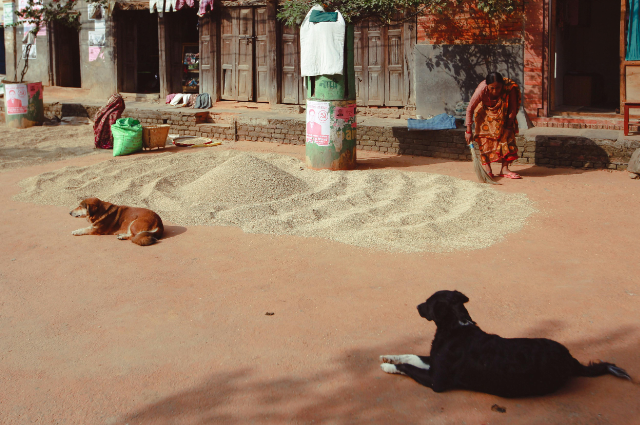
In the first two weeks of January 2026, Telangana didn’t just witness a case of animal cruelty — it watched a whole system quietly agree to it. Over 500 stray dogs were allegedly killed across multiple districts, especially Kamareddy and Hanamkonda, in what activists described as a planned, systematic “clean-up.” It wasn’t hidden in the shadows. It didn’t happen in secret basements. It happened in open fields, near temples, on village roads… and in full public knowledge.
And that’s what makes this story darker than the numbers. Not just that 500 lives were taken, but that entire villages stood around it like it was weather. Like it was inevitable. Like it was someone else’s problem.
This wasn’t a random outbreak of violence. Investigations and reports suggest these killings were tied to an “election promise” made during the December 2025 Gram Panchayat elections. Newly elected sarpanches were accused of pushing a “dog-free village” narrative to win votes, selling it as “development” and “safety.” A terrifying thing happens when cruelty is wrapped in the language of public service: people stop seeing it as cruelty. They start calling it “necessary.”
According to reports, the killings involved hired “dog catchers” or contractors, including individuals allegedly brought in from neighbouring states like Andhra Pradesh. The methods were reported as lethal injections, poisoning, and bait-based killing. This wasn’t a sudden angry mob moment. This was outsourced violence — the kind that looks clean from a distance because the blood doesn’t end up on your hands.
The horror became visible when animal welfare activists began finding carcasses dumped near temples and in open land, especially in villages like Bhavanipet and surrounding areas. Complaints were lodged, and in some cases, buried bodies were later exhumed for post-mortem examination. What’s chilling is that even after mass deaths were reported, there were still follow-up incidents—like nearly 100 dogs allegedly poisoned in Rangareddy’s Yacharam village near Hyderabad soon after. It wasn’t just one “incident.” It became a pattern.
But the question that sticks in the throat is this: how do 500 deaths happen without the village stopping it? Because in places like this, violence isn’t always driven by hatred. Sometimes it’s powered by something more common: silence, fear, and convenience.
In many rural pockets, stray dogs aren’t viewed as “community animals.” They’re seen as an uncontrolled problem with teeth. People don’t count the nights a mother dog guarded her puppies near a grocery shop. They remember the one time a child got chased. They remember one bite story told louder than ten peaceful days. The fear is real — stray dog attacks do happen, and the anger isn’t fake. The tragedy is what happens next: instead of demanding proper Animal Birth Control programs, vaccination drives, and waste management, villages often search for the fastest shortcut.
And shortcuts don’t come with ethics. They come with bodies.
Residents allegedly “shielding” the killers doesn’t always mean they actively protected them like heroes in a movie. It often looks more subtle. Nobody identifies the contractor. Nobody names the person who gave the order. Nobody “saw anything.” In some places, people might even warn the killers that activists are coming. Not because they love cruelty — but because the village doesn’t want outside interference. It doesn’t want police stations, media vans, court notices, or reputation damage. When a community believes its identity is under attack, it protects itself first — even if it means protecting something ugly.
There’s also the politics angle, and let’s not pretend it’s small. A sarpanch in many villages isn’t just an elected person. They’re the local gatekeeper of welfare schemes, daily permissions, jobs, and influence. If the sarpanch gives an order, people may not agree with it — but they may not dare oppose it either. A villager who speaks up risks being socially isolated, threatened, or labelled as “outsider-minded.” In a tightly bound rural ecosystem, being removed from the group can feel like being removed from survival itself. So people pick silence. Not because they don’t know right from wrong — but because they know what happens to people who challenge power.
This is exactly how mass harm becomes “normal.” Not with loud cheering crowds. With people murmuring, “What can we do?” and walking away.
The police response, at least on paper, has been serious. Reports show FIRs were registered against 15 to 17 individuals, including at least seven sarpanches, booked under Section 325 of the Bharatiya Nyaya Sanhita (BNS) and the Prevention of Cruelty to Animals Act. Viscera samples were reportedly sent for forensic analysis to identify toxins used.
And legally, this matters because it sends a message: local power does not override national law.
What adds a sharper edge to the story is that it unfolded during ongoing national-level conversations on stray dog attacks and public safety. Courts have acknowledged that dog-bite incidents are a serious issue — but mass killing is not a legal solution. When institutions say “follow rules,” and villages respond with “we’ll handle it our way,” you get this exact disaster: governance turning into revenge.
This situation isn’t just an animal rights crisis. It’s a governance failure wearing the mask of “problem solving.”
Because let’s be blunt: if the solution is poison, you’re not managing stray dogs. You’re managing optics. You’re not creating safety. You’re creating a habit.
And habits like this don’t stay limited to dogs.
Once a village learns that it can erase an inconvenient problem by hiring outsiders and killing quietly, what happens when the next “problem” isn’t an animal? What happens when it’s a person who speaks too much? A family that refuses to comply? A journalist who asks questions? Violence doesn’t announce its plans — it just builds confidence in the present.
There’s also an ecological and public health layer that people ignore. Removing large populations of strays suddenly can spike rodent populations and disrupt local balance. Poisoning can spread beyond the intended target — other animals, livestock, even children if bait is left in open areas. Even from a purely “practical” perspective, this isn’t a smart plan. It’s just a fast one.
This is why the “bystander village” is the real headline. Because the killer isn’t just the contractor with a needle or poison. It’s the community mindset that decided some lives are disposable as long as the streets look cleaner by morning.
A village doesn’t become cruel overnight. It becomes tired, scared, angry, unheard, and then… numb. And numbness is the scariest emotion in a society, because it can watch death and call it a “step forward.”
If Telangana wants to truly prevent this from repeating, the answer isn’t just arrests and outrage. It’s fixing what created the space for this violence: poor implementation of Animal Birth Control, weak vaccination programs, unmanaged garbage that feeds stray populations, and political incentives that reward instant results over lawful solutions.
Because safety and compassion were never meant to be enemies. But when leadership chooses brutality as policy, everyone loses — including the humans who thought they were winning.
And the saddest part?
Those 500 dogs didn’t die because they were dangerous.
They died because they were powerless.
That’s not public safety.
That’s just a massacre with paperwork.
REFERENCES:
Primary News Reports
- The Hindu — “550 stray dogs killed in Telangana in one week to fulfil ‘poll promise’”
- Times of India — “Mass culling exposed in Telangana: Lethal injections wipe out 500 stray dogs”
- The Indian Express — “In Telangana, mass killing of stray dogs, police action put entire villages on edge”
- Livemint — “Why 500 stray dogs were killed in Telangana: Kamareddy and Hanamkonda explained”
Video & Field Coverage
- NDTV (YouTube) — “Telangana Panchayat Kills 500 Dogs In A Week To Fulfil ‘Election Promise’”
- News9 (YouTube) — “Telangana Outrage: 500 Stray Dogs Allegedly Killed After Elections”
- WION (YouTube) — “Telangana Dog Killings: Activists Sue Village Heads Over Mass Culling”
Official / Agency & Legal Updates
- PTI — “Police register case against nine after 300 stray dogs killed in Hanamkonda”
- Financial Express — “500 dogs were ‘injected with poison’: Key details of the case”