
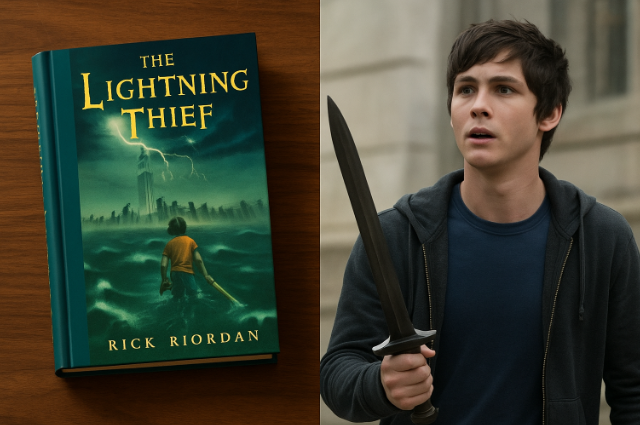
Stories are strange creatures. They start on a page, in someone’s imagination, then suddenly they live in all sorts of places, movies, series, fanfiction, Tik-Toks, and more. Some stick with us forever. Others get twisted along the way. And here’s the big question: when does an adaptation or fan-made story actually deserve to be treated as part of the “official” story? When does it become canon?
It’s tricky because canon isn’t just about who owns the rights or who published it first. It’s about which story actually feels real to us which one makes our hearts pound, our eyes water, or our imagination go wild.
Let’s look at an example everyone has strong opinions about: The Percy Jackson Movie.
Case Study: Percy Jackson and the Lightning Thief Movie
Rick Riordan’s books are loved by millions. They’re funny, adventurous, and full of heart. They speak to anyone who has ever felt out of place. Then came Hollywood. They said, “Let’s make it bigger, flashier, and more cinematic.” And fans weren’t happy.
The movie changed the ages of characters, skipped important parts of the story, and even made some characters act differently than in the books. Fans were upset. They argued, tweeted, made videos, and basically told the world: “This is not Percy Jackson. This is… something else.
Even though the movie is technically “official,” fans refused to treat it as canon. It didn’t feel like the story they loved. It didn’t have the same heart.
This is the first lesson: official doesn’t always mean true to the story.
When Should Adaptations Be Considered Canon?
Adaptations movies, shows, or even fan-written stories deserve canon status when they honor the heart of the story, not just the events. If a story changes the details but keeps the emotions, themes, and characters intact, it can sometimes even improve the story.
Think about it like this: a story is more than its plot. It’s its feelings, the way it makes you laugh, cry, or believe in something bigger. If an adaptation captures that, it deserves respect, maybe even canon status.
Fanfiction works the same way. Some fanfics are written by people who love the story so much, they understand it even better than the original creator sometimes. They expand minor characters, fix plot holes, or explore parts the original didn’t touch. And fans often connect deeply with these stories, sometimes more than the official ones.
The Power of the Fans
We live in an era where readers have more power than ever. Social media, fan communities, and streaming platforms let fans voice their opinions louder than ever before. A story that the audience rejects cannot truly survive as canon.
In the case of Percy Jackson, the backlash was huge. Fans made it clear the movie didn’t represent the story. The lesson? Canon is as much about the audience as it is about the author or publisher.
The more the fans embrace a version, the more it earns the right to be part of the official story even if it started as a fanfiction or an alternative adaptation.
Fan-fiction and Modern Storytelling
Fanfiction has been growing for decades, and it’s not just teen scribbles online. Many fanfic writers deeply understand the characters and themes. They create worlds that feel alive and real. Sometimes, fanfiction fills the gaps the original story left behind. Sometimes, it explores relationships, diversity, or emotions that the original didn’t fully show.
When a fanfic is embraced by a large community, or when it’s good enough to improve on the original, maybe it deserves to be canon. At the very least, it deserves recognition.
Stories belong to everyone who loves them, in a way. They’re not just ink on paper or digital files. They live in our imagination, in our hearts, and in the ways we retell them.
What This Means for the Future
The modern world of storytelling is messy and beautiful. Movies, series, fanfiction, and social media all mix. And maybe that’s a good thing. Canon no longer belongs only to publishers or studios. It belongs to the people who care, the people who keep the story alive.
A modern classic isn’t just a book or a movie. It’s the story that connects, inspires, and resonates, whether it’s officially published, adapted, or fan-created.
So maybe the next “canonical” version of a story isn’t made by a studio. Maybe it’s a fan who understood the soul of the story better than anyone else. Maybe it’s you.
Adaptations and fanfiction deserve canon status when they stay true to the story’s heart, even if they change the details. Fans decide what really matters. Official doesn’t always equal correct. Emotional truth does.
Canon is earned through connection, love, and understanding, not contracts. And in the modern age, the line between creator and fan is thinner than ever.
The story isn’t just on the page anymore. It lives everywhere: in our hearts, on our screens, in our conversations. And sometimes, the best version of a story is the one that fans create, love, and carry forward.
REFERENCES:
- Riordan, Rick. Percy Jackson & the Olympians: The Lightning Thief. Disney-Hyperion, 2005.
- Columbus, Chris, director. Percy Jackson & the Olympians: The Lightning Thief. 20th Century Fox, 2010.
- Riordan, Rick. “On the Movies.” RickRiordan.com, https://rickriordan.com