
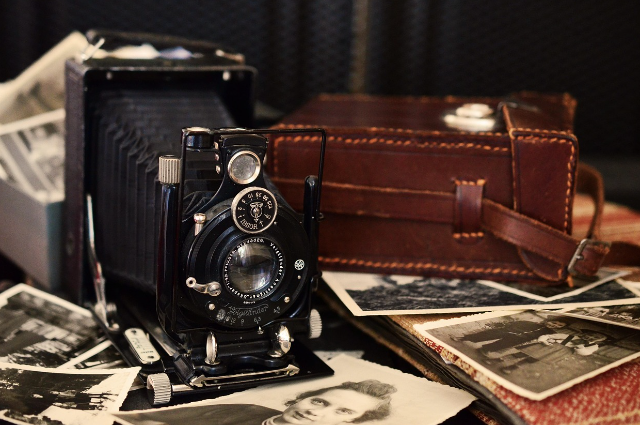
Escapism vs. Progress: Are We Losing the Future to Our Rerun Fantasies?
Nostalgia used to be a soft place to land — a warm chai on a cold morning, the smell of old books that knew your childhood secrets, a song that could braid your past back into your present. But somewhere along the way, our pop-culture machine took that gentle longing and sharpened it into a shiny little tool. Now it’s not just a feeling — it’s a weapon, strategically aimed at our wallets, our memories, and our imaginations.
Everywhere you look, someone is reviving a franchise, rebooting a classic, remaking what wasn’t even that great the first time. Disney’s live-action remakes of The Lion King, Aladdin, The Little Mermaid… Jurassic World resurrecting dinosaurs and box-office nostalgia… Star Wars dropping sequels and spin-offs like annual reminders of the childhood we thought we outgrew.
It’s like the cultural equivalent of texting your ex at 2 AM: regrettable… but familiar. And if familiarity is the new currency, then nostalgia is basically Bitcoin with emotional interest.
But here’s the thing that keeps haunting me at 3 AM — like a broken streetlight flickering outside my window: Are we clinging so tightly to the past that we’re slowly strangling the future?
Are we using nostalgia as a comfort blanket… or as a blindfold?
Because from where I’m standing — pen messy, heart dramatic, brain spinning like a poet on a sugar rush — the world is stuck in a loop. A cosmic rerun. A universe-sized “Previously on…” sequence. And honestly? I’m not sure if it's cute or concerning.
Nostalgia: The Sweet Poison That Tastes Like Home
Let’s be real: nostalgia feels amazing. It’s the emotional equivalent of finding your old diary and realising you used to be even more unfiltered than you are now. It’s delicious. It’s intoxicating. It makes you believe that yesterday was simpler, kinder, and aesthetically superior.
And pop culture knows this. Oh, it knows. Every studio exec out there is tapping nostalgia like maple syrup — slice the bark, collect the sap, sell it back to us in the shape of a “live-action remake nobody asked for.”
Streaming platforms do it too — Netflix reviving shows like Full House → Fuller House, or reinventing Sabrina for darker teens; Stranger Things building an entire empire on 80s nostalgia.
We eat it up because life right now feels messy. Chaotic. Planet-on-fire energy. We’re exhausted. And when the future feels overwhelming, the past starts looking like a vacation resort with unlimited snacks.
But nostalgia, darling, is a tricky lover. Sweet on the tongue, heavy on the heart. A soft spell with sharp edges.
The Death of Imagination: A Murder Mystery Where Nostalgia Is the Prime Suspect
Here’s where I get opinionated — like, aggressively holding-my-samosa-while-ranting opinionated.
The more we rely on recycled stories, the more creatively malnourished we become.
Reboots are comforting, sure. They’re like buying the same sneakers in a different colour because you know they won’t give you blisters. But future-building? Innovation? Wild, untamed imagination? That stuff requires risk, discomfort, mystery — the ‘what if’ instead of the ‘remember when.’
And it’s not just Hollywood. Political nostalgia does the same thing — “Make America Great Again,” Brexit’s dream of “old Britain,” India’s romanticised narratives of a “golden era.”
These aren’t just slogans; they’re emotional throwbacks used to shape public choices.
When every major cultural moment is a callback, a remix, a restoration, the collective imagination takes a nap. And not a cute nap — like, a coma.
We need original stories the way poets need heartbreak: desperately, constantly, dangerously. We need fresh worlds, bold characters, weird ideas that don’t fit neatly inside a nostalgia-drenched formula. Otherwise, we’re not building culture — we’re microwaving it.
Escapism: The Guilty Pleasure That Became a Lifestyle
Let’s talk escapism — the modern human’s favourite recreational drug. Reboots, remakes, and sequels have become emotional tunnels we run into when reality feels like too much. And hey, I get it. Sometimes the present feels like a group project with the whole world failing.
And brands know exactly how to use this.
Coca-Cola brings back vintage packaging like a hug from childhood. Nintendo resurrects NES Classics and Pokémon remakes. Fashion labels drag Y2K back from the attic, and suddenly, it sells like oxygen.
But escapism? It’s supposed to be a vacation, not a residency.
If all we do is look backwards, how will we ever move forward?
If we keep reviving the same worlds, where will the new ones come from?
If nostalgia is the ocean we keep swimming in, when do we learn to grow wings instead?
The Future Deserves Better Than a Recycled Script
I’m not anti-nostalgia. I’m not some cold, emotionless cyborg who doesn’t tear up when I hear a childhood song. I’m simply saying: nostalgia should be a guest, not a roommate.
Yes, reboots are comforting. Yes, remakes can be fun. Yes, sequels sometimes hit harder than the original (looking at you, Toy Story 3, you emotional Silencer).
But when they dominate the landscape, when they become the default, we risk trapping ourselves in a time loop.
Even the music industry is stuck in this loop — synth-pop revivals, disco comebacks, 90s hip-hop echoes, vinyl rising from the dead like it never left, and now AI remaking old classics like digital ghosts.
The future — our future — deserves wildness. Innovation. Courage. A little chaos. A little magic. Stories born from today, not reawakened from yesterday.
And while Marvel and DC keep resurrecting old characters, old timelines, old costumes — basically nostalgia in spandex — we deserve universes that don’t rely on our childhoods to survive.
So, Where Do We Go From Here?
Maybe we start by asking better questions.
Not “What did we love back then?”
But “What could we dream up now?”
Not “Bring this back!”
But “What hasn’t existed yet?”
Maybe we embrace nostalgia like an old friend — hug her, laugh with her, cry with her — but don’t let her drive the car.
We need new myths, new metaphors, new madness.
We need storytellers who aren’t afraid to burn the old maps and draw new constellations.
We need hope that isn’t recycled — hope that’s raw, radiant, and restless.
Final Word From Your Friendly Romantic Firecracker
Nostalgia is powerful — intoxicating even — but when it becomes a weapon, it wounds the future more than it warms the past.
So this is my opinion, my literary soul talk, my romantic rant of the day:
Let nostalgia be a doorway, not a cage.
Let the past kiss your forehead, not handcuff your imagination.
And let the future be wild, unpredictable, shimmering like a secret — be something you dare to invent, not something you keep dodging.