
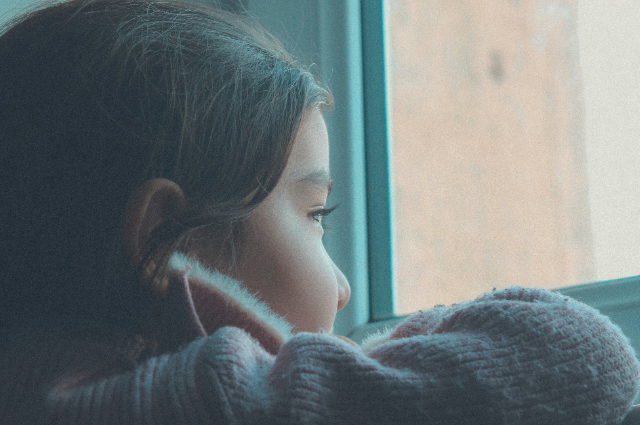
We often think of abuse in terms of physical violence or sexual assault. We look for bruises, injuries, and visible evidence. But what about the kinds of abuse that leave no marks on the body? Have we ever stopped to talk about verbal and emotional abuse?
I won't lie. As a girl, I've experienced sexual harassment through words and unwanted touches while travelling home from school or college. Those experiences are real, and they matter. But do you know what hurts in a different, deeply complicated way? The things you experience every damn day inside your own home. The things that happen between you and the people who brought you into this world. The things you struggle to explain because the people causing the pain are the same people society tells you should make you feel safe.
Have you ever felt that way? Have you ever lived in a place that was supposed to feel like home but somehow never did? Have you ever felt as though your life, your choices, and your freedom were slowly slipping away while everyone around you believed they were doing what was best for you?
Today, I don't want to write about the things we already know, the stories we've read countless times, or the forms of abuse that society has at least begun to acknowledge. I want to write about the things we know but rarely say aloud. The pain we minimise. The control we mistake for care. The silence we maintain because speaking up about our own families feels like betraying them.
Today, I want to write about the things we all know in silence.
The girl with a million dreams
I was just a girl with a million dreams.
Maybe I dreamed of too many things. Maybe, to some people, having so many dreams made me look like a quitter — someone who couldn't settle on one thing and see it through. But people often forget something important: just because they couldn't do something doesn't mean I should have to give it up. Just because one person believes a dream is unrealistic doesn't mean another person should have to bury it.
I wanted the freedom to explore, to make mistakes, to discover what I was good at, and to decide what kind of life I wanted to build. I didn't expect life to be perfect. I didn't expect every dream to come true. I only wanted the chance to try.
Because it is my life, isn't it? Don't I have the right to live it in a way that feels true to me?
We talk about rights as though they are universal. We talk about dignity, privacy, freedom, personal choices, and the right to decide our own future. We teach people that adults have the right to make decisions about their lives. We discuss these principles in classrooms, quote them in speeches, and turn to the law when someone's freedom is threatened.
But what happens when the person asking for those rights is someone's own child?
What happens when an adult daughter wants to choose her career, maintain her friendships, keep her conversations private, manage her own money, or decide where she wants to live?
Suddenly, the conversation can change.
Privacy becomes secrecy. Independence becomes selfishness. Disagreement becomes disrespect. A decision made by an adult becomes an act of rebellion simply because it doesn't match what the family wanted.
And the most confusing part is that these things can be presented as love.
We're doing this for your own good.
We know better than you.
After everything we've done for you, how can you do this to us?
Sometimes, genuine concern is expressed imperfectly. Parents can be afraid, protective, and genuinely convinced that they know what is best. Not every disagreement is abuse, and not every boundary a parent sets is an attempt to control a child. But concern does not automatically make every action right. Love does not erase the harm caused by humiliation, intimidation, relentless guilt, or the denial of another person's autonomy.
So where do we draw the line?
When does protection become control? When does guidance become coercion? And why is it so difficult to acknowledge that a person can love their family and still be hurt by them?
When gratitude becomes a weapon
And then come those words every child is expected to remember.
We did everything for you.
As though raising a child means they must surrender their right to disagree. As though every sacrifice a parent makes becomes a debt that can never be repaid. As though providing a home, an education, and the necessities of life gives someone permission to wound the very person they claim to love.
You did everything for me. And for that, I should be grateful. I am allowed to be grateful. But does gratitude mean I must accept being called names? Does it mean I must remain silent when my character is questioned, my intentions are doubted, and my friendships are turned into accusations?
When did calling your own child names become an expression of concern? When did attacking her character become a way of protecting her? When did taking a friendship she treasured — a friendship in which she saw someone as family, not as a romantic partner — and forcing a different meaning onto it become proof of parental wisdom?
Why is it that the people who claim to know their child best can sometimes be the quickest to believe the worst about her?
And then comes another sentence.
We are more mature than you.
But what does maturity actually mean?
Does it mean assuming every friendship between a girl and a boy must be romantic? Does it mean treating every rumour as the truth simply because it came from a relative? Does it mean trusting the interpretation of a stranger over the words of your own child?
Maturity should mean being willing to listen, even when the truth is uncomfortable. It should mean asking questions before making accusations, seeking facts before passing judgment, and allowing someone to explain themselves before deciding who they are.
Being a parent does not make someone incapable of misunderstanding. Being older does not make someone incapable of being wrong. And being a child — even an adult child — does not automatically make someone's feelings, explanations, or experiences less credible.
What hurts is not simply being misunderstood. It is being misunderstood by the people whose understanding matters most to you. It is trying to explain yourself while feeling as though the verdict has already been delivered. It is watching other people's assumptions become more believable than your own words.
And sometimes, the deepest wound is not the accusation itself. It is realising that the people you hoped would defend your character are the very people questioning it.
When your trust becomes a weapon
There is another kind of hurt that is difficult to explain.
Imagine sharing something personal with someone because you trust them. You speak about your friendships, your feelings, your fears, and the people who matter to you. You believe those conversations belong to a private space.
Then, one day, those very messages become evidence against you.
Your private conversations are taken out of context. Your friendship is given a meaning you never intended. Your personal words become accusations about your character. Someone you consider family is turned into a subject of suspicion, and suddenly you are expected to stop speaking to that person to prove something you never did.
How do you defend a friendship when someone else has already written its story for you?
How do you explain that someone can mean the world to you without being a romantic partner? Why must every meaningful connection between a girl and a boy be interpreted through the lens of romance?
Friendship is not a crime. Caring about someone is not proof of wrongdoing. And a person's private conversations should not become convenient weapons for humiliating or controlling them.
The problem is not simply that someone disagrees with a friendship. It is what happens when that disagreement turns into repeated accusations, character attacks, pressure, and the expectation that a person must abandon an important relationship to satisfy someone else's suspicion.
Privacy should not have to disappear just because someone is a parent. Trust should not be replaced by surveillance. And personal messages should not become ammunition in family arguments.
When the people you trust use your vulnerability against you, you may begin to question whether it is safe to share anything at all.
That is a lonely way to live.
When your dreams are treated as worthless
Sometimes the words are not about your friendships or your choices. They are about your worth.
You are nothing without us.
Your talent is nothing without the education we gave you.
Imagine spending years discovering what you love, learning new things, building skills, writing, creating, and dreaming about the future, only to hear that none of it belongs to you.
Education matters. Parents who support their children's education deserve recognition. But education is not ownership. A degree does not give someone permanent authority over another person's identity.
Your talent is not automatically theirs because they helped pay for your education. Your creativity is not theirs because they encouraged you to study. Your achievements are not meaningless because someone else contributed to your journey.
A person can be grateful for the opportunities they received and still take pride in what they have built with those opportunities.
And what happens to the dreams that do not fit the family's expectations? Are they automatically useless? Must every ambition be approved before it is allowed to exist?
A child should be able to explore a career, change direction, discover new interests, and sometimes fail without being made to feel that their entire existence is a disappointment.
A dream does not become worthless because someone else cannot see its value.
The law recognises what society often overlooks
This is not simply a question of hurt feelings or a disagreement between generations. There is a wider conversation about dignity, privacy, autonomy, and the kinds of harm that can happen inside families.
In India, the Protection of Women from Domestic Violence Act, 2005, recognises that domestic violence is not limited to physical injury. Section 3 includes physical, sexual, verbal and emotional, and economic abuse. Its explanation specifically identifies insults, ridicule, humiliation, and name-calling as forms of verbal and emotional abuse. It also recognises certain forms of economic deprivation and restriction of access to resources.
That matters because it challenges the assumption that abuse must always leave a visible injury to be taken seriously. The Act also requires the overall facts and circumstances to be considered when determining whether conduct amounts to domestic violence. Not every argument, disagreement, or hurtful remark automatically meets the legal definition. Context matters. The Act applies to women in qualifying domestic relationships, and its protections depend on the facts and legal requirements of the case.
The Supreme Court's landmark 2017 judgment in Justice K.S. Puttaswamy (Retd.) v. Union of India recognised privacy as a fundamental right connected to life and personal liberty under Article 21. The judgment discussed privacy in relation to individual dignity and autonomy. A person's private life and ability to make personal choices are not insignificant matters.
The Supreme Court also made an important observation in Joseph Shine v. Union of India (2018): familial structures cannot be treated as private spaces where constitutional rights may simply be violated without scrutiny.
These judgments do not mean that every disagreement between a parent and an adult child is automatically a constitutional violation. Nor does every act of parental control automatically amount to a criminal offence. The legal position depends on the facts and the relevant law. But they challenge the idea that the family is a space where a person's dignity ceases to matter.
If privacy, dignity, and personal liberty matter outside the home, why should we stop discussing them when the door closes?
The burden of being a role model
And do you know what makes it even more exhausting?
People expect me to be a role model.
I was told that younger people should learn from me, that I should inspire others, that my life could become an example for someone else. But has anyone ever stopped to ask what my life actually looks like behind the person they expect me to be?
How can you ask someone to become an inspiration while she is still fighting to have control over her own life? How can you expect her to teach others about independence when her privacy is questioned, her phone is checked while she sleeps, and her decisions are treated as though they require everyone's permission?
I was expected to be someone younger people could look up to while I was still trying to understand why choosing something for myself could make me feel like a terrible daughter.
Tell me, why should wanting to live my own life make me a bad daughter?
Why should choosing a work trip on a day my father was ill automatically become a measure of how much I love him? Does one decision define an entire relationship? Does being a daughter mean that every personal opportunity must come with guilt, that every choice must be measured against what someone else needs, and that choosing myself means I must be choosing against my family?
I can care about my father and still have a career. I can love my family and still want opportunities beyond my home. I can feel concern for someone who is ill without believing that every decision I make must be a test of my loyalty.
Perhaps I could have made a different decision. Perhaps there were circumstances I needed to consider. I am human. I can reflect on my choices, regret some of them, and learn from others. But why must every decision become a verdict on my character?
And honestly, I am tired.
I don't want to be someone's inspiration right now. I don't want every painful experience to be turned into a motivational quote. I don't want people looking at my life and deciding there is something to learn from me when they haven't even asked whether I am okay.
I don't want to be praised for being strong when what I really need is the freedom to make my own decisions. I don't want to be called brave simply because I have learned to live with things that hurt me.
I am not a lesson. I am not a motivational speech. I am not a perfect example of how a young woman should behave when life becomes difficult.
I am a person.
A person who has dreams that may change. A person who will make mistakes. A person who sometimes wants to consider her own happiness without having to defend it in front of an entire courtroom of opinions.
Sometimes, a person doesn't need to be told that her struggles will make her stronger.
Sometimes, she just needs the struggle to stop.
Sometimes, she doesn't need to inspire anyone.
Sometimes, she just needs to be allowed to live.
This life is mine to live.
Perhaps the most difficult part of this conversation is that we are not asking people to stop loving their parents. We are not asking families to abandon concern, guidance, or responsibility. We are asking why love is sometimes used to justify behaviour that would be recognised as harmful if it came from someone outside the family.
Why is a young woman expected to explain every friendship, defend every decision, justify every ambition, and prove her character repeatedly to the people who raised her?
Why is her privacy treated as suspicious? Why is her independence interpreted as rejection? Why does wanting a life of her own become a reason to question her love for her family?
A person can be grateful for their upbringing and still want something different from the life their family imagined for them. A daughter can respect her parents without agreeing with every decision they make. She can love them without giving up her right to privacy, friendships, ambitions, and personal choices.
And sometimes, she may need distance to find the peace she cannot find at home. That does not automatically mean she has stopped loving her family. It may simply mean that she needs room to breathe.
We need to stop measuring the quality of a home only by whether it has food on the table, a roof overhead, and people living under the same address. Those things matter, but they are not the whole meaning of safety.
Does a person feel heard there? Can they disagree without being humiliated? Can they make a mistake without having their entire character questioned? Can they have friendships without being accused? Can they close a door and expect privacy? Can they grow into an adult without being made to feel guilty for it?
These questions matter.
Because a home should be more than a place where someone is expected to obey. It should be a place where they can exist without constantly defending who they are.
I know this subject is uncomfortable. I know that parents make sacrifices. I know that many parents work hard, worry about their children, and want to protect them from the world. Their efforts deserve recognition.
But recognising those efforts should not require us to ignore the harm that can happen within families.
We need to make room for two truths: parents can love their children, and parents can still hurt them. Children can be grateful, and still need boundaries. Families can have disagreements, and some patterns of humiliation, intimidation, coercion, and control can go far beyond ordinary disagreement.
Most importantly, we need to stop asking people to remain silent simply because the person hurting them is related to them.
Not every story of family pain will look the same. Not everyone will have the words to describe what is happening. Some may not even recognise it until years later. Some may stay because they have nowhere else to go. Others may leave and spend years trying to understand whether choosing themselves made them selfish.
I cannot speak for everyone who has lived through this. I can only speak from what I have felt, questioned, and struggled to put into words.
I was a girl with a million dreams. I still am someone with dreams. I don't want to spend my life proving that I am a good daughter by giving up the things that make me who I am. I don't want to spend every day defending my friendships, my character, or my decisions. And I don't want to become an inspiration simply because I learned to endure what I should never have had to normalise.
This life is mine to live.
I wasn't brought into this world to spend it fulfilling someone else's expectations. I don't want to spend my adulthood asking permission to become the person I have always wanted to be. I can listen. I can consider advice. I can love my family, and I can be grateful for what they have done. But I am also allowed to make decisions about the life I live.
I am not someone else's unfinished dream. I am a person with a life of my own.
I want to live. I want to make choices. I want to make mistakes and learn from them. I want to be trusted. I want to be heard. I want a home where love does not feel like a condition I must keep satisfying.
Perhaps that is what this conversation should really be about.
Not about teaching children to hate their parents. Not about labelling every disagreement as abuse. Not about declaring that parents are always wrong and children are always right.
It is about recognising that parents are human beings, too — capable of making mistakes, causing harm, and needing to take responsibility for their actions.
And children are human beings, too — not possessions, not lifelong obligations, not characters in someone else's unfinished dreams.
They deserve dignity. They deserve privacy. They deserve the freedom to grow.
Because a home should be the place where you learn to live, not the place where you learn to disappear.
References:
- Government of India. The Protection of Women from Domestic Violence Act, 2005, particularly Section 3. Official India Code PDF: https://www.indiacode.nic.in
- Supreme Court of India. Justice K.S. Puttaswamy (Retd.) v. Union of India (2017). Judgment: https://indiankanoon.org
- Supreme Court of India. Joseph Shine v. Union of India (2018). Judgment: https://api.sci.gov.in