
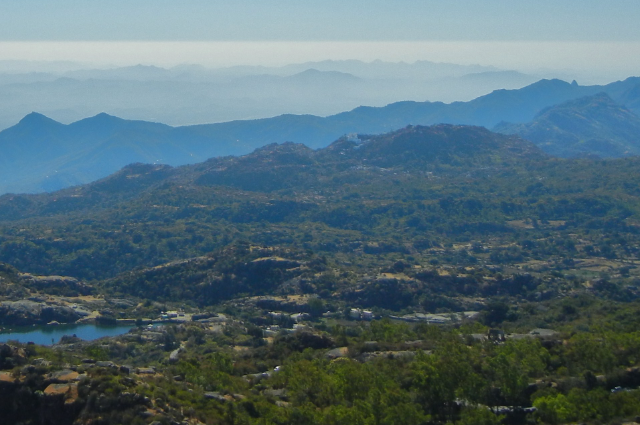
The Aravalli hills, if you have heard the name before, might just sound like some distant rocky place on the map. But in reality, this ancient mountain range has become the center of a messy, confusing, and emotional fight between economics and ecology. On one hand, there are hard rock miners and business interests eyeing billions of rupees of revenue from minerals. On the other hand, there are environmentalists, tribal communities, and scientists warning that mining here could wreck the land forever.
It is a bit like watching two big forces pull a rope. One wants short-term money jobs and economic activity. The other wants long-term survival, water forests, and the future. And right now, the debate is louder than ever, especially in 2025.
What Are the Aravallis And Why Are They Important
First, for people who do not know, the Aravalli hills are not tiny rocks. They are one of the world’s oldest mountain ranges, stretching from Delhi through Haryana and Rajasthan down to Gujarat. They are not very tall compared to Himalayan peaks, but they are massive in size and importance.
The hills help with water. Rainwater seeps in, recharges groundwater, and feeds rivers. They help with air. Trees and soil trap dust and pollution. They help stop the desert from spreading eastward into fertile lands. Many communities depend on them for water, livelihood, culture, and tradition. For lots of people around here, the hills are not just geological formations. They are home.
So when talk of mining comes up, people’s reactions are naturally emotional.
The Money Side: Why Mining Is Attractive
From a government or business perspective, mining in the Aravallis seems tempting. The area has minerals like marble, granite, dolomite, quartzite, and stone used in construction and industry. That means big sales export local jobs and revenue. In some districts, these materials have already supported local economies for decades.
For some small towns and workers, mining means income and work. The technical term is mineral extraction, but locals might call it stone cutting, quarrying, or jobs in crushers and trucks. From a short-term perspective, digging up rock and selling it looks like plain money rupees flowing into local pockets and government coffers.
But here is where it gets complicated.
The Environmental Side: Why People Are Worried
Experts and environmentalists say mining here is not as simple as revenue. The Aravallis are ecologically sensitive, meaning even small changes can cause big problems.
Studies of mining in the region show a long list of environmental concerns. Loss of forests and wildlife habitat. Disruption of water systems and drying of rivers. Increased soil erosion and dust pollution. Threats to biodiversity and species movement. Long-term ecological damage that cannot be reversed even if mining stops later.
Beyond that, uncontrolled mining can reduce groundwater levels drastically, drying wells that farmers and villages depend on. Even the air quality can suffer. Dust from crushers and trucks circulates widely and affects health.
So some environmental scientists argue that the true cost of mining is not just rupees counted in bank accounts. It is also water lost, soil broken, forests gone, and ecosystems that take centuries to build but could be destroyed in years.
The Legal Battle Court, Government, and Confusion
In 2025, the issue took another major turn. The Supreme Court of India got involved to clear up a long-running dispute over how to define the Aravalli hills for mining regulation. Different states were using different rules, and miners were exploiting that confusion to operate in places that might be outside strict forest or environmental protection zones.
To fix this, the court accepted a uniform definition mostly based on whether the landform rises above a certain height, one hundred meters above the surrounding land. Under this definition, only a small fraction of the total Aravalli area automatically counts as protected against mining.
The court also ordered that no new mining leases will be granted until a full Management Plan for Sustainable Mining is prepared by scientific bodies like the Indian Council of Forestry Research and Education.
So mining is not totally banned, but it is paused until a more detailed plan and rules are in place. This middle path is meant to balance economic activity with environmental protection.
But critics are not happy.
Case In Point: Politics, Protests, and People
Across Rajasthan and neighboring states, politicians, scientists, and activists have reacted in different ways. Some governments say ninety percent of the Aravalli area will stay protected even under the new definition. They claim that fears of massive new mining are overblown or misleading.
Others say the new definition weakens protection by allowing mining in hills that are less than one hundred meters tall, and that most of the Aravallis are exactly those low hills, not the big rocky peaks. They argue that more than eighty-five to ninety percent of the hills could lose legal protection simply because of this one technical definition change.
Meanwhile, tribal communities whose history and culture are tied to these lands have physically pledged to protect the forests. They see mining not just as a business but as a danger to their identity.
In some cases, technology like drone surveys has exposed illegal mining beyond permitted areas, showing the government and courts that unauthorized extraction is already a huge problem.
What This Means for the Future
So, where does this leave the Aravalli hills and the people living around them?
Right now, the situation is a balance of tensions.
Government and courts want to regulate mining, not completely stop it.
Environmentalists and tribal groups want strict protection.
Miners and some business voices want access to mineral wealth.
Local communities want both jobs and clean water and land.
In a sense, the fight is a microcosm of a bigger global issue. Can we responsibly use natural resources and still protect the planet?
The answer is not simple. Mining does give money. But at what price?
If groundwater goes down, rivers dry, forests disappear, and soil erodes, then those rupees today might not be worth the cost of not having water tomorrow.
Rocks vs Revenue, Not Just Economics
This battle is not just a story about money. It is about identity, survival, law, science, and who gets to decide the future of a region that has been around for billions of years.
Some people see the rocks as treasure chests to be opened. Others see them as living parts of the Earth that sustain life.
There are no easy answers. But the debate over Aravalli minerals is about much more than rocks. It is about how we choose to balance our needs today with the needs of tomorrow.
. . .
Reference:
- Illegal Mining in the Aravalli Range Environmental Issues and Impacts https://pwonlyias.com