
Cybercrime is no longer an abstract concept that belongs to science fiction. It is now part of everyday life. In the early days of the internet, most criminals needed a computer and an internet connection to break into someone’s account. Today, the threats are far more complex and far more personal. From smart homes that can be locked by strangers to digital burglars that operate without direct human control, the nature of crime in the digital age has changed dramatically. These attacks are not limited to corporate networks or government servers. They target people in their homes and even inside their own bodies. Understanding these new threats can help people protect themselves before it is too late.
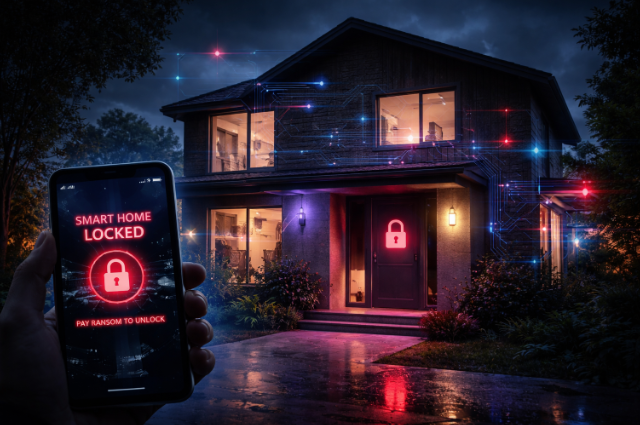
Imagine coming home from work and walking up to your front door. You press the button on your smartphone to unlock it, but nothing happens. You try again, and you notice your smart lights flicker. Then a message appears on your screen. It tells you that someone has taken control of your smart house and that you will not regain access until you pay a ransom. This is not a scene from a movie. Smart home lockouts have happened in real life. Hackers have found ways to break into internet connected cameras, thermostats and door locks. Once inside they are able to control the systems that were meant to make life easier and safer. In one publicised incident, a couple in the United States lost access to their front door lock and other connected devices after an attacker exploited a weak password on a poorly protected home network. The attackers demanded payment in exchange for unlocking the system. The couple eventually regained access only after replacing all of the compromised devices and updating their network protections. This case highlights how vulnerable connected homes can be when security is an afterthought.
What makes these kinds of attacks so frightening is not just the technology involved. It is the fact that our homes are now part of a huge network of devices all connected to the internet. Each device is a door into another part of our lives. When criminals learn how to slip through even one small opening in that network, the consequences can be severe.
As technology evolves, criminals are also evolving their methods. One of the most ominous developments in recent years is the rise of autonomous digital intruders. These are programs that do not require constant human control but instead roam the internet looking for weaknesses. Some experts call these programs shadow agents. They scan thousands of systems every minute searching for unprotected entry points. If they find an easy target, they break in and exploit the system while the human hacker sleeps. Unlike traditional attacks, these shadow agents can act independently and without direct oversight. This means that an attack can occur at any time and can spread from one system to another quickly before anyone even realises something is wrong.
Shadow agents raise important questions about how we think about online safety. In the past, most people assumed that only skilled hackers with a lot of time and effort could break into systems. Today, all it takes is an automated program scanning the internet to find a single weak connection. A simple router with an outdated firmware or a smart device with a default password can be enough for these agents to gain access. Once they are inside, they can do more than just steal data. They can install additional malware that allows them to come back later or to use the compromised system to breach other networks.
Another emerging threat comes from efforts to manipulate artificial intelligence itself. Artificial intelligence has become a powerful tool for businesses and individuals alike. It helps with customer service chat support, medical diagnosis assistance, financial analysis and a host of other tasks. But attackers have found ways to misuse or contaminate these systems as well.
One such method is called model poisoning. To understand this, imagine you are hiring a student to help with your work. You give them textbooks and ask them to learn. If someone slips in corrupted or misleading books, the student will learn the wrong lessons and then give you incorrect information. In the same way, hackers can feed corrupted data into machine learning systems so that the AI begins to behave in unexpected or harmful ways. In some cases, this can lead an AI program to give out sensitive corporate data. In others, it can cause the system to make bad decisions that have real-world consequences.
Prompt manipulation is another method that attackers use. Most artificial intelligence tools rely on user input. If a person is able to phrase their request in the right way, they may be able to trick an AI assistant into revealing information it was not meant to share. This is similar to social engineering used in traditional hacking, except it targets the AI’s decision logic instead of a human. For example someone might use clever wording to ask a company’s AI customer support bot for details that should be private. Because the bot is designed to help it might respond with information that the real support team would never disclose without proper verification.
These kinds of attacks remind us that artificial intelligence systems are only as secure as the data they learn from and the rules they are built with. As AI becomes more integrated into everyday life these kinds of vulnerabilities can have big impacts.
Cyber crime does not stop at our computers and phones. It is now reaching into the devices we wear and even into devices that help manage our bodies. Today many people wear fitness trackers and smart watches that monitor heart rate, sleep patterns and movement. These devices can provide valuable health information, but they also collect highly personal data. Criminals have begun to recognize the value of this information not just for resale but for extortion.
Imagine a hacker gaining access to a person’s health data and threatening to release it publicly unless they pay. This is known as body data theft or body snatching in some discussions of cybercrime. The personal health data collected by wearables can reveal where a person is located at any given moment, how active they are and even their stress levels. In the wrong hands, this data can be used to track someone’s movements or to influence them through threats of exposure.
Going a step further, some criminals are now exploring what could be called bio ransom. In this scenario, attackers take control of devices that are more than just accessories. They target critical medical devices like insulin pumps, pacemakers or bionic limbs. These devices often connect to wireless networks so caregivers can monitor them and adjust settings remotely. Hackers can exploit vulnerabilities in these connections to lock the devices or change their operation. The attacker then demands payment to restore control. The idea of someone controlling a device that is literally inside a person’s body may sound extreme, but it has already been demonstrated in controlled laboratory environments by security researchers. Their findings show that poorly secured medical devices can be manipulated from a distance if proper safeguards are not in place.
The human cost of these attacks is real. Losing access to medical support or having it manipulated by an attacker can be life-threatening. This kind of threat highlights the need for stronger security standards, not just in consumer electronics but also in medical technology.
Another frightening trend in cybercrime is the use of deepfake technology. Deepfakes are videos or audio recordings that have been altered or completely created by artificial intelligence. They can make someone appear to say or do things they never actually said or did. What makes deepfakes so dangerous is how believable they can be. The technology has advanced to the point where even trained professionals struggle to tell real from fake. Live video calls from friends or family have become part of normal life for millions of people. Deepfake technology can now create real-time video and audio that mimics a person’s face and voice with impressive accuracy. An attacker can use a live clone to impersonate a trusted person on a video call and ask for sensitive information like passwords, bank details or one-time codes without raising suspicion. Because humans are wired to trust familiar faces, it is very easy to be fooled, especially under pressure.
Fake content can also be used for broader manipulation. Groups of attackers can coordinate thousands of fake social media accounts to post false information all at the same time. This flood of fake news or misleading content can create confusion, panic or false belief. For example, hackers could spread fake reports of market crashes or political upheavals. When real people see the same claim repeated again and again, it can influence how they behave. They might sell their investments in fear or change their opinion on important issues. This mood manipulation does not require physical violence, but it can alter societies and economies in profound ways.
All of these examples show that modern cybercrime is not just about stealing money anymore. It is about control, trust, identity and personal security. Criminals have discovered that the digital world is full of hidden doors waiting to be opened. They exploit weaknesses not just in technology but also in the way people think and interact with that technology. So what can people do to protect themselves?
First, security needs to become a priority for everyone, not just technology professionals. Using strong, unique passwords for every device and account is a simple step, but it remains one of the most effective. Many devices still come with default passwords that are easy to guess. Changing these immediately and enabling two-factor verification adds a layer of protection that can stop many unauthorised attempts at access.
Networks themselves should be protected. Home routers must be updated regularly. Outdated devices with old software are easier for attackers to exploit. Many modern routers offer guest networks. Setting up a separate network for visitors and for smart devices can limit the reach of an attacker if one device becomes compromised.
For wearable and medical devices, people should look for products that prioritise security. While not all manufacturers make this easy to evaluate, many now provide clear information on how data is encrypted and what protections are in place. Talking to healthcare providers about security features before using connected medical devices can help reduce risk.
Finally, people need to stay informed. Technology changes fast, and threats evolve even faster. Understanding what is possible allows people to make better decisions about the devices they bring into their homes and the information they share online.
Cybercrime today is not imagination anymore. It is real, and it is growing. But knowledge combined with simple protective habits can make a difference. By treating digital security as part of everyday life, we can reduce our exposure to these kinds of attacks and keep our homes, bodies and minds safer in a world where technology and crime cross paths more often than we would like.
. . .
References
- CNET — Smart Home Hack Incident https://www.cnet.com
- University of Michigan — Smart Home Security Flaws https://news.umich.edu
- CEPRO — Smart Home Camera Hacking Case https://www.cepro.com