
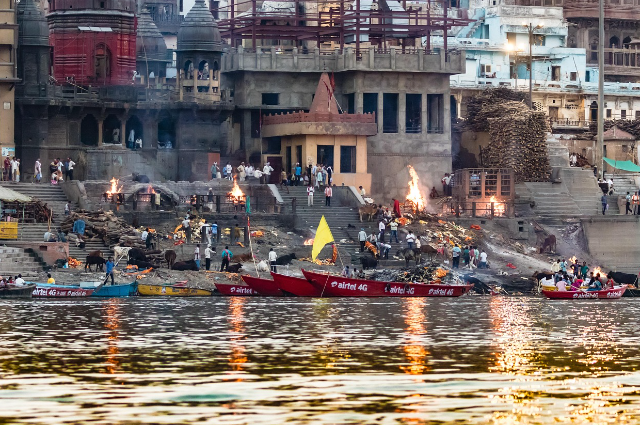
Varanasi is not a city you understand in one visit. It feels old in a way that books cannot explain. The streets are narrow, the air smells of incense and smoke, and the river keeps moving as if it has seen everything already. For many people, Varanasi is not only a place to live or visit. It is a place where they want to die. This idea can sound strange or even frightening to outsiders, but for millions of Hindus, dying in Varanasi is believed to be a blessing.
In Hindu belief, death is not the end of everything. It is seen as a step in a much longer journey. Life moves in cycles of birth, death, and rebirth. The soul continues even when the body does not. Many people believe that the goal of this journey is moksha, which means freedom from this cycle. Moksha is not something people see with their eyes. It is more like peace beyond suffering. For centuries, Varanasi has been connected to this belief in a very strong way.
Varanasi is also called Kashi, and it is believed to be one of the oldest living cities in the world. According to tradition, the city was founded by Lord Shiva. Because of this, many believe that dying here brings the soul closer to liberation. Some religious texts suggest that a person who dies in Varanasi is freed from rebirth. Whether everyone believes this literally or not, the idea has shaped real human actions for generations.
Because of this belief, people from different parts of India travel to Varanasi when they know death is near. Elderly people and those with serious illnesses come with their families, sometimes after long and uncomfortable journeys. They come not for treatment or cure, but for peace. This is where the idea of the so called death hotels comes in.
These places are not hotels in the normal sense. They are very simple lodgings. Some have only small rooms, basic beds, and shared bathrooms. Many are run by trusts or religious groups. People stay there while waiting for the final days or weeks of life. The goal is not comfort in a luxurious way. The goal is to be present in the holy city and close to the river Ganges.
The Ganges is extremely important in this belief. It is considered sacred and pure. People believe it's water that cleanses sins. Many cremations happen on the riverbanks every day. Fires burn almost constantly at places like Manikarnika Ghat. For someone unfamiliar with this, it can feel overwhelming. But for locals, this is part of daily life. Death is not hidden away. It is visible, accepted, and respected.
Families who bring loved ones to Varanasi often stay with them in these lodgings. They pray together, talk quietly, and sometimes just sit in silence. Priests may visit to chant mantras. Some people listen to religious stories or simply watch the river flow. There is sadness, but there is also acceptance. Many families say that being in Varanasi helps them emotionally, even if the loss is painful.
One important thing to understand is that these death hotels did not appear suddenly. They grew naturally because people needed a place to stay. Hospitals are not designed for spiritual waiting. Homes are often far away. These lodges became spaces where spiritual belief and human care meet. In a way, they function like informal hospice spaces shaped by tradition instead of modern medicine.
Researchers have looked at how sacred places influence end-of-life choices. A study published in the journal Death Studies discusses how religious belief affects where people want to die. It explains that sacred geography plays a role in emotional comfort during the final stage of life.
Another widely read article from The Atlantic shared real stories from Varanasi. It described families bringing dying relatives to the city with hope and faith. The article showed how belief, culture, and emotion come together in this practice. Some people criticize this belief. They ask whether it causes unnecessary suffering by moving very ill people long distances. Others question whether dying in a certain place really changes the fate of the soul. These are valid questions. Even within Hindu communities, opinions differ. Some believe that true liberation comes from inner understanding, not location. Others feel that the energy and history of a place like Varanasi matter deeply.
What cannot be denied is the emotional reality. For many people, dying in Varanasi brings comfort. It gives meaning to something that is otherwise frightening. Death becomes part of a larger story instead of a sudden end. This belief helps people face fear with courage. It also helps families cope with loss.
In modern times, India faces challenges in caring for its ageing population. Access to hospice and palliative care is limited in many areas. Families often take on the full responsibility of care. In this situation, the death lodges of Varanasi offer something different. They offer community, shared belief, and emotional support. They are not perfect, but they exist because people need them.
Walking through Varanasi, you see life everywhere. Children play, shopkeepers sell tea, students hurry to class. At the same time, funeral processions move slowly through the streets. This closeness of life and death changes how people think. Death feels less hidden and less shameful. It becomes something natural, even if it is still painful.
Calling dying in Varanasi a blessing does not mean death itself is joyful. It means that people feel guided and supported during the final moment. It means believing that suffering has an end and peace is possible. For those who hold this belief, Varanasi is not a place of fear. It is a place of release.
In the end, the idea of death hotels is not about promoting death. It is about respecting the final wish of people who believe deeply in their faith. It shows how culture shapes the way humans face the hardest truth of life. Whether one agrees with the belief or not, it reminds us that death is not only physical. It is emotional, spiritual, and deeply human.
. . .
References: