
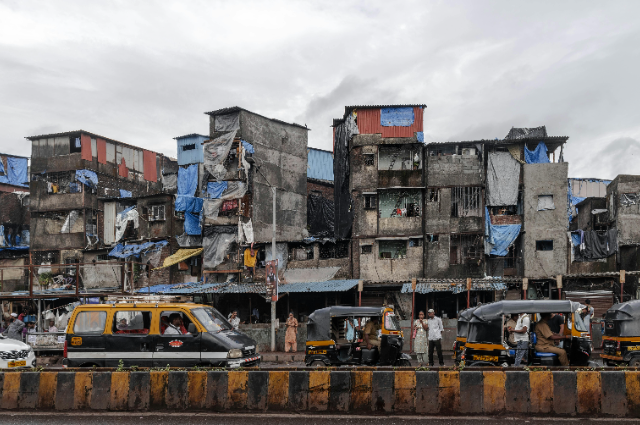
We like simple stories about poverty. We like to believe that every outstretched hand is empty because fate was cruel. After all, opportunity never knocked because the system failed. Most of the time, that is painfully true. But sometimes, the street runs its own economy. Quiet. Cash-heavy. Unregulated. And far more profitable that we are willing to admit.
In recent years, India has been forced to confront an uncomfortable reality: not all begging is survival. Some of it is strategy.
The phrase ‘Crorepati Beggar’ sounds like satire until you meet the numbers. And the numbers are very real.
Consider the widely reported case of Bharat Jain in Mumbai. Often described as the world’s richest beggar, Jain has been active around busy areas like CSMT and Azad Maidan for decades. His daily earnings reportedly range between ₹2,000 and ₹2,500. That figure alone surprises people, but it’s the accumulation that shocks. Over-time, Jain invested his income into real estate. Today, he owns a 2BHK flat in Parel valued at over ₹1 crore and two shops in Thane that generate steady rental income. His estimated net worth sits around ₹7.5 crore. He still begs. Not because he has to, but because it works.
Then there’s Mangilal from Indore, whose case surfaced during the city’s ‘beggar-free’ mission in early 2026. On the surface, he appeared like many others, presenting himself as disabled, but behind that image was a small financial empire. Mangilal owned three houses, multiple auto-rickshaws, and a Swift Dzire car, complete with a hired driver. More strikingly, he ran an informal money-lending operation in the local jewellery market, using the cash he collected daily to lend at high interest. Begging wasn’t just income. It was seed capital.
This is where the economics of the street become unsettling.
People often ask how small coins turn into crores. The answer lies in volume, invisibility, and structure. In high-footfall areas, a professional beggar can collect anywhere between ₹1,000 and ₹2,500 a day. That’s ₹30,000 to ₹75,000 a month. It’s cash-based, untaxed, and untracked. Unlike salaried work, there are no deductions, no paperwork, and no formal accountability.
Expenses are minimal. Food often comes from temples, langars, or charities. Clothing is donated. Shelter, in many cases, is informal or shared. What remains is disposable income, which can be saved, invested, or circulated. Over the years, this steady accumulation, when combined with real estate or informal lending, compounds quietly.
This doesn’t mean begging as a whole is lucrative. It means professional begging, in specific urban pockets, can be.
And that distinction matters.
Because the impact of these cases extends far beyond the individuals involved. They reshape public trust. When stories of wealthy beggars circulate, people hesitate. They pull their hands back. They look away. Genuine hunger gers mistaken for strategy. Real disability gets met with suspicion. The street loses credibility, and the most vulnerable pay the price.
Psychologically, this creates a ‘cry wolf’ effect. Compassion becomes cautious. Giving becomes conditional. The emotional impulse to help is replaced by doubt. For people who truly rely on alms to survive, this shift is devastating.
There’s also the question of habit and identity. For some professional beggars, the street is no longer a last resort. It’s a familiar system with predictable returns. Leaving it means entering uncertainty: rules, schedules, supervision, and a lower guaranteed income. Rehabilitation programs often fail not because people don’t want dignity, but because the street offers autonomy and cash flow that formal systems can’t match.
Then there’s the darker side.
In many cities, begging is not an individual choice but an organized operation. Syndicates control territories, assign spots, and take cuts. Vulnerable people, including children and the disabled, are often exploited. Fake injuries, drugged infants, and scripted stories are tools of the trade. The coins we drop don’t always go where we think they do.
This is why cities like Indore have tried aggressive interventions. Their ‘beggar-free’ campaign didn’t just remove people from streets. It attempted documentation, rehabilitation, and skill-training. At the national level, the SMILE Scheme aims to provide medical care, vocational training, and reintegration support for people involved in begging. These efforts recognise a difficult truth: that is, you cannot fix a complex street economy with charity alone.
For the public, the impact is moral fatigue. People are caught between empathy and awareness. Nobody wants to fund exploitation. Nobody wants to ignore suffering. The result is paralysis.
So how do we respond without becoming cynical?
Experts increasingly argue for conscious charity. Stop giving cash. Support verified NGOs. Donate food, clothing, or education directly. Push for stronger implementation of rehabilitation schemes rather than one-time clean-up drives. Compassion, when paired with structure, does far more than spare change ever could.
The economics of the street thrive in silence. They grow in gaps between intention and impact. When we refuse to look closely, myths flourish. When we look too harshly, humanity erodes.
Indian streets hold both truths at once: desperation and strategy, hunger and accumulation, need and manipulation. Recognising that complexity is uncomfortable, but necessary.
Because ₹20 coins don’t turn into crores by accident. They do so because systems allow it, attention drifts, and accountability never quite arrives.
And until we learn to see the street not just as a place of pity but as an economy with consequences, we’ll keep mistaking survival stories for success stories and losing the people who genuinely need help in between.
References:
- Meet Bharat Jain, world’s richest beggar: Here's how he turned pennies into a fortune - The Economic Times
- This Crorepati Beggar In Indore Has 3 Homes, 3 Auto-Rickshaws, Dzire Car