
Sometimes, the moments that stay with us longest are the ones never meant to be extraordinary.
On February 14, 1992, Princess Diana was visiting a government school in Hyderabad during her royal tour of India. Children performed traditional dances, cameras captured the occasion, and officials welcomed one of the world's most recognisable women. But somewhere between the formal greetings and cultural performances, a four-year-old girl caught Diana's attention.
Her name was Avanti Reddy.
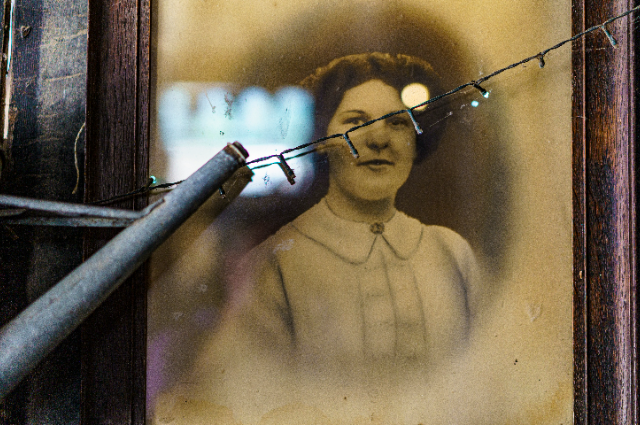
More than three decades later, Avanti still treasures a framed photograph of herself sitting on Diana's lap. What happened that afternoon became a childhood memory she carried into adulthood, and a reminder that sometimes a small gesture of kindness can outlive even the person who offered it.
The little girl who caught Diana's attention
Avanti was among the children performing a traditional Lambadi dance at Lalapet Government High School in Hyderabad. Lambadi, also associated with the Banjara community, is known for its colourful costumes, jewellery and energetic folk performances.
Avanti's mother, Japamala Rani, was a dance teacher who helped prepare the performance for the royal visit. For the little girl, however, the occasion was probably far less complicated than it appeared to the adults around her. She was four years old, dressed for a performance and taking part in a special school event.
Then Diana noticed her.
According to Avanti's later recollections, the princess picked her up, carried her back towards the stage and settled her on her lap. She asked the child about her name, school and class. It was an unusually personal interaction during what would otherwise have been a tightly scheduled royal engagement.
Then Diana noticed something else. Avanti had a cold.
Instead of allowing the moment to remain formal, Diana reportedly took out her own handkerchief and wiped the little girl's nose.
It was a simple, almost ordinary act. Yet it is precisely this detail that makes the story so memorable. Diana was not responding to Avanti as a performer or as part of a carefully arranged public appearance. For those few minutes, she was responding to a child who needed a little care.
“Today, you are my daughter.”
As the visit ended, Diana reportedly expressed reluctance to leave Avanti. According to the girl's later account, the princess told her, “I don't have a daughter, so today you are my daughter.”
The words have since become the emotional centre of the story.
It is important to understand what they meant and what they did not. Diana was not claiming Avanti as her biological daughter or establishing a legal relationship with her. The remark was reportedly an affectionate expression during a brief encounter, remembered by the child who experienced it.
Diana had two sons (Prince William and Prince Harry) and no daughters. It may have been that the nature of the exchange was all the more poignant for those who knew her in the public eye as a mother. The significance of the moment, though, is entirely independent of any conjecture as to her private feelings.
What matters is that a young child remembered being treated with warmth by someone who could easily have remained distant behind the barriers of royal protocol.
And the story did not end when Diana left Hyderabad.
The photograph that outlived the moment
Reports say Diana and Avanti's family continued communicating by letter after the royal visit. Diana also sent Avanti a signed photograph of the two of them together, which Avanti has continued to treasure.
For a child, it would have been extraordinary to receive a photograph from a princess. As Avanti grew older, the significance of the encounter became apparent. She came to understand who Diana was, why the photograph was important and why that one moment had become part of her life.
Avanti eventually became a trained dancer and a primary-school teacher. Her life moved beyond that single afternoon in Hyderabad, but the memory remained.
There were also hopes of another meeting. Reports have described plans for Avanti to meet Diana again in Britain while the young girl was travelling in Europe with a dance group. Those plans never came to fruition. Diana died in a car crash in Paris on August 31, 1997.
For Avanti and millions of people who admired Diana, the possibility of future encounters disappeared with her death. The photograph, however, remained.
This is the real human story, a child who grew up carrying a memory of kindness from someone she would never meet again.
Why this story still touches people
Diana's meeting with Avanti is a case in point as to the quality that made her so popular. A great deal of her public work involved coming into contact with people who were on the margins, who were vulnerable, who were excluded from power by the very nature of their circumstances. Whether it was children, patients or members of the disadvantaged communities she worked with, it was these encounters that helped to build up the image of her as a monarch who could genuinely make people feel seen.
For the average person, the story also serves as a reminder that kindness doesn't have to be huge to be worthwhile.
A child may not recall the minutiae of a school event, but being held, being seen, being comforted can go on to inform their whole concept of care. For adults, it's a very different kind of nostalgia that Avanti's story evokes. It's the memory of someone who came into your life for a very short time and who left you with something.
The story is still going around in a world where you're pretty much always going to come across public figures on a screen. The picture gives us a tangible record of Diana with Avanti; the remembered conversation adds a personal element which the picture alone can't do. The picture is the record of the encounter; the handkerchief and the words Diana is said to have spoken are from the recollection afterwards.
That distinction matters, because the story is touching enough without needing to become a fairy tale.
A separate Indian connection
Another reason headlines sometimes describe Diana as having an Indian connection is a completely different story.
In 2013, reporting on genealogical and mitochondrial DNA research suggested that Diana had distant Indian ancestry through an ancestor named Eliza Kewark, who lived in Bombay in the
early nineteenth century. The research traced a maternal line through several generations to Diana, and consequently to her sons, William and Harry.
That ancestral connection has nothing to do with Avanti Reddy. One is a story about family history and genetics; the other is a story about a human encounter that became personally meaningful to a little girl.
The two should not be confused.
More than a royal photograph
Princess Diana's life was filled with famous photographs, from her hospital visits to her appearance at the Taj Mahal during the same Indian tour. Yet the image of her sitting with Avanti offers something different from the usual royal spectacle.
It captures a moment in which status seemed to matter less than tenderness.
Avanti was not a princess, a celebrity, or an influential person. She was a four-year-old girl who had danced at school. Yet for a few minutes, she received the undivided attention of someone whose life millions watched.
Perhaps that is why the framed photograph still matters.Not because Avanti literally became Diana's daughter, but because someone she would remember for the rest of her life made her feel special.
Sometimes, a person does not have to stay in our lives to leave a lasting place in them.
References:
- https://www.thedailystar.net
- https://astroulagam.com.my/lifestyle
- https://reflections.live
- https://timesofindia.indiatimes.com