
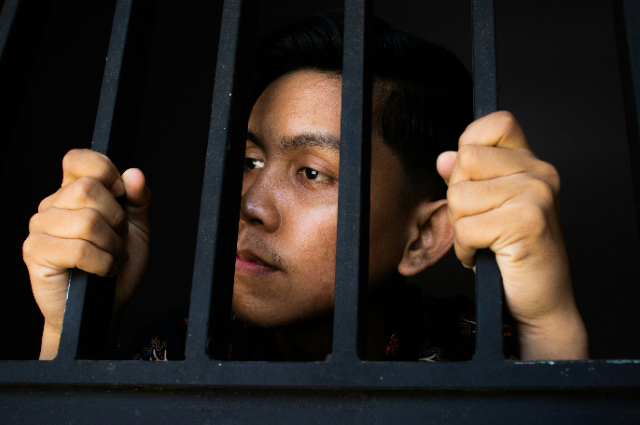
In a democracy, dissent is supposed to be normal. It is the quiet mechanism that keeps power accountable. The Indian Constitution promises citizens the right to question authority, criticise policy, and protest peacefully. Yet in recent years, the line between disagreement and criminality has started to blur. Students, activists, and academics who once debated ideas in classrooms now find themselves defending those ideas in courtrooms. For many, the journey from campus discussion to prison cell has become alarmingly real.
India’s political vocabulary has also changed along the way. Terms like ‘anti-national’ are used frequently in public debate, yet the phrase itself has no clear legal definition. It exists more as a label than a law. But labels carry weight, especially when they influence how dissent is perceived by institutions and society.
One of the most widely discussed recent examples involves Sonam Wangchuk, a Ladakh-based engineer, education reformer, and environmental activist. Known globally for his innovative ice stupas that help store winter water for farming communities, Wangchuk has long advocated for ecological protection and sustainable development in the fragile Himalayan region. He also received the Ramon Magsaysay Award in 2018 for his work in education reform.
In 2025, Wangchuk became a central voice in protests demanding statehood for Ladakh and constitutional safeguards under the Sixth Schedule, which many locals believe would protect tribal land and culture. The protests were largely peaceful, including hunger strikes and public demonstrations aimed at drawing national attention to Ladakh’s environmental vulnerability. However, after tensions escalated during protests in Leh, Wangchuk was detained in September 2025 under the National Security Act (NSA), a preventive detention law that allows authorities to hold individuals without trial for extended periods.
His detention sparked debate across India. Supporters argued that an environmental activist advocating democratic protections should not be treated as a security threat. Critics of the protests claimed authorities had to maintain order. The case raised a deeper question: ‘When activism intersects with state power, where does dissent end and national security begin?’
The story of jailed activists in India is not limited to one region or one movement. Another major flashpoint came during protests against the Citizenship Amendment Act (CAA) in 2019. The law created a pathway to citizenship for non-Muslim refugees from neighbouring countries, but its religious criteria led many critics to argue that it violated the secular principles of the Constitution.
Across universities and cities, students organised marches, sit-ins, and discussions. Among the prominent voices were student activists Umar Khalid and Sharjeel Imam. Both were later arrested in connection with the 2020 Delhi riots investigation and charged under the Unlawful Activities Prevention Act (UAPA), India’s primary anti-terror law. UAPA cases are particularly controversial because obtaining bail is extremely difficult under its provisions. As a result, the accused can spend years in jail while trials proceed slowly.
For supporters of the arrested activists, the issue is not merely about individual cases but about the use of laws designed for terrorism in situations involving protest or political speech. They argue that the process itself becomes punishment when pre-trial detention stretches into years.
Perhaps the most tragic case connected to this debate is that of Father Stan Swamy, an 84-year-old Jesuit priest and tribal rights activist. Swamy had spent decades advocating for Adivasi land rights in Jharkhand. He was arrested in October 2020 in connection with the Bhima Koregaon case under UAPA. Due to his age and Parkinson’s disease, he struggled with basic tasks in custody. Requests for bail on health grounds were repeatedly denied. In July 2021, he died in the hospital while still awaiting trial. He had never been convicted of any crime.
His death triggered global criticism from human rights organisations and renewed scrutiny over the use of anti-terror laws against activists.
These cases collectively highlight a deeper tension within modern democracies. Governments argue that national security threats require strong laws and swift action. Civil liberties advocates warn that when those laws are applied too broadly, the risk is of silencing legitimate criticism.
For students and young activists, the impact is psychological as much as legal. University campuses have traditionally been spaces where political ideas are debated freely. When activism leads to legal consequences, many students begin to question how far they can go in expressing dissent. Some withdraw from public engagement altogether, fearing surveillance or misinterpretation of their views.
This shift has consequences beyond politics. Democracies thrive when citizens feel safe questioning authority. If people begin to equate protest with personal risk, public discourse narrows. The debate becomes quieter. Complex issues receive fewer perspectives.
At the same time, the state faces genuine challenges. India deals with internal security threats, insurgencies, and communal tensions that require careful management. The challenge lies in distinguishing between violent threats and democratic disagreement.
The cases of Sonam Wangchuk, Umar Khalid, Sharjeel Imam, and Father Stan Swamy illustrate how complicated that balance has become. Each case exists within a unique political context, yet together they raise the same uncomfortable question: How should a democracy treat its critics?
The answer isn’t simple. Laws protecting national security remain necessary. But so do safeguards ensuring those laws are not used in ways that discourage peaceful dissent. Courts, policymakers, and civil society continue to debate where that boundary should lie.
What remains undeniable is that the journey from university classroom to jail cell has become part of India’s contemporary political narrative. Whether seen as necessary enforcement or troubling overreach, it reflects a country still negotiating the boundaries between authority and freedom.
And in that negotiation lies the true test of any democracy, not how it treats those who agree with it, but how it responds to those who dare to question it.
. . .
References: