
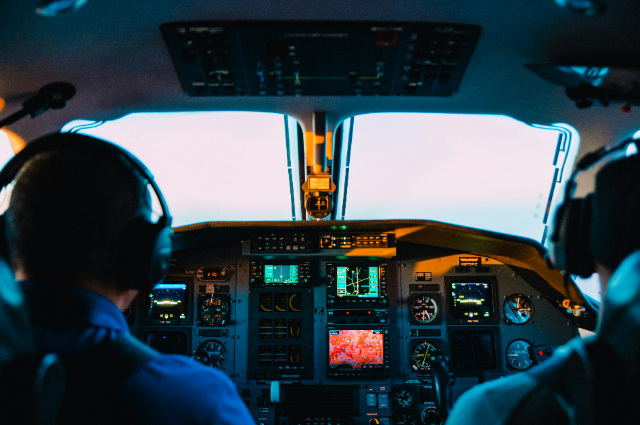
A routine flight from Dubai to Tel Aviv became a nightmare on 30 September 2026 when an alleged attack in the cockpit put the lives of hundreds at risk. The passengers had boarded Flydubai flight FZ1073 expecting nothing out of the ordinary. What they got was an emergency situation involving the very person who was supposed to be in a position to fly the aircraft.
The incident has since raised serious questions about aviation security, airline recruitment procedures and the safety of international flight routes. For Flydubai, the immediate response was to suspend all flights to and from Israel while authorities investigated what had happened.
But how did a commercial flight reach a point where its own co-pilot became the alleged threat? When the cockpit became the danger zone
On September 30, Flydubai flight FZ1073 departed Dubai International Airport for Tel Aviv's Ben Gurion Airport. On board were 174 passengers and six crew members, according to the National Investigation Agency's account.
The flight was operating normally until an alleged confrontation broke out inside the cockpit.
The co-pilot, identified in media reports as an Omani national, allegedly attacked Indian captain ‘Smit Machchhar’, stabbing him during an attempt to take control of the aircraft. Israeli officials described the incident as an attempted hijacking and possible terror attack.
What followed was terrifying.
Flight-tracking information showed the aircraft plunging thousands of feet in a very short period. Reports placed the descent at approximately 14,000 to 17,000 feet. Emergency and hijack transponder codes were activated, signalling that the aircraft was facing a serious situation.
Machchhar is said to have managed to open the cockpit door despite his injuries and the amount of blood he was losing. The passengers and other crew members then got involved and managed to subdue and restrain the attacker.
An off-duty pilot travelling on the flight also helped secure the aircraft and take control. The plane was diverted to Tabuk Airport in Saudi Arabia, where it landed safely.
Every person on board survived.
The captain who refused to give up
Captain Smit Machchhar quickly became the central figure in the story.
Despite being seriously injured, he continued trying to protect the aircraft and its passengers. His actions were publicly praised by Narendra Modi and Benjamin Netanyahu.
For the passengers, the experience was undoubtedly traumatic. Imagine sitting thousands of feet above the ground, watching an aircraft descend rapidly while having little information about what is happening inside the cockpit.
They had trusted the airline, its crew and the security procedures that allowed them to board. Suddenly, their safety depended on people fighting to regain control of the aircraft.
Machchhar received medical treatment in Saudi Arabia and was later cleared to return to the UAE. Flydubai's chief executive publicly thanked him, the pilots who helped land the aircraft, the cabin crew and passengers who intervened.
The incident also highlighted something important about aviation safety: emergencies can require coordinated action from people throughout the aircraft, not just those operating it.
Why Flydubai suspended its Israel operations
Following the incident, Flydubai has announced that they are suspending all flights to and from Israel in line with the authorities.
The airline has described the decision as temporary, with operations remaining suspended until the investigation is complete and the facts are established.
This was a significant decision for an airline operating an important connection between Dubai and Tel Aviv.
The route carries business travellers, tourists, families and passengers connecting to other international destinations. Suspending it means disrupted travel plans, missed connections, additional expenses and uncertainty for people who depend on regular air services.
Flydubai said it was arranging alternative travel options and support for the affected passengers.
For the airline, the suspension has operational and commercial implications too. The aircraft and crew schedules will have to be rearranged, passengers will need to be dealt with, and confidence in the route will have to be re-established before normal services can be restarted. The decision reflects the seriousness of the incident and the need to allow investigators to examine what happened.
The bigger question is, ‘How did the co-pilot get cleared?’
Perhaps the most disturbing part of this incident concerns the alleged attacker himself.
Israeli and international media reports identified the co-pilot as ‘Hamam al-Hammami ', an Omani national. According to reports citing intelligence and law-enforcement sources, he had previously been suspended from a trainee position at Oman Air after concerns about extremist material allegedly found in his possession.
These claims have raised questions about how he subsequently obtained employment with Flydubai and was cleared to operate flights to Israel.
Reuters reported on October 5 that Israeli officials believed the alleged attack had been planned before the co-pilot joined the airline. Sources also claimed that he had intended to crash the aircraft into Ben Gurion Airport.
These are serious allegations, and they are allegations which have emerged from an investigation which is still very much underway. Flydubai has said the motive was initially unknown and that it would take time for the authorities to establish what the facts were.
There is also a diplomatic dimension. Israel and Oman do not have formal diplomatic relations. However, an individual's Omani nationality does not automatically establish whether they can work for an international airline or operate a particular route. The real questions concern the background checks, security assessments and approvals involved in assigning crew members to sensitive routes.
What this means for passengers
The incident has consequences beyond one airline and one flight.
Passengers need to trust that airlines have effective recruitment procedures, that crew members undergo appropriate background checks and that security concerns are shared between relevant authorities.
Airlines operating international routes also face the challenge of assessing threats that may originate outside the country where they are based. A security failure in one part of the aviation system can have consequences across several countries.
India also has a direct interest in the investigation given that the injured captain is Indian. The NIA has registered a case under the Anti-Hijacking Act and the Unlawful Activities (Prevention) Act, which places the incident squarely within India's national security ambit.
The investigation will need to establish the alleged motive, whether the attack was planned, and whether anyone else was involved.
An incident aviation cannot afford to overlook
Flydubai's suspension of Israel flights is a reminder of how quickly an ordinary journey can become an international security crisis.
The safe landing at Tabuk was an extraordinary outcome, made possible by the injured captain, fellow pilots, cabin crew and passengers who responded under immense pressure.
But the questions surrounding the alleged attacker remain deeply concerning.
Air travel depends on trust. Passengers cannot personally verify the background of every crew member, inspect cockpit procedures, or assess intelligence shared between countries. They rely on airlines and regulators to do that work before an aircraft leaves the runway.
The real test now is whether the investigation can establish how this happened and ensure that the same security gaps never put another flight at risk.
References: