
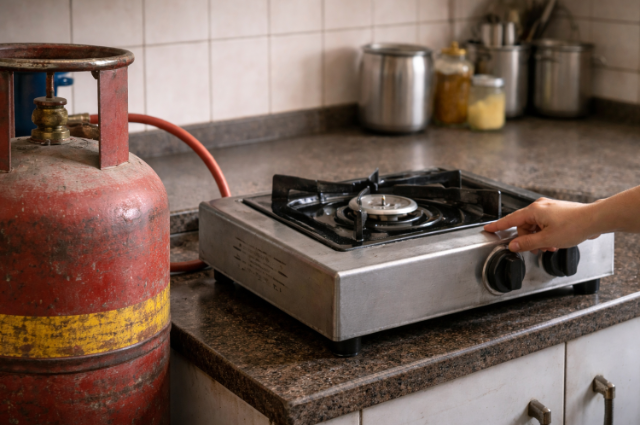
Cooking gas is one of those things people rarely think about until it stops arriving. The cylinder sits quietly in the kitchen, doing its job every day, so familiar that its importance almost disappears. But over the past few months, many households and businesses across India have been forced to think about it again. Delivery delays, empty stock at distributors, restaurants scrambling for fuel, and suddenly a strange phrase is floating around neighbourhoods, ‘black market cylinders’.
At first glance, buying one might seem like the practical solution. When your cylinder runs out, and the delivery is delayed for days, paying extra to keep the stove running feels understandable. But this small decision feeds a much larger problem. The current LPG shortage shows how quickly survival choices can strengthen illegal supply chains that hurt everyone else.
The shortage itself did not appear overnight. It traces back to global events far beyond India’s borders. India is the second largest importer of LPG in the world, and a large portion of these imports move through the Strait of Hormuz, one of the most sensitive shipping routes in global energy trade. When conflict escalated between Iran, Israel, and the United States, disruptions in this region immediately affected shipping schedules and supply flows. Since India imports around 65% of its LPG needs, nearly 25 million tonnes annually, even a small disruption can create major ripple effects.
In fact, analysts noted that a drop of roughly 5% in global supply was enough to destabilise the already tightly balanced LPG system. The result was felt first in commercial supply chains, and then gradually in domestic deliveries.
The ground reality quickly became visible in cities across India. Restaurants were among the first to feel the shock. In places like Mumbai, Bengaluru, and Kolkata, commercial LPG deliveries slowed dramatically. The National Restaurant Association of India warned that eateries could begin shutting down if the situation continued. Some already have. In Mumbai alone, reports suggested that nearly 20% of hotels and restaurants temporarily closed operations due to lack of cylinders.
One case that circulated widely involved a restaurant owner in Andheri who reportedly paid ₹6,000 for a commercial LPG cylinder, more than triple its normal cost. In regular markets, a commercial cylinder usually sells for around ₹1,600. During the shortage, prices shot up to nearly ₹3,000 in some areas as black market networks stepped in to exploit the crisis.
This is where the problem deepens.
Black market LPG doesn’t come from nowhere. It often comes from diverted supply, cylinders meant for households or businesses that are illegally rerouted and resold at inflated prices. Every time someone buys one, it strengthens that underground network. The immediate buyer solves a personal problem, but the system becomes more distorted.
The impact spreads quickly.
Households begin experiencing longer delivery delays because part of the legitimate supply is being siphoned off. Restaurants that refuse to comply but illegally struggle to stay open. Industries that depend on LPG, like textile processing units and small manufacturing clusters, find themselves squeezed between rising prices and unreliable supply.
Even ordinary families start feeling the stress. Booking cycles that once guaranteed a refill within a few days are now stretching longer. In some areas, consumers report waiting anywhere between two and eight days after booking before their cylinder arrives.
The government has responded with a series of emergency measures. Authorities invoked the Essential Commodities Act, directing refineries to increase LPG output and asking oil marketing companies to prioritise domestic consumers. The refill booking cycle was extended slightly, and import strategies were adjusted to reduce dependence on the Strait of Hormuz route. Imports from alternative supply lines were increased while domestic production was pushed upward by about 10%.
Officials have also assured the public that national reserves should cover at least several weeks of demand. But on the ground, fear spreads faster than policy updates. Panic buying begins, and that panic becomes the oxygen that keeps black markets alive.
The people hit hardest are often the ones with the fewest choices.
Small restaurants run by families cannot easily switch to induction cooking overnight. Many depend entirely on LPG to operate. Textile processing units, which use commercial LPG for heating and dyeing processes, face the risk of temporary shutdown if supplies dry up. When these businesses slow down, workers lose wages, daily labourers lose shifts, and entire local economies begin to wobble.
Households are affected differently but no less deeply. Cooking becomes a countdown game: how long the remaining gas will last, whether the next cylinder will arrive before it runs out. Families begin conserving fuel, changing cooking habits, or delaying meals.
In the middle of this uncertainty, the temptation to buy a black market cylinder becomes understandable. But it also becomes part of the cycle that worsens the shortage.
Every illegal purchase encourages suppliers to divert more stock. Every inflated price becomes the new benchmark for the next desperate buyer.
The better response is less dramatic but far more effective, patience and conservation. Using LPG carefully, avoiding panic buying, and refusing illegal cylinders keep legitimate supply chains functioning. It allows distributors to deliver cylinders where they are actually booked instead of where they can earn the highest illegal profit.
Shortages caused by global conflicts will eventually stabilise as shipping routes reopen and supply adjusts. Black markets, however, do not disappear on their own. They grow quietly until consumers refuse to participate.
A cylinder bought illegally might solve a kitchen emergency today, but it also helps create the shortage someone else will face tomorrow.
And in a crisis where millions rely on the same supply chain to cook their daily meals, the smallest decision inside one kitchen can echo far beyond that.
References:
- India's city gas distribution sales face 8-10% dip due to West Asian conflict: Crisil - The Economic Times
- One Narrow Strait, Millions of Cylinders: India’s LPG Crisis
- Middle East crisis: Hospitality industry seeks urgent government action over commercial LPG supply disruption | India News