
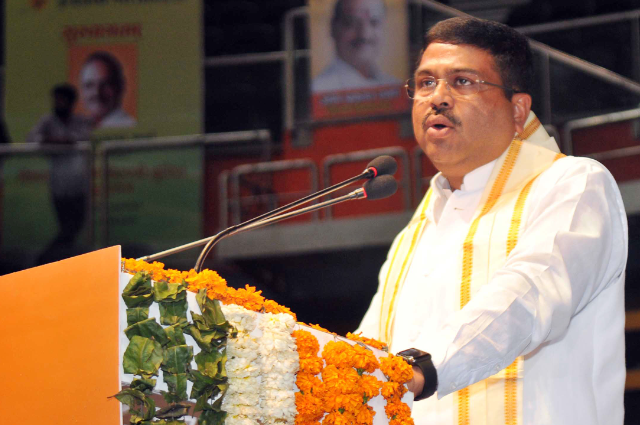
There are certain instances in politics when a resignation carries more than a simple meaning; it serves as a signal. On July 25, 2026, Dharmendra Pradhan, who was the Union Education Minister, resigned following weeks of student outrage over the NEET-UG examination crisis. To the young protesters at Jantar Mantar, the resignation was exactly what they had been asking for and what they had never been willing to give up. To the government, it was framed as a voluntary choice made for the sake of the students and the nation.
The controversy began over claims of serious irregularities in the NEET-UG 2026 exam, an examination of great importance to students aspiring to medical careers. Accusations of a question paper leak, doubts about whether the exam had been conducted fairly, and broader complaints about the assessment system led to a crisis of trust. For a generation that has to prepare for this one exam over many years, the possibility that the playing field could be compromised is more than just an administrative issue; it can seem as though all those years of effort have been put on unstable ground.
That anger eventually acquired an unusual political expression. The youth-founded Cockroach Janta Party, or CJP, made Jantar Mantar the focal point of a growing protest movement and transformed the examination controversy into a broader discussion of accountability and the future of competitive examinations.
Sonam Wangchuk, who was personally involved in the protests, started a hunger strike in support of the students and continued it for 26 days. He terminated the fast on July 24 following negotiations with the Union ministers and after receiving written guarantees from the government, covering action against the examination irregularities and compensation for the affected families. Wangchuk later stated that protecting the protesters and avoiding violence were the reasons for his decision.
That decision gave rise to a debate. Many supporters wondered why the hunger strike had ended before all their demands had been fulfilled. Wangchuk justified his action because the students' safety had to be taken into account, and the situation might become more dangerous. This illustrated the complexity that arises in movements when pressure, endurance, and negotiation came together.
The protests organized by the CJP continued. The resignation of Pradhan remained a main demand, along with compensation for the affected families and a promise that the protesters would not face legal action. The negotiations, which had continued since an agreement was reached on some of the demands, did not resolve the others.
Then came July 25.
For many, this was the first visible sign that sustained public pressure could move a national institution forward.
Pradhan submitted his resignation to Prime Minister Narendra Modi. The President accepted it with immediate effect under Article 75, and Cabinet Minister Pralhad Joshi was assigned the additional charge of the Education Ministry. In his resignation letter, Pradhan said the decision was intended to protect young people from prolonged political and legal conflict while defending the government's response.
At the same time, the government was taking steps to impose stricter measures against exam fraud and paper leaks. The importance of this response lies in the fact that students have to rely on an examination system which they cannot control. Although a more stringent law could deal with leaks, the greater problem would be restoring trust.
The effect on students was very personal. Since competitive exams already involve a great deal of emotional and financial stress, families end up spending a lot of money on coaching, travel, applications, and preparation. If there is a leak or a dispute over the marking, it can lead to feelings of anger, helplessness, and fear about whether all their hard work will actually be worthwhile. The uncertainty is even more severe for students who lack access to expensive coaching.
Parents now experience a different sort of anxiety. They see their children studying for long periods and have expectations that affect the whole household. When the system seems unreliable, parents find themselves asking what they are preparing their children for.
The political importance of the resignation lies in the fact that it shows the effect of continuous pressure from the streets. Congress and other opponents have called it a win for student power. At the same time, supporters of the government can cite the resignation and the proposed reforms as evidence that the system is responding.
Both readings matter.
A protest does not automatically prove every allegation, and a resignation does not prove every criticism. What it does show is that student anger became impossible to ignore. The government had to negotiate and eventually accept a change at the top of the education ministry.
That makes this moment bigger than one minister or one examination.
India's young population is increasingly connected, vocal, and willing to organize through social media. Students can now find thousands of others facing the same uncertainty. A grievance can become a movement within days. That power can create accountability when it remains peaceful and grounded in verifiable demands.
The real test begins after the resignation.
Will compensation reach affected families? Will protesters be protected from retaliatory legal action? Will the new anti-paper-leak measures actually prevent future scandals? And most importantly, will students regain faith that when they sit for an examination, their effort will matter more than someone else's access, influence or dishonesty?
Dharmendra Pradhan's resignation may close one chapter of the NEET crisis, but it will not close the argument. The students at Jantar Mantar were asking for something much larger than a change of minister. They were asking for an education system worthy of the trust they place in it.
And that trust will have to be earned long after the protest banners come down.
References: