
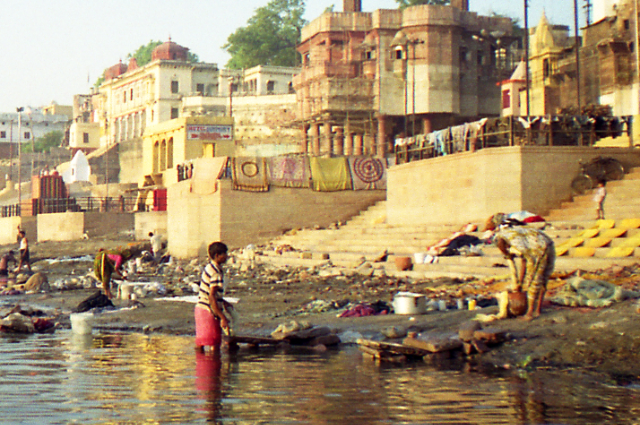
When India ranks 120 out of 122 countries on the global Water Quality Index, the number lands softly. It doesn’t scream. It doesn’t shock the way inflation figures or election results do. But it should. Because this isn’t a scorecard about pride or prestige. It’s a measure of what flows from our taps, through our bodies, and into our future.
A rank like this isn’t abstract, but deeply personal.
According to consolidated data referenced by national and international bodies, nearly 70% of India’s water is contaminated, and close to 2,00,000 people die every year from illnesses linked to unsafe water. These aren’t freak accidents. These are slow, normalised losses, absorbed quietly into daily life.
We often talk about water scarcity, when the quality is the quieter emergency. You can have water and still not be safe.
The Water Quality Index doesn’t just look at how much water a country has. It evaluates what’s inside it: chemical pollutants, biological contamination, sanitation infrastructure, and exposure to unsafe drinking water. On these parameters, India consistently performs near the bottom globally, alongside countries with far fewer resources.
What makes this ranking unsettling is not that India lacks data or awareness — it’s that the crisis is no longer invisible.
An ongoing case study lies in India’s river monitoring data, especially from the Central Pollution Control Board. In recent assessments, hundreds of river stretches across the country have been classified as polluted beyond safe limits. The Yamuna in Delhi, the Ganga in Uttar Pradesh, and multiple rivers in Maharashtra and Tamil Nadu show dangerously high levels of industrial effluents, untreated sewage, and chemical runoff. These findings aren’t theoretical. They are measured, recorded, and repeated year after year.
Take Delhi as an example. Large sections of the city rely on surface water sources that are already under stress. Treatment plants work overtime to make contaminated water usable, but when pollution loads exceed capacity, the risk shifts to households. People compensate in familiar ways: bottled water, home purifiers, and boiling. But these are private fixes to a public failure.
And not everyone can afford them.
For millions in urban slums and rural areas, water is collected, not filtered. Children drink what’s available. Women cook with what flows. The health impact shows up as chronic stomach illnesses, stunted growth, kidney disease, and repeated hospital visits that drain already fragile incomes.
This is where the Water Quality Index stops being a number and becomes a mirror.
India’s own Composite Water Management Index (CWMI), developed by NITI Aayog, describes the situation bluntly as the country’s worst-ever water crisis. Around 600 million people face high to extreme water stress. Groundwater levels are falling rapidly, especially in northern and southern states, as India extracts more groundwater than any other country in the world.
When groundwater drops, quality suffers alongside quantity. Deeper aquifers often contain higher levels of arsenic, fluoride, and salinity. This is not a future threat. It’s already affecting districts across Bihar, Rajasthan, Andhra Pradesh, and Telangana.
The economic cost is equally sobering. Long-term projections estimate that poor water management could shave up to 6% off India’s GDP by 2050. That loss isn’t just financial. It translates into lower agricultural productivity, rising healthcare costs, and growing inequality between those who can buy clean water and those who can’t.
And yet, India has not been idle.
Programs like the Jal Jeevan Mission aim to provide piped drinking water to rural households, and several states have shown improvement in management practices. Gujarat, Andhra Pradesh, and Madhya Pradesh have historically ranked higher on domestic water governance indicators. But infrastructure alone cannot fix quality if pollution continues upstream and enforcement remains uneven.
This is the uncomfortable truth the global ranking forces us to confront: access without assurance is not safety.
What does this mean for ordinary people?
It means mothers questioning whether tap water is safe for formula. It means farmers are watching soil salinity creep upward. It means urban residents pay twice for water — once through taxes, and again through purifiers and packaged bottles. It means hospitals are quietly filling with preventable cases.
Water quality also shapes trust. When people stop trusting public water, they stop trusting systems altogether. That erosion is slow but profound.
So why does this rank matter globally?
Because India is not a small country struggling in isolation. It is one of the world’s largest economies, fastest urbanizers, and biggest groundwater users. If a country of this scale cannot protect the quality of its water, it signals a warning to the rest of the world about what unchecked urbanisation, weak enforcement, and fragmented governance can produce.
This is not about embarrassment. It’s about urgency.
Because beyond the 122, beyond the charts, rankings, and policy papers, this crisis is already flowing through everyday life. Unsafe water has quietly become normal — and that normalisation is the real danger.
Clean water is not a luxury, not a future goal, and not a private responsibility. It is the most basic public promise a nation makes to its people. And until that promise is treated with the seriousness it deserves, no index will move, no mission will be complete, and no progress will be truly sustainable.
. . .
References:
- Rahul Gandhi Meets Patients, Families Of Indore Water Contamination Victims
- Water Crisis in India, Reasons, NITI Aayog Report, Reforms
- Why Unsafe Drinking Water Remains India’s Most Underestimated Public Health Emergency – GKToday