
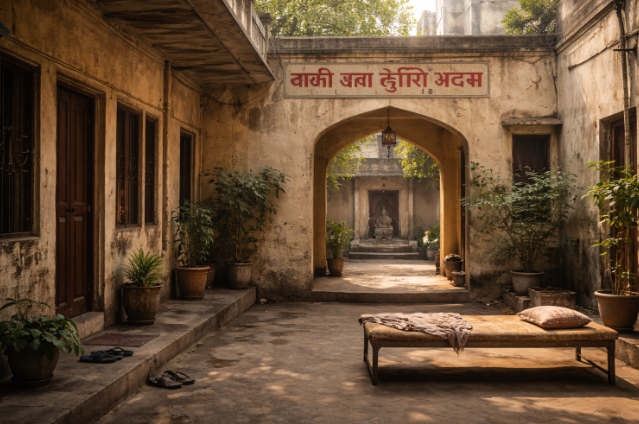
Kashi Labh Mukti Bhavan—a place that offers peace for souls, not for those who wish to continue living long, fruitful lives, but for those who are on the brink of losing theirs. Hindu religion believes in the afterlife and spirits, so to free souls from the turmoil of an unfinished task, not letting them freely enter the afterlife, it is laces like Mukti Bhavan that take them to salvation and grant them the freedom to die peacefully.
It isn’t merely peace after death that they seek. Hinduism preaches the concept of karma, everything you do returns to you, in a good or bad way, depending on the nature of your actions. When they return to a new life in another form, it is karma that determines the kind of life they will lead, whether it will be full of difficulties or rewarding, based on how they acted in their previous one.
Mukti Bhavan is considered one of the mystical places on the face of the planet where ending one’s life can free them of all of their sins and help them attain moksha, eternal peace. Situated in the sacred town of Varanasi, known as Kashi in ancient times, it is a place that has witnessed over 14,000 deaths in its course of time. Some call it the “Death Hotel, a term that would ignite curiosity or maybe even lead people to believe that it is, in a way, haunted.
Also known as Moksha Bhavan, the place is connected with spirits, but not the typical kind that draws people away; instead, it is a realm of sorts where people wish to spend their dying moments. It was established in 1958 by the Dalmia family. It isn’t a giant place, supporting only 10 ailing people, mostly elders, at a time. The general rule says that one is allowed to stay for a time period of 15 days at a time. If someone outstays their visit, they are requested to empty the room and return when they believe their time has come once again. Another wonderful thing about this place is that no one is obligated to pay any fee for their stay. The place is equal for all, rich or poor.
Bhairav Nath Shukla is the one who has been performing the job of manager at Mukti Bhavan for the past 44 years. He prays for the salvation of those who have come all the way to Varanasi to die and hopes for the well-being of those who will be losing a loved one. It is a tough job, knowing that death is constantly showing up at your doorstep. It is even more so a particularly brave one, witnessing almost 12,000 death, a huge number for something so sinister, and still believing that there resides beauty in this passing.
Shukla believes that resolving conflicts before one leaves the earth is truly an important task because the mending of bonds and healing of hearts do not happen in the afterlife. To be content with simple things and let go of all the luxuries before one goes to the distant land is also a common phenomenon he has witnessed. People often recognise it in their final days that simplicity is the foremost truth of life that cannot be denied by the endless wants that humans experience. How strange it is that it takes us our whole lives to learn such a lesson.
Shukla also urges people to look at the good qualities of a person instead of their bad ones. It helps put up a better perspective and a shinier lens to witness the world with, as opposed to the endless, disastrous, and hurtful feelings we can withhold. He also preaches that it is extremely important to learn how to ask for help. Not everything can be achieved in the power of one human, and knowing that there is someone out there who can help you do what you can’t do yourself is a general truth. Reaching out for help doesn’t make one a smaller person; it grants them the power to exist freely without the load of self-attainment at all points of life.
It is also quite necessary to be accepting in situations. When you do not know how to accept what you are dealt, it becomes difficult to continue with life without a negative bubble surrounding you. And negativity, as we know, is the biggest weapon against a happy and fulfilling human life.
An ultimate truth that Shukla speaks upon is the feeling of empathy and donating, which people often face in their final phase of life, as he’s seen in his experience. When they suffer themselves, it is only then that they reckon that others suffer too, and that is when they wish to help those less fortunate than them.
When one witnesses death and the realities it exposes about life, as Shukla does, the soul develops a strength that cannot be built by those living ordinary lives. When one learns from someone who has been around for so much to happen, enlightenment is found.
References:-