
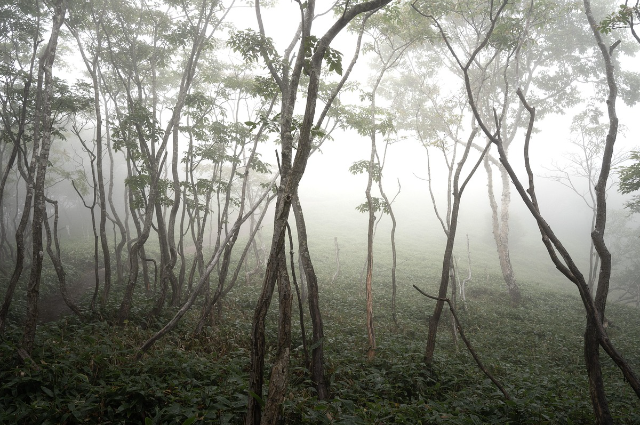
Forcing the terminally ill to perform organ donations is a sinister crime. When the already decaying environment is taken away, quite a similar situation unfolds. The planet Earth has, in its lifetime, given more than it has received, and somehow that wasn’t enough for humankind. They wanted more than they always did, and in this greed of theirs, they ruined Mother Earth beyond repair.
“Development” is something that we as a species have sought after for centuries. We find the best and yet still want something better. A flourishing planet was not enough; we had to turn it unclean with our fumes and emissions. And in this process of growing, we took more than was accounted for, more than we ever deserved to have.
Conservation of biology and its diversity in India is a topic of major concern, which needs to be paid special attention to, as the environment around us is already undergoing heartbreaking habitat loss, deforestation, poaching issues, as well as species on the brink of endangerment and extinction.
India has multiple biological hotspots, including the Himalayas, the Western Ghats, Sundaland and many more. The lifecycles of flora and fauna in these biodiversity hotspots need to be conserved as much as possible, as without them, there wouldn’t exist nature as we know it. The breakdown that biospheres around us are facing is more than just a side-effect of the necessary development civilisation requires; it represents the negligence of humankind as a community.
In the name of development, the natural spots that raise us on this planet and are the reason for our survival are being thrown under the bus and put in harm’s way as we continue to further grow and water jungles of concrete and cement. The hotspots of biodiversity that require equal care and attention, or even the bare minimum of letting their existence bloom as it does on its own, without being harmed and vulnerable to human intervention.
The ecological cycle of Earth is highly dependent on the existence and flourishing nature of these biodiversity hotspots. No matter how much we try and disconnect ourselves from nature and its existence, the ever-existing truth is that we’ll always have an invisible string tying us back to the roots of nature and its hotspots. Life on Earth is quite literally fuelled by ecological resources of nature, and without ensuring proper conservation methods, we are setting ourselves up for a present filled with the notions of “development” and a future that might be non-existent.
India as a nation has not been entirely apathetic about nature’s conservation methods. There are certain regulations imposed by the government and laws deep-set into the pages of the Constitution that determine how we can protect the nature that has been and will be serving us for the long time-being of this planet of water and green lands.
The Constitution has numerous provisions that guard the integrity of the environment. Articles that impose duties and fundamental responsibilities onto governments at various levels, as well as citizens, to safeguard the protective rights to protect forests and wildlife. A clean and healthy environment is included as a part of the right to life according to the Constitution and its implications.
Moreover, pollution control laws that restrict any and every kind of pollution to nature’s resources in the name of development are applied at various levels of governance. It often depends on the region of India, how strongly these laws are acted upon. It is the fear of loss of resources that we have gained in the process of development that pushes us to protect environmental resources because the worth of what nature is and gives us is somehow still not a popularly recognised concept and not as much a part of civic sense that should reside within every citizen as it should be. And that is the typical issue that India faces as a nation.
A case that faced the heavy question of ecological impact made by a development project in a negative way was Buxwaha’s Bunder diamond mining project. A company by the name of Essel Mining & Industries Limited planned the felling of more than 2 lakh trees for a diamond mining project in the Chhatarpur district of Madhya Pradesh. Locals joined hands to protest against the environmental impact this development project would have and how severely the deforestation required for it would affect the air and land.
This is just a single example of the many major projects that take down nature along with them in the pursuit of development strategies and contribute to only partial growth, based on how negatively it affects the planet and its survival mechanisms. It is a conflict that sadly has not yet been strictly reduced to nothing because of how powerful agencies and companies jump into planning and organisation of mega projects without regard to the environmental concerns.
For the rich, getting rich and for the poorer, remaining stable, it is all above the single coin of survival that is constantly tossed in the game of biodiversity loss.
References: