
1st of January. A new beginning. The fresh new start of a year brings hope and prosperity. But that wasn't the case for India's cleanest city.
Indore was struck with an unexpected tragedy. A severe healthcare crisis that rattled the spirit of the public. In Bhagirathpura Area 1, widespread water contamination broke through.
The contamination brought along a hiatus of waterborne diseases. Ailments like gastroenteritis were implanted into the bodies of residents, who were fighting for their lives after consuming the contaminated liquid.
According to reports, over 150 people have been hospitalized due to infection outbreaks, with 30 being in critical conditions. Around 7 to 10 deaths have occurred in Bhagirathpura, taking the lives of children as young as a six-month old infant. More than 2,000 people have fallen prey to the deadly trap of dirty water.
The Indore Municipal Corporation (IMC) has performed Industry Lapse Investigations to find the root cause of this mass contamination. The possibilities are extremely daunting.
There was found to be a leakage in one of the pipelines supplying clean drinking water. The horror of the situation arises when it was found that this leakage was located directly beneath a toilet at a police check post, meaning that sewage of human waste was being mixed into the water that was going into people's bodies. It had to be an unsettling discovery that raised big questions regarding the quality of water flowing through the city's pipes.
The same toilet had been constructed without a mandatory septic tank for safety purposes. So, the untreated sewage flowed directly into the broken pipeline and reached homes along with the water supply. The irresponsible behaviour at both ends facilitated such a harmful cycle of contamination that put countless human lives at risk.
Through investigations, it was also discovered that a brand new supply pipeline was to be reinstalled in Bhagirathpura. This was a documentation dating August of 2024. No action was taken for a year because of the concerningly long wait of funds. The work on the supply pipes only began on 30th December, 2025, after the deaths due to contamination came into the limelight.
The story spread like wildfire. Soon enough, the entire nation knew about how the negligence of public welfare resulted in an epidemic in the nation's cleanest city.
Legal proclamations were announced. The Madhya Pradesh High Court intervened to solve the matter. On 31st December, 2025, the state and IMC were both ordered to ensure that the water supply was immediately cleaned up and the order was restored. The affected families were compensated with free medical treatment. MP Chief Minister Mohan Yadav has announced ex-gratia of 2 lakh rupees for families of those who were deceased in the case of the contaminated water.
A status report was demanded on 2nd January, 2026. It was important to find out who was to be held accountable for this life-threatening raging account of health hazard.
One PHE in-charge sub-engineer was dismissed. An assistant engineer and a zonal officer were suspended. It is impossible to redeem lost lives. The only consolation that can be given to the affected is that something of such manner won't repeat. To ensure this, a three member committee headed by an IAS officer has been working diligently to improve the situation.
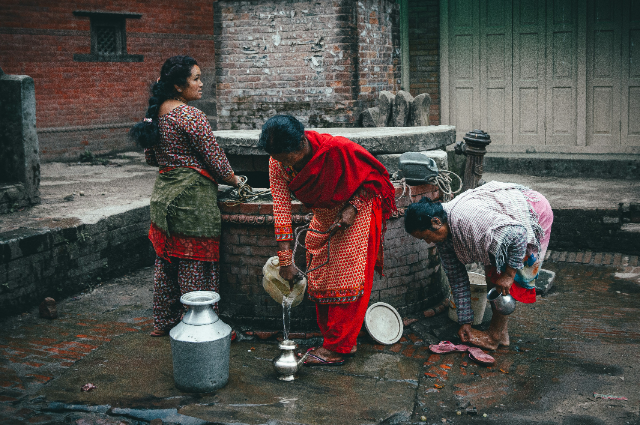
According to new reports, women have been lining up with buckets and tubs to fill up water from tanks, still unsatisfied with the quality. Those who can afford it rush to local stores to stock up on packaged mineral water because it is their only hope in being clean enough to not destroy their homes. No one knows what's in their stomachs from the past few horrible days. No one knows how long before they become prey to contaminated water.
Workers have reported that it has been for days that even tap water supply has been entirely stopped. People are in rummages trying to find the viable solution for this problem. They refuse to let their children consume water from tankers, sceptical about its quality, but have to settle of ingesting it themselves.
Meanwhile, politicians have been becoming part of the local protest to make political statements and gain points with the public. They see such a situation as an opportunity to let people know how involved they are by empathizing instead of providing real solutions and helping them out. The furious crowds do not entertain them. They've lost too much. They do not know what's at stake.
The crisis grows bigger and bigger because no one understands the gravity of the situation. The government does not realise that delay in their actions is a deadly play for their people. And what do they expect the people to do? When water is poison, does one just accept death as it comes?
References:-