
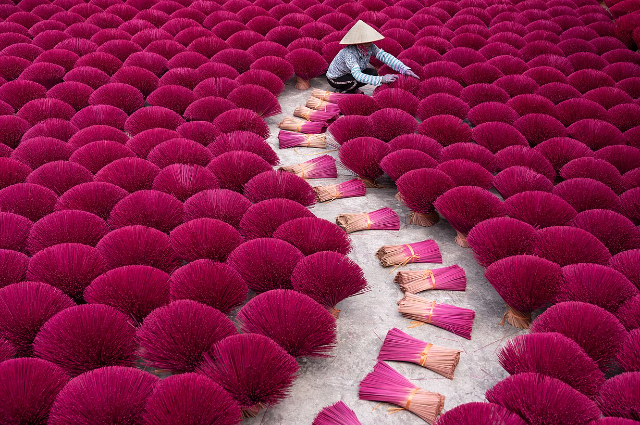
With a heavy scent of incense hanging over the village, it is not only the air that sprinkles the joy of beauty on visitors and residents, but the stunning landscape decorated with all the colours imaginable, a land of gorgeous incense sticks brightening up the view. This is the tale of Quang Phu Cua, a village in Ung Hoa district of Vietnam, which is fondly regarded as the “incense village”.
Located on the outskirts of Hanoi, the incense village is one of the many, many villages in Vietnam involved in the ancient incense-making art form. Most people live in small alleys amongst bamboo barks and, through long lineages of practice, found themselves a livelihood within the constraints of the forested areas.
Local elders proclaim that it’s been more than a century of resident families making incense from scratch, creating the wonderful scented sticks we so warmly light up in our homes and even temples.
January is considered to be the busiest incense-making time of the year. It is when the business and creation are in full bloom. After all, the prestigious and long-awaited Lunar New Year holiday is almost around the corner, the season of tinsel decorations and exchanging wishes as well as presents.
The creation process of these fragrant incense sticks is just as fascinating as the final product. Created out of bamboo that is axed to the ground by a special whittling machine, these sticks are split into thin pieces and dipped into pink dye, giving them the perfectly bright hue that is so well-known.
They are then set out in the sun to dry, lining up roadsides with fantastic magenta colour that never fails to catch one’s eye. To incorporate aroma into these sticks, a paste made from sticky bark powder of the local duoc tree and a herbal mixture is used.
This handmade paste is then rolled around the pink sticks, either by the use of hand or through machinery. These sticks are then once again returned to the outdoors, where they laze and dry in the heat of the sun and take the form of incense sticks as we know them.
A cultural art form that is practised only within a specific region of the world and not perfected anywhere else gains popularity because what can’t be replicated is the most prized of all. The art of incense making, as it is practised in Vietnam’s incense village, is not only impeccable but also unmatched. The precision and perfection with which local families here perform this art is a truly special skill that is acquired through years of diligent learning. That is exactly why foreign exports of incense from Quang Phu Cua have risen dramatically over the past few years.
Dang Thi Hoa is a Vietnamese local who lives with her family and is involved in the incense-making business. Three generations of her family have been practising this art form, and it lives on in the present day and age.
In the age of social media, what were traditionally the same bright colours that incense sticks here were dipped into, to create a more appealing frame to be shot, hues of red, yellow, blue and green paint even more beautiful imageries.
The eye-catching visuals that these mystifying incense sticks lay out to be captured attract tourists like pollen to honeybees. Huge stocks of colourful incense are spread out in front of temples, and people line up in queues to take whiffs and snapshots of these world-famous commodities and perhaps take a few back home with them.
Because the scenery is extremely “Instagram-worthy”, camera shutters and flashes sound throughout the village, a melodious buzzing of the beauty of the incense finally gaining the popularity and recognition that was long overdue. It would most definitely raise the question of whether the local artists feel offended or saddened by the interest that visitors take in just capturing the perfect photograph instead of appreciating the hard work and efforts they put into perfecting every single stick.
The process of crafting incense is certainly tedious, and therefore, it makes the locals all the more proud of how they’ve managed to capture the magic of beauty and fragrance into an aromatic stick. But they do not feel disappointed in how their artwork only became a more famous affair after social media decided that it was cool enough to click and post photos of.
The locals feel grateful and blessed that people from all over the world come over to witness and celebrate the wonder of their creations. The limelight is a bonus, but it is pride and increased earnings that act as gold for all the progress they’ve worked for over the years.
So, the time is almost near; the incense village is beginning to celebrate, the roads will be majestically coloured, and the air will smell like arrival in heaven.
. . .
References: