
A drought that ruined the village. A lingering case of disparity brought upon with such force that it seemed improbable to ever escape from the situation, let alone reach a prospering state. Poverty and perish seemed to be the forever condition of Hiware Bazar. However, could the village change its fate and turn the tables on itself?
Hiware Bazar is situated in the Ahmednagar district in Maharashtra. Labelled as India’s modern village, it has the highest GDP in the entire country. The environmentally stable and energetic community that exists in this village is a complete one-hundred-eighty degree turnover from its earlier conditions. It wasn’t any boon from the Gods or a miraculous saviour who came to rescue Hiware Bazar from the path of deterioration. Collective efforts made by communities in the village and most importantly, the conscious steps taken by their Panchayat, led to life out there turning out beautifully.
The year was 1972. There was dryness all around. Wells had dried up, and hand pumps spat remnants of dirty underground water. The rainfall levels received were already scanty enough, and with the insufficient income the village generated, import of water resources was also an unrealistic solution.
People in the village lacked the willpower to exist in such conditions where the land was not cultivable, and rainwater only managed to fill up wells in the high season. It was tough not to feel demotivated and under the weather with an unfairly unusable pack of cards at hand. Decked in distress and to cope with the dread of daily happenings, the unemployed workers took to alcoholism. They began engaging in the business of making, selling, and supplying country liquor to earn a living.
This turned into an issue because of the widespread nature of this new venture. It wasn’t something that the locals were proud of because selling alcohol wasn’t merely a cheap way of making money, but the rise in its availability resulted in problems within households and village streets. Because of no proper governance at the time, nobody attended to the issue, and the village became popular due to its liquor business.
The village’s condition was close to hopeless, and it seemed as if there was no saving hat could take it back to the way it was before the drought hit and ruined what little it had left. Then came Popatrao Pawar. Pawar had a career in cricket for himself. A postgraduate who was living a life in Pune, on hearing the news of the tragedy struck in Hiware Bazar, he couldn’t help himself. Pawar returned to the village in 1989, determined to make a change and give his best to make the village a place of lingering prosperity.
On becoming the sarpanch of Hiware Bazar, Popatrao gathered the community and promised them to bring about a transformation so positive that the state of the village would become a thousand times better, and he only asked them for one thing in return: their support. He was aware that, however honest or hardworking a leader might be, without the support of his community’s people, it is impossible to bring about change.
The first and foremost step was to encourage the youth to give up their drinking and liquor businesses. The fire within them that was required to make changes involved rekindling in the youth as well as the elders the worth of clean drinking and irrigation water, employment, education, and health. Repairs to previously neglected percolation tanks were made, voluntary labourers built contour trenches on forest land, and wells were recharged.
These, amongst many other measures, were taken to take care of the water situation in Hiware Bazar. To rebuild a safe community, water was the first step. Now that survival was ensured, progress had to be taken care of. Jobs, educational institutions, and land rehabilitation were the next priorities. Step-by-step, the people of Hiware Bazar rebuilt their sad, old village into something they loved.
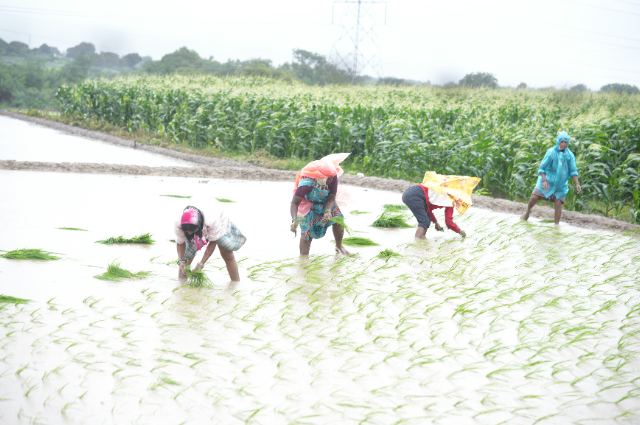
Today, the average income of citizens has increased from Rs 832 to 24000 in the past 15 years. The economic growth alone represents how vivid a transformation Hiware Bazar went through. 54 residents of the village hold the title of millionaires. The number of wells has increased from 97 to 217, and the land area has exponentially increased for irrigation three times. Agriculture has drastically gained a spot on the job list. Even cattle farming and milk-producing businesses have prospered significantly.
The village proudly shares that what used to be a big number years ago is zero today when it comes to counting the number of families below the poverty line. Due to a significant increase in the quality of here, what used to be small huts are now bungalows. Reverse migration is trending in Hiware Bazar, and it is all because what was needed was taken care of.
Hiware Bazar was exceptional in its becoming because the entire community became involved in the development process without blaming one another and taking the matter into their own hands. The true solution was paving the way with a shovel for everyone’s creations.
References