
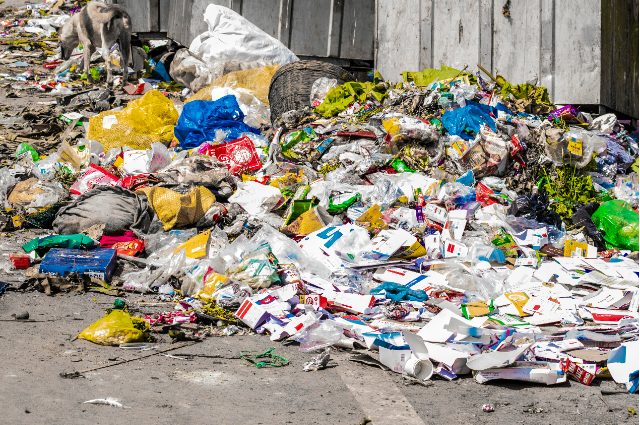
The seas are drowning in multi-coloured blobs of shiny plastic. The air is filled with the noise of unrecycled bits. The streets are stormed with the wild message of used bottles and boxes. This plastic won't resurrect. It will die a factory death, useless and disposed of in its last days.
They've got their hands full with corruption— the traditional malnutrition, poverty, and endless religious banters. There is no time to worry about the environment, the world that keeps us alive. It won't even occur as an afterthought, but rather as a problem that doesn't seem major enough to address.
A fighter plane zooms over the quiet town. A few missiles fall to the ground. Humongous blasts wreak havoc and destruction. The city is under attack, and the killings are quick. No time before humans vanish out of existence.
There are many different ways to end lives. Some are quick and painless to experience. Others are slow poisons harming them from within while they unknowingly go ahead with their livelihoods, unaware of what's soon coming for them.
Plastic waste is one of those killers that tears people away from any chance of salvation. The giant moulds of plastic existing within society, or the microplastics that every packaged product we touch is composed of, are the most lethal of them all.
The high cost of living consists of maintaining health and ensuring that suffering doesn't linger in our paths. If you can't access the necessities that prevent premature death, perhaps it is your nation that doesn't provide you with enough commodities.
The question of the ticking bomb that plastic is not permitted for recycling arises. Plastic isn't a biodegradable material; it doesn't rot and take the form of the earth when time runs its course. It stays, harming life in every way it can, from the plant kingdom to the animal sanctuaries. While we consciously remove these unwanted particles from our lifestyles, creatures do not have such a privilege. Whom do we raise such a petition? Whom do we ask for the answers to our worries?
High-income countries such as Germany and Japan export their plastic waste overseas to avoid the hassle of recycling. In this manner, they create space to import new products to facilitate more profitable dealings. They offload their burdens onto developing nations like Vietnam, Malaysia, and Turkey for short-term solutions that reportedly reduce their own carbon prints but have a long-term impact on the environment that is difficult to solve.
A study was conducted in 2019 by NGO Pandit Deendayal Upadhyay Smriti Manch (PDUSM) that stated that over 1.2 million metric tons of plastic were secretly being imported into India from over 25 countries, with 55,000 metric tonnes coming from only Pakistan and Bangladesh combined. It was a cheaper solution to import flakes and lumps of PET bottles from other nations than to recycle locally produced waste, another hit at ethical recycling methods for the purpose of saving money.
To provide a solution for these raised concerns, the Indian Government announced a complete and total ban on the import of plastic waste in 2019. However, this eco-conscious imposition didn’t prove to be as fruitful as expected, as recent studies have shown that India still belongs in the list of the top twelve countries responsible for 60 per cent of the world’s mismanaged plastic waste.
A sickening time lapse proves that these unstable methods change the way that this plastic waste can be recycled itself in the hands of the ones who use it, and ship them over to infrastructures that most probably aren't advanced enough. It creates a corrupt cycle of unused plastic roaming from land to land, never earning the chance to live in a new form.
In search of cost-effectiveness and cheaper solutions that further show off a country all over the globe as an "eco-conscious" one, the trouble that our planet faces a whole is disregarded with brutality. The colonial rule lives on in this manner as well; the higher nations dominate the ones in the process of turning into one, beginning a chain of waste dumping.
Soldiers protect their borders from the most obvious harm: war. To show enemies what they're made of and give them a taste of dominance they withhold, they bear weapons of all kinds, ready to shoot and shield. But the silence of the government on what dangers are marching on their way to them is a matter of curiosity. For cleaner air and oceans, they are sent quiet missiles to foreign lands, deadly wastes that feed on their prosperity. It is seldom that they'll inform the general public of the dangers they bring. Does this raise another controversial question— is democracy a mere matter of show-and-tell?
There might be meaner ways to destroy a country, to degrade it further and further into submission. There might be more cruel ways that bring instability to their streets. But when it is a solvent that tampers with their water, air, and land, it is an invisible war.
Dipping feet in cruel intentions is an everyday job for any nation's rulers. It isn't a hypothesis, but more of a statement, seeing the glory of colonialism, they wish to reclaim by showing the "lower" nations what false freedom looks like. They proclaim their failure when they do not turn their garbage into gold, they announce superiority by remaining apathetic about human lives they do not govern. So, the conclusion is somehow more of a query— are we or are we not inhaling the fumes of something we can benefit from?
References:-
- https://interplasinsights.com
- https://indianexpress.com
- https://timesofindia.indiatimes.com
- https://indianexpress.com