
Beed district, a place in Maharashtra where women do not have wombs. It is a strange title that has been allotted to this village, because where exactly did their wombs go? Were these women born without reproductive organs? Did their wombs vanish overnight? Was it an unfortunate curse at the hands of an angry or perhaps mischievous god?
The truth is more daunting than one would predict. All these women have willingly undergone womb-removal surgeries. Hysterectomies, as they are called, are a procedural surgical method by which women’s reproductive systems do not function as before. They do not undergo menstruation and cannot give birth anymore. Now the question arises: why are hysterectomies so common in the Beed district?
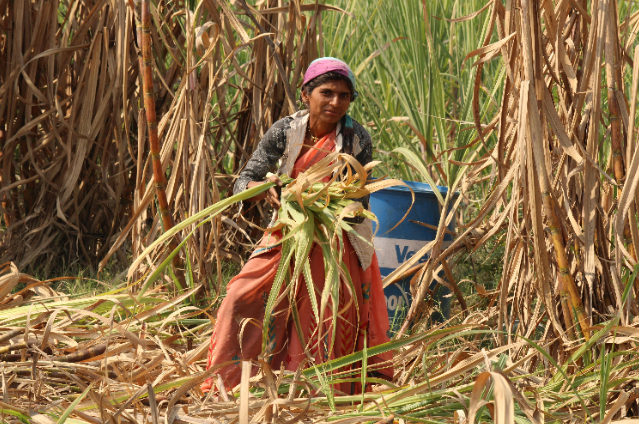
Most villages in Beed are drought-prone. The main source of income here is sugar cane cutting. Men and women alike are involved in this laborious task that feeds their households. Generally, no typical issues arise while hiring men for these jobs. An average man can easily be chosen for cane cutting without raising any questions. The same cannot be said for women.
While hiring people to cut sugar canes, menstruating women are generally not preferred. It causes them to be unfit for being able to work efficiently and can even lead them to taking leaves. A menstruating woman is simply not considered the best choice because her periods are seen as an ailment or weakness.
More than 4,500 women in Beed’s villages have opted for a hysterectomy because of their need to work. Because employers sideline them as potential workers, women chose to remove their wombs from their bodies, the root source of all their predicaments, to be able to find work easily without getting rejected.
An extremely heartbreaking reason believed to be the reason for the nature of how common this kind of surgery has become amongst women over the years is the profit that doctors earn from it. Since these people are typically less educated, doctors take advantage of their situations and lead them to believe that hysterectomies are life-saving and necessary so that they can earn from these innocent people. And because believing in a doctor’s word ought to be smarter than risking their lives, they choose to go through with these surgical procedures that might not even give them the promise of a better life, as they are fooled into thinking they do.
Plastered in the name of necessity and a better option as compared to taking medicines for period pain, surgery is chosen. Women believe that their uteruses are useless after they have undergone childbirth, and because of this belief, barring them from realizing that it is just an organ of their body, residing within it just like any other, they take unnecessary chances with their fragile body frames.
Farmers in Beed are usually employed by contractors as a unit of couples. These contractors see those who have a “pishvi, a word used by locals for a uterus, as less employable. These couples are required to make an advance payment itself before the labour work begins, and the workers are supposed to show up every day to earn back this payment. This laborious work is hindered by women’s periods, and they find it convenient and a more reliable option to get a hysterectomy to protect their jobs and ensure security.
A tragic conception of how human rights are being violated in cases where contractors or healthcare specialists are forcing unknowing women to undergo unnecessary surgical procedures. However, raising disputes or building formal matters against the accused can be difficult since these workers are employed in a very scattered job sector, and most of the time voluntarily undergo surgeries without consulting doctors.
Most of the women in the Beed district refer to periods as “female problems. The reason for this is partly the huge burden that they consider this normal bodily function to be, both on their capability to earn a livelihood as well as their status in patriarchal society, and the way they are treated when they undergo the bleeding phase of their menstrual cycles.
The taboo that revolves around periods in rural India is shocking. Bleeding women are not allowed to enter temples, kitchens, or even their own houses. They are banished to spend their time in specially constructed menstruation huts, as if they are impure or untouchable. These women are led to believe that experiencing periods is the root cause of all problems, but what they are taught is that if taken proper care of, their bodies are vessels of great life and flourish.
These women ought to be taught that it is a natural process that their bodies are going through, not some ailment, and certainly not a taboo that should allow for them to be treated like an unlikable creature. Proper education about women’s bodies can truly save lives.
References:-