
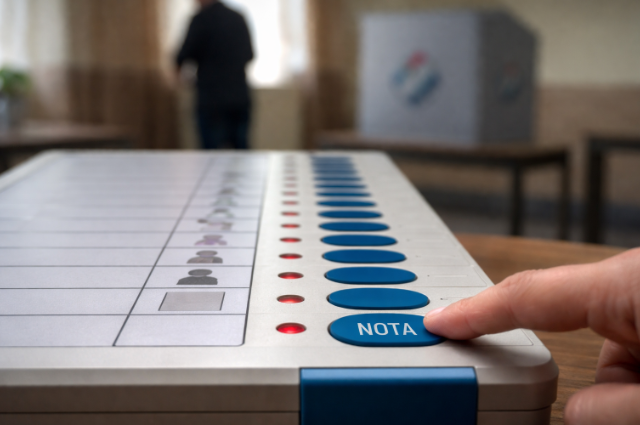
Voting is one of the most potent weapons of a democratic nation around the world, and this is because it is more than a preference for a particular policy; rather, it is an expression of our values that we would like to find in our leaders. Unfortunately, with every election around the world, Common voters are left with a dilemma, which is between a candidate whose integrity is in question or a candidate with an array of charges. This is where NOTA comes into play. This is where the NOTA (None of the Above) option becomes a meaningful form of protest.
What is NOTA?
NOTA, or None of the Above, is an option on the ballot where voters refuse to support any of the nominated contestants in case they don't feel any of them deserve their vote. It is practically an indication of discontent with all the choices available. NOTA does not vote in any candidate but expresses outright dissatisfaction with all choices. NOTA, in essence, is demarcating discontent on the ballot.
Why Background Checks Matter:
When we submit our vote, we demand certain qualities of character and integrity, and a respect for the rule of law, in the persons we choose to lead us. Background checks will enable a determination to be made about a candidate’s: Criminal history, Ethical conduct, Past controversies and Conflicts of interest. In many countries, including India, information about criminal charges against candidates is publicly available through election affidavits. Yet, many voters remain unaware or unsure how to respond when their choice includes someone with serious allegations.
Criminal Records and Political Legitimacy:
An accused candidate, especially for charges of corruption, violence, and abuse of authority, presents the following crucial questions:
- Integrity of Public Office: A defendant facing allegations of misconduct may be judged to lack the integrity to duly and properly advance the public interest.
- Trust in Democratic Institutions: When leaders emerge after extensive legal battles, it may lead to distrust in the institutions.
- Symbolic Accountability: Voting for a candidate with a tainted record communicates a message that such acts areacceptable/irrelevant.
In short, criminal charges don’t merely impact individual election nominees, they fundamentally change the fabric of democracy itself. - Encourages Accountability: When many people opt for NOTA, political parties are encouraged to choose cleaner candidates instead of having candidates with a
Why Voters Choose NOTA:
Pressing NOTA is not an act of apathy; rather, it is an informed and deliberate action. The reason why voters start choosing NOTA when candidates have criminal records is because of:
- It’s a Clear Signal of Protest: NOTA is a vote that lets citizens express their dissatisfaction without having to vote for any of the candidates that are listed. It's a vote that says "we want better options."
- It Drives Accountability: When many people opt for NOTA, political parties are encouraged to choose cleaner candidates instead of having candidates with repeat offenders.
- It Upsets the Status Quo: Too often, candidates with criminal cases continue to contest and win due to vote-bank politics or lack of alternatives. NOTA disrupts the traditional electoral process, as it gives voters a way to reject their options without taking sides.
- It Empowers Future Change: The increased use of NOTA has potential to stimulate public conversations, increase media scrutiny, inspire judicial and/or electoral reforms.
What Critics Say:
There are several arguments against NOTA. One argument is that it makes no difference in the final results; the candidate with the highest number of votes is still the winner, regardless of how many people vote for NOTA. Another argument is that people will not show up to vote because they think that voting for NOTA is a waste of time and, therefore, does not help their cause. While these arguments may appear valid on the surface, they do not take into account that NOTA has significant symbolic value. In addition to the fact that it does not represent an instant replacement for a political candidate, NOTA: records dissatisfaction among the electorate and expresses the interests of the politically active voter, and exerts pressure on the political establishment to reform.
The Real Hope: Better Choices, Not Apathy
Real hope comes from having better options for all voters instead of apathy. Instead of just rejecting the candidates they dislike, voters should be seeking out, expecting, and voting for better candidates. Increasing the use of NOTA should coincide with increasing civic education; urging the political parties to refuse to accept candidates who have serious charges against them; supporting candidates who are honest, transparent, and free of corruption; and engaging in civic discussion with other voters. When voters become well-informed and actively participate, political parties will need to respond to them.
Representative Scenario
- Realistic Incident: “The Background-Check Protest – Why We Press NOTA When the Candidates Have Criminal Records”
- Location: Kanpur, Uttar Pradesh, India
- Election: Local Municipal Corporation Elections
- Date: Late 2024
Background:
The upcoming municipal elections prompted worry from local civic organisations in the city of Kanpur about the number of candidates who had been charged with serious crimes such as extortion and intimidating voters, as well as assault charges. The news of these candidates had been extensively documented in local newspapers and other media outlets. Many voters expressed their concern that having to vote for a candidate who had pending criminal cases could lead to more corruption and a decline in public trust in elected leaders.
The Incident:
On Election Day, a group of young voters from the Govind Nagar Ward, including students, teachers, and civil service employees, gathered outside the Saraswati Vidya Mandir School, where they would be voting. They held placards reading: “Clean Politics, Clean Future”, “NOTA: Our Protest Vote”, “Say No to Criminal Candidates”.
Instead of campaigning for any candidate, they distributed pamphlets explaining: What NOTA means, How to vote NOTA, Why NOTA can be a civic protest. The group didn’t block voters — instead, they encouraged people to cast ballots and only consider NOTA if the strongest candidates carried serious charges.
Why Voters Chose NOTA:
In follow-up conversations with voters outside the booth:
- Ayush (24, IT professional): “I wasn’t against voting in general, but I couldn’t bring myself to vote for someone with serious charges against them. NOTA was the only way to show that.”
- Meera (38, school teacher): “I’ve seen councillors here use muscle power rather than ideas. We wanted to send a message that we want leaders with integrity.”
- Ramesh (52, shopkeeper): “I’ve voted for parties before, but this time I checked the affidavits. When the top candidates had pending cases of intimidation — why should I help them win?”
Aftermath:
The high NOTA count triggered these outcomes: Local discussions in newspapers and TV about criminalization of politics. Political pressure on parties to reconsider nominations in future elections. A few candidates publicly defended their records, while others pledged to clear charges and focus on development issues. However, because Indian election law does not invalidate an election just because NOTA got many votes, the highest-voted candidate still won.
What This Incident Shows:
- NOTA as protest: Voters can use NOTA to signal dissatisfaction with candidate quality.
- Greater awareness: Background checks and public discussion can influence voting behaviour.
- Limits of NOTA: It doesn’t automatically force a rerun or disqualify candidates — but it can send a message.
- Civic engagement: Young and first-time voters played a key role.
Choosing NOTA is more than a vote against — it’s a vote for integrity. It’s a reminder that: “We value clean leadership, accountability, and ethical governance.” In a time when trust in institutions is fragile, pressing NOTA is not an act of despair — it’s an act of empowerment.
. . .
References: