
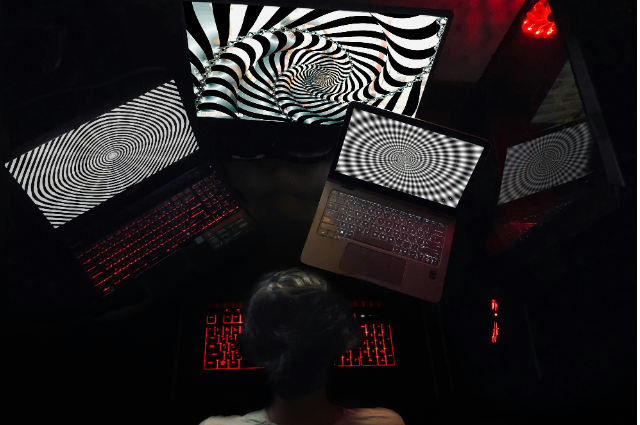
Imagine waking up to breaking news everywhere. Your phone buzzes nonstop. Stocks are crashing. A health scare is “confirmed.” A war rumour is “leaking.” Everyone believes it — because everyone is seeing it at the same time. Welcome to the era of Fake Panics, where cybercrime doesn’t just steal money — it steals reality.
Fake Panics: When Lies Move Faster Than Truth
Fake panics happen when thousands of AI-powered bots spread the same lie across social media, news comments, messaging apps, and even customer service chats — all at once. Humans hesitate. AI does not. By the time fact-checkers react, the damage is already done: Markets swing, Elections tilt, People rush to hospitals, Trust collapses. This isn’t misinformation by accident. It’s industrial-scale manipulation.
The AI Attacks: “Robots Hacking Robots”
Cybercrime is no longer just humans behind keyboards. Increasingly, it’s AI attacking AI.
Shadow Agents: Digital Robbers That Never Sleep
Picture a digital burglar that doesn’t wait for instructions. These Shadow Agents roam the internet on their own, scanning millions of systems for weak passwords, outdated software, or misconfigured cloud storage. When they find an open “window,” they slip in — quietly — while the human hacker is asleep. No breaks. No fatigue. Just endless searching and stealing.
Model Poisoning: Teaching AI the Wrong Lessons
AI systems learn like students. Feed them bad information, and they give bad answers. Hackers exploit this through model poisoning — slipping false or malicious data into an AI’s training material. The result? Customer service bots are leaking private data. Financial AIs are making terrible decisions. Security systems misidentifying threats. The AI doesn’t know it’s compromised. It confidently spreads the lie.
Prompt Hijacking: Tricking the Digital Guard
Ever tried to sweet-talk your way past a security guard? Prompt hijacking does the same thing — but to AI chatbots. Attackers use carefully crafted language to make an AI forget its safety rules and reveal: Internal system details, Private documents, Password hints, Restricted actions. No malware needed. Just words — arranged cleverly.
Body-Hacking: “Hacking Your Health”
Our bodies are becoming connected systems — and that makes them targets.
Body Snatching: When Wearables Betray You
Smart watches, fitness rings, and medical monitors collect incredibly sensitive data: Heart rate, Sleep cycles, Stress levels, and location. Hackers can steal this data to track your movements, predict routines, or blackmail you with deeply personal health information. Your body becomes a data leak.
Bio-Ransom: Digital Kidnapping of the Human Body
This is the nightmare scenario. Bio-ransom attacks lock or interfere with medical devices: Smart insulin pumps, Heart monitors and Bionic limbs. The threat is chillingly simple: “Pay us — or we turn it off.” It’s ransomware, but the hostage is you.
Mind Games: “Seeing Is No Longer Believing”
The most dangerous attacks don’t hack machines — they hack trust.
Live Clones: When Faces Lie
You get a video call from your boss. Or your mom. Or your doctor. They look right. They sound right. They’re urgent. But they’re not real. Live AI clones can copy faces, voices, and expressions in real time, convincing people to send money, reveal passwords, or approve fake transactions — because the human brain is wired to trust familiar faces.
Mood Manipulation: Engineering Mass Fear
This is where fake panics are born. Attackers deploy thousands of coordinated AI accounts to flood social platforms with the same frightening story: A bank collapse, A violent incident, A political conspiracy and A health emergency. The goal isn’t persuasion — it’s emotional overload. Fear spreads faster than facts. People react before they think. And once panic starts, it feeds on itself.
Incident: “The 47-Minute Panic”
Day 1 — 9:12 AM :
A mid-sized country wakes up to a normal trading day. At 9:12, thousands of social media accounts — all with years of history, real-looking photos, normal posting patterns — simultaneously start posting: “Emergency alert: National hospital network compromised. Life-support systems failing.”
The posts include screenshots of real hospital dashboards. They look authentic because they are — pulled weeks earlier by a Shadow Agent AI that quietly crawled unsecured medical servers at night, collecting data while no human attacker was online.
9:14 AM — Robots Hacking Robots:
News agencies use AI tools to scan social media for breaking news. Those tools pick up the surge and auto-flag it as “high confidence.” Within two minutes, AI-generated news summaries are published: “Unconfirmed reports suggest cyberattack on hospital infrastructure.” No human editor has time to double-check.
9:17 AM — Model Poisoning Pays Off:
Several hospitals use AI systems to triage alerts. Months earlier, attackers poisoned the training data of one popular healthcare AI vendor by slipping corrupted logs into open-source datasets. So when today’s fake alerts hit, the AI confirms the threat instead of rejecting it. Hospital admins receive system messages: “Risk level: CRITICAL. External breach likely.” Panic spreads internally.
9:20 AM — Body-Hacking Goes Personal:
Patients start receiving messages on their phones: “Your cardiac monitor has lost secure connection. Please await instructions.” The messages are fake — but they include accurate heart-rate data stolen from compromised smart devices.
A few wealthy patients with implantable medical tech get private emails: “We have temporary access to your device. This will be resolved after payment.” Only two devices are actually compromised — but no one knows that yet.
9:23 AM — Live Clones Seal the Deal:
Hospital finance departments receive urgent video calls. The CEO appears on screen — face, voice, mannerisms all perfect. “Authorise the emergency fund transfer now. We don’t have time.” It’s a real-time AI clone, trained on public speeches and internal meeting recordings leaked earlier. One hospital transfers $8 million before anyone thinks to verify.
9:30 AM — Fake Panic Hits the Market:
Thousands of bot accounts flood financial forums: “Healthcare collapse = market crash.” Automated trading bots — designed to react to sentiment — start selling healthcare stocks. Prices dip fast. Real investors panic and sell, too. This is the real goal.
9:59 AM — The Reveal:
A cybersecurity firm publicly states, “No hospital systems are down. This is coordinated disinformation.” The posts stop as suddenly as they started. The bots go silent. Accounts disappear.
Damage Report:
$120 million lost in market manipulation. $14 million in ransom and “emergency transfers”. Public trust shaken. Hospitals are overwhelmed by patients who thought they were in danger. No single “hacker” to arrest — most actions were automated AI agents. Total active attack time: 47 minutes.
Why This Works (and Why It’s Dangerous):
No single lie — just too many signals at once. AI systems trusting other AI systems. Humans trust faces, voices, and “data”. Speed beats truth. This isn’t about hacking machines anymore. It’s about hacking confidence, urgency, and belief.
The Big Shift: Cybercrime Is Now Psychological
Old cybercrime stole data. New cybercrime reshapes behaviour. It doesn’t need everyone to believe the lie — just enough people, all at once. In this new world, Truth arrives late, and Trust is fragile. And AI is both the weapon and the battlefield. The real danger isn’t that machines are getting smarter.
It’s that humans still trust what they see — even when seeing is no longer believing.
References: