
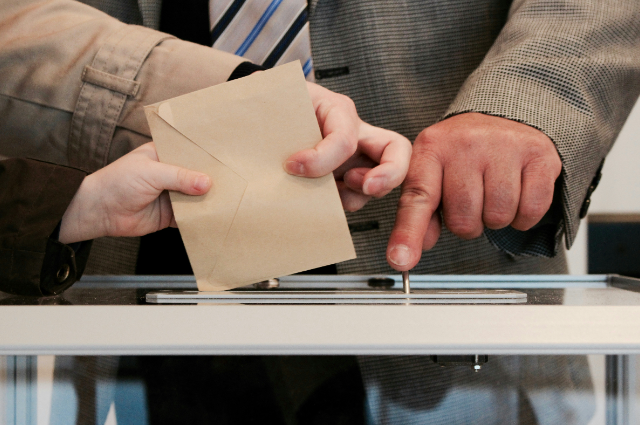
In every election cycle, a familiar frustration resurfaces: “None of these candidates represents me.” To address this sentiment, India introduced the None of the Above (NOTA) option in 2013, following a landmark judgment by the Supreme Court of India. The idea sounded revolutionary — a way for voters to reject all candidates while still participating in the democratic process. More than a decade later, the question remains: Is NOTA a real instrument of change — or merely a democratic pressure-release valve?
The Birth of NOTA: A Symbol of Protest
The option of NOTA was included after a petition filed by the People’s Union for Civil Liberties (PUCL) that secrecy in voting should be applicable to people who wish to reject all candidates. In 2013, the Supreme Court of India decided in favour of the inclusion of NOTA in Electronic Voting Machines.
The Court reasoned that it protects voter anonymity. It gives voice to political dissatisfaction. It could pressure political parties to field better candidates. On paper, it appeared to deepen democracy. In practice, however, its power is largely symbolic.
The Hard Truth: NOTA Has No Electoral Consequence
Here lies the central flaw. In Indian elections, even if NOTA receives the highest number of votes in a constituency, the candidate with the next highest vote count still wins. NOTA does NOT trigger a re-election, disqualifies candidates, "punishes" political parties, or compels the nomination of new candidates. It simply registers dissatisfaction (and nothing else). So its power as an instrument for change is diminished compared to potentially being used as a safety valve — a way for too much built-up frustration to release from the system and not put the system in jeopardy.
Psychological Relief, Political Stability:
NOTA serves an important psychological function. It reassures voters that they can participate without endorsing any candidate. This reduces voter abstention and strengthens turnout statistics. From the system’s perspective, this is ideal: Voters feel heard. Elections proceed uninterrupted. Political structures remain intact.
But does it alter political incentives? Rarely. In several state elections across India, NOTA has polled more votes than the victory margin between candidates — yet results remained unchanged. Political parties seldom re-evaluate candidate selection solely because of high NOTA percentages.
The Illusion of Accountability:
Democracy thrives on accountability. Tools that genuinely shift power — like recall elections (in some countries), primary challenges, or binding referendums — carry consequences. NOTA does not. It signals dissatisfaction but imposes no cost. Without consequences, political actors lack an incentive to respond. In this sense, NOTA resembles a public complaint box that no one is required to open.
Comparative Perspective:
In countries like the United States, some states, such as Nevada, include a "None of These Candidates" option. However, just like in India, this does not negate the results. In contrast, in some jurisdictions around the world, elections can be deemed void if certain minimum requirements are not met or if protest votes prevail. This is an issue of consequence. India’s version of NOTA was conservatively created.
The Democratic Paradox:
There’s a paradox at play: NOTA expands expressive freedom. Yet it restricts institutional impact. It strengthens democratic appearance without redistributing democratic power. For reform advocates, the core demand remains: Should NOTA become binding if it crosses a certain threshold? Proposals have included: Mandatory re-elections if NOTA tops the poll. Temporary disqualification of contesting candidates. Financial penalties for parties fielding rejected candidates. So far, none have been adopted.
Why It Was Designed This Way:
A binding NOTA could create logistical and political complications: Endless re-elections in polarised constituencies. Strategic use of NOTA to sabotage elections. Increased costs and administrative burdens. In a country as large and complex as India, electoral stability is a paramount concern. The decision was clear: symbolic empowerment vs. structural disruption.
Case Study:
- Incident: The 2018 Madhya Pradesh Assembly Election (NOTA Impact): During the 2018 Madhya Pradesh Legislative Assembly Election, some constituencies saw an unexpectedly high number of votes for NOTA. One of the constituencies was Jhabua, in which the number of NOTA votes was greater than the winning margin between the two runners-up.
- What Happened?: Major parties fielded candidates with controversial backgrounds. Local dissatisfaction was rising over corruption allegations and the lack of development. Civil society groups encouraged voters to use NOTA as a protest vote. Thousands chose NOTA instead of selecting a candidate.
- The Result: Even though NOTA received a significant number of votes, it had no legal impact on the outcome. Nonetheless, the candidate with the most votes won — even when the idea behind the protest was not included.
Why This Reflects “Safety Valve, Not Power Tool”:
- Emotional Release, No Structural Change: The introduction of NOTA provided a way for voters to express their displeasure while being able to vote and not boycott the election or have any real effect on future elections. Some people think it might cause the government to call for a re-election if NOTA were used as a reason for a lack of votes. Others believe that it does not: Disqualify candidates, Force parties to select better candidates.
- No Legal Consequence: Currently, there are no legal consequences. Since the Election Commission of India states that there is no change to the results if NOTA received the most votes, the second-place winner is not declared OVER (e.g., very few votes) or has the election automatically end. Therefore, the winning candidate will still take office.
- Political Strategy Absorption: Political parties have generally viewed large numbers of NOTA votes as symbolic opposition (opposition without needing to reform).
The Core Democratic Tension:
The introduction of NOTA was mandated by the Supreme Court in 2013 after the UNION achieved a directive in favour of ballot secrecy, but citizens cannot veto candidates. Thus, while voters are able to be heard and the government is required to have a voice as well, the current status quo has not changed. NOTA is used more as a pressure valve to express outrage toward the current government rather than as a means to achieve and make an impact on democratic change.
Safety Valve, Not Power Tool
NOTA is not meaningless. It records dissent. It protects secrecy. It affirms participation without endorsement. But it does not transfer power. It cools democratic pressure without reshaping democratic outcomes. Until NOTA carries enforceable consequences, it will remain what it was engineered to be — not a lever of transformation, but a carefully designed release mechanism within the electoral system. The real reform question is no longer whether NOTA exists. It is whether democracy is willing to let it matter.
. . .
References: