
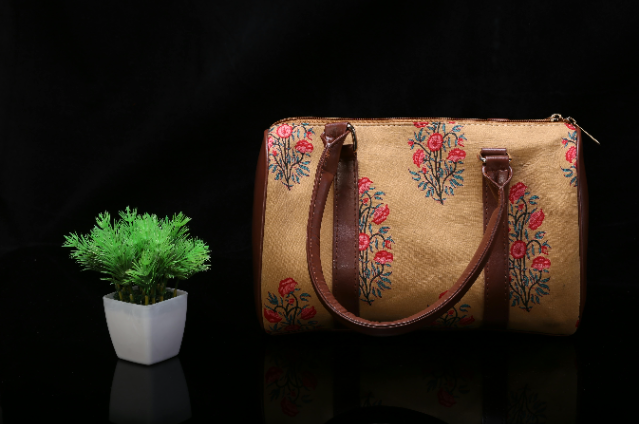
What if I told you your morning banana could one day become a luxury handbag? It sounds impossible—but it’s already happening. Around the world, young innovators are proving that waste isn’t useless. Sometimes, it’s just misunderstood.
The Hidden “Waste” Problem:
Imagine a banana farm after harvest season. The bananas are packed and shipped—but the rest of the plant is left behind. Here’s the shocking truth: A banana plant fruits only once. After harvesting, the thick stem is usually burned or left to rot.
The facts are eye-opening: For every 1 kg of bananas we eat, 10 kg of plant waste is produced. When this waste decomposes, it releases methane, a greenhouse gas far more harmful to the climate than carbon dioxide. What looks like harmless farm trash is actually a major environmental problem. But one person looked at it differently.
The “Magic” Process Behind Banana Leather:
Young innovator Jinali Mody saw potential where others saw waste. She discovered that banana stems are packed with strong natural fibers—perfect for making durable materials.
Here’s how banana waste becomes leather-like fabric: Extract: Long, tough fibers are pulled from discarded banana stems. Clean & Bind: The fibers are cleaned and combined with natural binders like tree gums and starch—no toxic chemicals, unlike traditional leather. Finish: The material is pressed into sheets and coated with natural colors. The final result looks, feels, and even smells like premium leather. No animals. No plastic. No harmful waste.
Why This Is a True “Win-Win-Win”:
This innovation doesn’t just solve one problem—it solves three.
- For the Planet: Uses 95% less water than animal leather. Produces zero toxic waste. Reduces methane emissions from rotting farm waste.
- For Farmers: Banana stems are no longer trash. Farmers sell them for extra income. Average income increases by about 30%.
- For Fashion: Cruelty-free full stop, Not plastic (unlike most of "vegan leather"), Sustainable without a sacrifice in style or quality.
Key Comparison (2025 Data):
- Material: Uses Animal hides for animal leather. Uses upcycled banana stems for banana leather.
- Chemicals: Uses Toxic (lead, chromium) for animal leather. Uses Natural (gums, starch) for banana leather.
- Water needed: Uses 10,000+ liters per bag for animal leather. Uses ~500 liters per bag for banana leather.
- Farmer Income: None. Uses +%30 bonus for banana leather.
From Science to Style: Jinali Mody’s Journey
In her video "Leather from Leaves," Jinali Mody explains how a science and sustainability background helped her transform agricultural waste into high-value, eco-friendly leather. Her work through Banofi Leather (India) has received recognition around the world, including being named a UNEP Young Champion of the Earth 2025, along with other innovators transforming waste, water, and ecosystems around the world.
It was Sunday morning, and I was getting ready for school; after having a banana, I reached to throw the peel into the dustbin. Nothing unusual—just breakfast waste. But later that day, while scrolling through a video, I saw something that made me stop. A young innovator, Jinali Mody, was holding a stylish handbag and saying, “This is made from banana waste.” I looked again at the banana peel I had thrown away.
What I didn’t know was that when bananas are harvested, the fruit is the only useful part. Farmed bananas have a large amount of biomass, and much of the biomass has been considered a waste. Farmers typically leave waste on the ground to decompose and/or burn it for disposal. The amount of biomass waste created from one kilogram of banana fruit is approximately 10 kilograms. When banana waste decomposes, it emits methane gas, which is much more harmful to the environment than carbon dioxide.
Jinali Mody thought differently about the banana biomass waste problem; she saw the waste as an opportunity. Jinali discovered that banana stems have strong natural fibers. The fibers are separated and cleaned to be combined with natural materials such as tree gums to create a fabric that looks, feels, and smells similar to leather. Jinali's process does not require the use of toxic chemicals and does not harm animals or the planet.
This innovative and straightforward approach resulted in a tremendous win-win opportunity. By selling the previously useless banana stems, farmers have an additional stream of revenue. The environment is protected by consuming 95 percent less water than the equivalent amount of leather produced from animals and creating no toxic waste. The fashion industry has a cruelty-free and plastic-free leather substitute.
By consuming the banana for breakfast that day, I realized that waste problems could stem from small daily choices, and by rethinking waste, we could find solutions to our biggest environmental issues.
A Bigger Picture
The story of Jinali is an example of how people around the world are utilizing their creativity and innovation to create something good out of the environment around them. To create biodegradable packaging from invasive plant species, change the way we think about waste and resources, and recycle household wastewater so that it can be used for safe drinking water, young changemakers are leading a global movement. When we say that our future is not about creating new materials but about making different decisions with regard to the way we think, we express an important but simple message. So the next time you are peeling your banana, remember that the peel may have value as a designer handbag tomorrow!
References: