
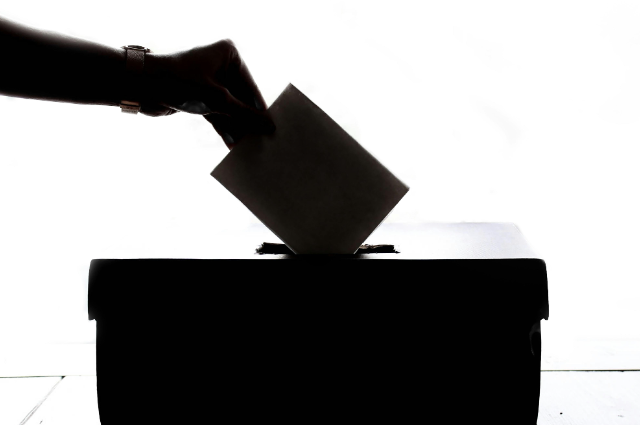
Democracy is supposed to be about choice, voice, and consequence. But sometimes systems evolve that appear democratic without actually giving citizens real power. India’s NOTA (None of the Above) is one such innovation—well-intentioned, symbolically appealing, and ultimately hollow. NOTA is democracy with the sugar removed: “Diet Democracy.” It offers the feeling of participation without the impact of decision-making.
What NOTA Was Meant to Be:
Introduced in 2013 following a Supreme Court directive, NOTA allows voters to formally ---------------reject all candidates on the ballot formally. On paper, this seemed revolutionary: A way to protest corrupt or incompetent candidates. A moral alternative to voter abstention. A signal to political parties to “do better”. NOTA was framed as empowerment. But empowerment without consequences is performance, not power.
The Core Problem: NOTA Changes Nothing
Here’s the uncomfortable truth: Even if NOTA gets the highest number of votes, the candidate with the next highest votes still wins. No re-election. No candidate disqualification. No mandatory reform. In effect, NOTA is a complaint box that is never opened. A vote for NOTA: Does not alter the outcome. Does not punish political parties. Does not reward better behaviour. It is recorded, archived, and ignored.
The Illusion of Choice:
Democracy depends on meaningful alternatives. NOTA offers rejection without replacement. This creates a dangerous illusion: You feel like you resisted, the system continues unchanged, and political parties face zero cost. It’s like being asked to choose a meal, hating all options, and being told: “You may dislike them formally—but you’ll eat one anyway.” That’s not a choice. That’s managed consent.
NOTA vs Real Democratic Accountability:
In functioning democracies, protest mechanisms carry consequences: Recall elections, Re-run polls if rejection is overwhelming, Candidate disqualification thresholds, and strong independent candidacy pathways. India’s NOTA does none of this. Political parties don’t fear NOTA. They don’t reform because of it. They don’t even acknowledge it beyond post-election statistics. A protest vote that doesn’t hurt is not a protest—it’s a release valve.
How NOTA Benefits the Status Quo:
Ironically, NOTA helps the very system it claims to challenge: It absorbs dissent
Angry voters choose NOTA instead of organising, campaigning, or supporting alternatives. It legitimizes flawed elections. High turnout + NOTA = “People participated,” even if they were deeply dissatisfied. It fragments opposition sentiment.
NOTA votes don’t consolidate against bad candidates—they dilute resistance. NOTA doesn’t threaten power. It protects it.
“At Least It’s Better Than Not Voting” — Is It?
This is the most common defence of NOTA. But it misses the point. Not voting is silence. NOTA is symbolic noise. Both result in the same outcome. The difference is psychological comfort. NOTA lets citizens feel morally satisfied while remaining politically ineffective. That’s why it’s dangerous—it replaces action with expression.
What Real Reform Would Look Like:
If NOTA were serious, it would have teeth. For example, if NOTA crosses a certain threshold, elections must be re-held. Candidates rejected by NOTA cannot contest again. Parties must field new candidates. Public funding penalties for repeated NOTA rejections. Without such mechanisms, NOTA is a decorative democracy.
In a small town in Madhya Pradesh during the 2019 Lok Sabha elections, Ramesh, a 28-year-old schoolteacher, stood in line outside the polling booth. He had read the manifestos, followed debates, and even attended a local rally. His problem wasn’t apathy—it was disillusionment. The ruling party candidate was facing allegations of corruption related to a local road project. The main opposition candidate was a political dynast with no history of constituency work. Smaller parties existed, but they were clearly non-viable and barely campaigned.
Ramesh believed voting mattered. But voting for any of these candidates felt like endorsing incompetence or corruption. So he chose NOTA. He pressed the button with a quiet sense of moral satisfaction—“At least I didn’t support the wrong people.” Later that evening, the results came in: The ruling party candidate won by 12,000 votes. NOTA received 1,800 votes—more than the margin by which the third-place candidate lost.
Nothing changed. The corrupt candidate still became an MP. The NOTA count was recorded, analyzed, debated briefly on TV—and then forgotten. No re-election was triggered. No candidate was disqualified. No legal or political consequence followed. Ramesh realised something unsettling: His protest vote had been acknowledged—but completely neutralised.
Why This Feels Like “Diet Democracy”:
This incident reflects a structural reality: NOTA gives expression without impact, Dissent is permitted but defanged, Choice exists, consequence does not.
Like diet soda: It looks like the real thing. It tastes similar. But it doesn’t deliver the substance. NOTA allows voters to feel heard without actually reshaping power.
The Illusion of Choice:
In theory, democracy means: If enough people reject all candidates, the system must respond. In practice, in India: NOTA is non-binding, It does not trigger re-elections, It does not bar rejected candidates, It does not force parties to reform. So voters can say “none of the above”, but the system replies: “Noted. We’ll proceed anyway.”
Why This Incident Matters:
This is not voter laziness or ignorance. It’s engaged citizens boxed into symbolic participation. NOTA becomes: A safety valve for frustration, A moral escape hatch, A statistical footnote. But not a tool of accountability.
Democracy Can’t Be Symbolic Alone
India doesn’t lack democratic rituals—it lacks democratic consequences. NOTA is not empowerment. It is a placebo. It treats voter dissatisfaction without curing political decay. Until rejection carries real cost, NOTA will remain what it is today:
Diet Democracy — zero sugar, zero impact. The real choice India faces isn’t between Candidate A, Candidate B, or NOTA. It’s between performative democracy and accountable democracy.
References:
- https://www.thecheckup.in
- https://www.youthinpolitics.in
- https://moderndiplomacy.eu
- https://swarajyamag.com