
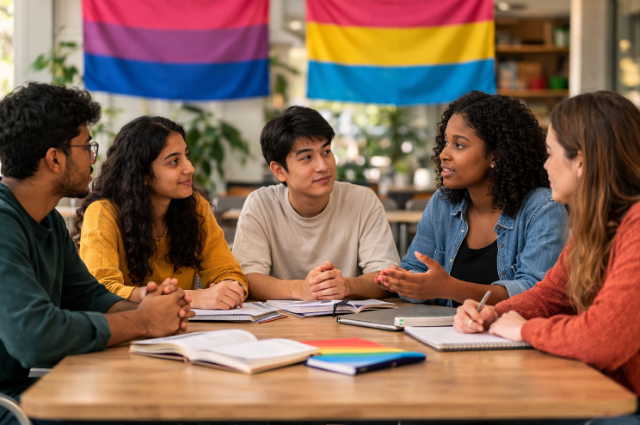
The topic of sexual orientation has become more mainstream in the past few years. However, misconceptions about the topic still exist, even within the LGBTQ+ community. One of the most common misconceptions about sexual orientations is that pansexuality is simply “bisexuality with extra steps.” Although both orientations share many similarities, they are not the same. One must understand the differences between the two orientations and how they define attraction, sexual identity, and gender.
The Myth: Pansexual = Bisexual Plus More:
The first and most common misconception about the sexual orientations of LGBTQ+ individuals is that bisexual individuals are attracted solely to men and women, while pansexual individuals are attracted to everyone, regardless of gender. This misconception has led many people to believe that pansexuality is simply “bisexuality with extra steps.” However, this is simply not true. This misconception has led many LGBTQ+ individuals to experience unnecessary tension within the LGBTQ+ community.
The Fact: Definitions Focus on Different Experiences of Attraction:
Bisexuality is defined as the attraction of one person towards multiple genders. Bisexual individuals have always defined themselves as individuals attracted to more than one gender. Bisexual individuals have defined themselves as individuals attracted to people of the same gender and different genders, or attraction across multiple genders.
Pansexuality, however, is defined as “attraction regardless of gender.” For many pansexual people, the factor of gender is not something that will influence the people they are attracted to. In fact, the attraction that a person feels can be defined as “gender-blind,” which refers to the fact that the factor of gender does not influence the romantic and/or physical attraction that a person feels.
Why Some People Prefer the Label “Pansexual”
Identity labels are personal to the people who identify with them. People identify with the labels that they feel most accurately define their experiences. For instance, a person could identify as pansexual for several reasons: They feel that the factor of gender does not influence the people they are attracted to. They feel that the label clearly expresses the fact that they are attracted to people regardless of the gender that the people identify with. They feel that the label resonates more with them compared to the label bisexual. Some people could identify as bisexual because the label is historical, well-known, and inclusive of different genders. None of these labels is “better,” “progressive,” “correct,” or any other such label.
Historical Context Matters:
However, bisexual activism has been around for quite some time and has always argued against the binary concept of gender. In fact, many bisexual groups and activists have promoted the concept of inclusive definitions long before the term pansexuality gained popularity. Pansexuality has become more popular in the mainstream in the 2000s and 2010s with the rise of awareness of gender diversity. The term provided some people with language that felt clearer or more aligned with their personal experiences. Rather than replacing bisexuality, pansexuality simply expanded the vocabulary people could use to describe themselves.
The Real Issue: Respecting Self-Identification:
The most important takeaway is that identity labels are tools for self-expression, not rigid categories imposed from the outside. Two people may experience attraction in similar ways but choose different labels. That’s normal. Treating pansexuality as “bisexual with extra steps” dismisses people’s identities and reinforces unnecessary gatekeeping. It also ignores the diversity of experiences within both bisexual and pansexual communities.
Incident: A College Orientation Discussion
At a student club meeting in Chennai, the Diversity and Inclusion group was holding an open discussion about LGBTQ+ identities. During the session, a first-year student named Arjun raised his hand. “I don’t get it,” he said. “Isn’t pansexual basically just bisexual with extra steps? Like, they both mean you like men and women, right?”
A few students looked uncomfortable. Then Maya, a third-year psychology student who identified as pansexual, calmly responded. She said, “That’s a really common misunderstanding. Bisexual generally means being attracted to more than one gender, often men and women. But pansexual means attraction regardless of gender—including people who are nonbinary, gender-fluid, or don’t identify strictly as male or female.”
Another student added that many bisexual people also feel attraction beyond the gender binary, which shows that the terms can overlap but aren’t identical. Maya gave a simple example: “When I’m attracted to someone, their gender isn’t a deciding factor. It’s more about the person. That’s why I use the word pansexual.”
Arjun nodded slowly. “Oh… so it’s not about being ‘extra bisexual,’ it’s about how someone experiences attraction.”
The facilitator wrapped up by explaining that labels help people describe their experiences, but everyone’s identity is personal. The discussion ended with students realising that the myth oversimplifies people’s identities.
Key takeaway from the incident:
The phrase “pansexual is bisexual with extra steps” is a myth because it ignores the distinct way pansexual people describe attraction as independent of gender, even though the identities can overlap.
Moving Beyond the Myth:
Understanding LGBTQ+ identities requires listening to how people define themselves. Instead of debating which label is more accurate, a better approach is to respect how individuals describe their own experiences. Language evolves, identities evolve, and communities grow stronger when there is room for multiple ways of understanding attraction. In the end, bisexuality and pansexuality are not competing identities—they are different ways people articulate the complex and varied ways humans experience attraction.
References: