
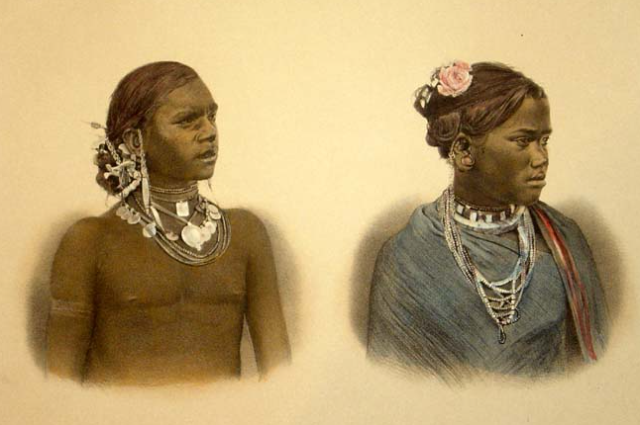
Hidden in the forests and plateaus of eastern India is a tribal tradition so rare that it appears only once every twelve years. Known as Mukka Sendra—also called Jani Shikar—this powerful ritual belongs to the Oraon (Kurukh) tribe, spread across Jharkhand, Odisha, and Chhattisgarh.
Unlike most festivals that mark seasons or harvests, Mukka Sendra is a celebration of women’s courage, resistance, and leadership—a living memory of war, sacrifice, and defiance that has survived for nearly five centuries.
A Festival That Comes Once in 12 Years
Mukka Sendra follows a twelve-year cycle, much like the Mahakumbh Mela. This long gap makes the event deeply sacred. For the Oraon community, it is not just a ritual—it is a historical remembrance passed from one generation of women to the next.
When the cycle arrives (the last one was in 2017, with the next expected around 2029), villages prepare for days. What unfolds is a complete reversal of everyday social roles.
The Epic Origin: The Defence of Rohtasgarh
The roots of Mukka Sendra trace back around 500 years to Rohtasgarh Fort, located in present-day Bihar.
The Surprise Attack
According to oral history, Mughal (or Turk) invaders planned a dawn attack on the Oraon settlement just after Sarhul, the spring festival. They assumed the men would be exhausted from night-long celebrations and drinking hadia, the traditional rice beer.
They were right about one thing—the men were asleep. But they were wrong about everything else.
The Female Battalion
Three women rose to lead the resistance: Princess Sinagi Dai, Kaili Dai, and Champa Dai. Refusing to surrender, they rallied the village women. The women dressed in men’s clothing, tied turbans around their heads, and armed themselves with bows, arrows, spears, and axes. From a distance, the fort walls appeared crowded with soldiers.
Three Battles, One Legacy
The invaders attacked—and were repelled. They attacked again—and failed again.
The women fought with such intensity that the enemy retreated three times.
It was only during the third confrontation that a spy noticed something unusual: the “soldiers” washed their faces in the river and touched their foreheads in a way the invaders identified as feminine. Eventually, the fort fell—but the story of the women warriors became immortal.
How Mukka Sendra Is Performed Today
When Mukka Sendra returns, the spirit of Rohtasgarh comes alive again.
Gender Reversal
Women dress in traditionally male attire—once the karea, now often shirts, trousers, and caps. They carry weapons and take full control of the ritual. For the day, men are forbidden from participating in the hunt or even eating the final feast.
The Relay Hunt
This is not chaos—it is discipline. Women from one village march to the next. The host village must: Welcome them formally. Wash their feet. Offer food and rest. Then the roles switch. The host village’s women take up the weapons and march onward, creating a ceremonial relay across villages.
The Symbolic Hunt
Traditionally, small livestock such as goats, pigs, or hens were hunted. In modern times, to avoid harm and conflict, villages often pre-select animals for a symbolic hunt, preserving both tradition and wildlife.
The Three Dots on the Forehead
One of the most striking symbols of Mukka Sendra is the three-dot tattoo worn by many Oraon women. After the fall of Rohtasgarh, captured women were branded on the forehead with three dots—a mark meant to label them as rebels and humiliate them.
The Oraon women did the opposite. They transformed the mark into a badge of honour. Today, the three dots represent: The three battles fought by women. Twelve years of patience and remembrance. Resistance that could not be erased. What was once intended as shame became identity.
A Realistic Incident Behind the Forehead Tattoo Tradition
At Rohtasgarh, the fort did not fall in one dramatic day—it wore down over nights of fear, deception, and exhaustion.
On the morning after Sarhul, smoke still hung low in the valleys. The Oraon men, drained from ritual drinking and celebration, were slow to respond to warning drums from the watch posts. A small group of women—led by Sinagi Dai—understood the danger immediately. They had seen scouts moving in the forest days earlier. This was not rumour; it was timing. With no chance to wake or organise the men, the women made a decision that broke every rule they knew.
They cut their hair short, wrapped turbans tightly, smeared ash and soil across their faces, and took up whatever weapons were within reach—old bows, farming daos, spears meant for hunting, not war. They did not believe they could defeat a professional force. Their goal was simpler: **buy time**. When the attackers approached the fort walls, they saw silhouettes—rows of armed figures standing alert. War horns sounded from within. Arrows were loosed from the ramparts. The illusion worked. The attackers withdrew, regrouped, and tried again—twice.
By the third attempt, hunger and thirst had begun to weaken the defenders. At the river below the fort, some of the women washed blood and ash from their faces. A spy noticed the gesture—the way the water was cupped, the foreheads wiped clean. The disguise cracked. The fort eventually fell.
What followed was not mass slaughter, but punishment meant to humiliate and mark. Several women were captured and branded on their foreheads with three dots—one for each failed assault—meant as a warning: *remember who you are.*
But when survivors returned to their villages, something unexpected happened. The women were not shunned. They were received in silence first, then with food, then with ritual. The marks were no longer seen as branding—they were proof.
In the years that followed, women voluntarily tattooed the same three dots on their foreheads. Not all of them. Not always visibly. But enough that the meaning settled into memory. Twelve years later, when the women took up weapons again—not to fight armies, but to reenact authority—the dots were no longer about defeat. They were about holding the line when no one else could.
More Than a Festival
Mukka Sendra is not folklore frozen in time. It is history that walks, marches, and remembers—carried forward by women who refuse to let courage fade into silence. Every twelve years, the forest paths echo with footsteps that remind the world: power does not always wear armour—and bravery does not forget.
References: