
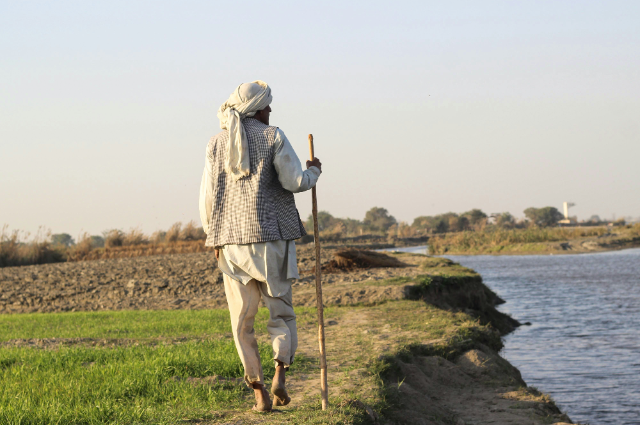
Photo by Goldson kuame on Unsplash
The suicide incidents by farmers in India are not isolated events; rather, they are symptomatically the most apparent expression of failure. As of January 2026, the crisis persists in the agricultural sector of India despite the long passage of time with policy responses, allocations of funds, and political promises. The scenario that portrays from the statistics and reality checks is not only an economic challenge but also defines itself as a human needs crisis.
As per the recent data available with the National Crime Records Bureau (NCRB) for the year 2023-2024, some 10,000-11,000 suicides occur every year in the farming community. This is not restricted to farmers who possess land but also includes agricultural labor. To put this in perspective, this is a death that occurs every hour —a rhythm of loss that has become disturbingly routine.
The Numbers Behind the Tragedy:
Although the annual data displays negligible variation, the district and occupation-based pattern of suicide rates points to serious shifts in the agricultural economy of India. In the same year, 2023, the NCRB reported 10,786 agricultural sector suicides, which comprised 6.3% of the agricultural sector’s total number of suicides. However, the agricultural burden is not evenly distributed.
Most Affected Regions:
Maharashtra consistently records the highest number of farmer suicides, at times contributing more than 35% of the total. Regions such as Vidarbha and Marathwada have literally become a synonym for agrarian distress. Karnataka is close behind, especially in the drought-prone districts where rainfall uncertainty has been a reality. Andhra Pradesh and Telangana also continued to report alarmingly high numbers, particularly in their cotton-growing belts.
A Disturbing Shift:
One of the most critical recent trends is the shift from land-owning cultivators to agricultural labourers, who now account for over 55% of suicides. These developments highlight a worsening crisis for the least privileged members of our rural society, those without land or collateral, and with very limited access to government support.
A Cascade of Distress: Understanding the Root Causes
An agreement has been reached by many experts who study issues related to agriculture that no single cause can explain farmer suicides. The combination of economic shocks, policy failures, and social pressures creates a situation referred to as the "cascade of distress," where all the different factors combine to create a condition where it is no longer possible for a farmer to survive on their own.
Indebtedness: The Core Trigger
Debt continues to be the number one reason farmers are committing suicide. Farmers do not typically have access to institutional credit due to a lack of land titles or other bureaucratic barriers. Therefore, farmers will turn to informal money lenders who charge high-interest rates, especially in times of crop failure. Once farmers do not have the ability to repay their debts after a crop failure, their cycle of debt continues to compound and, as a result, they become trapped.
Climate Change and Crop Failure:
The unpredictability of the monsoon season, the extended periods of drought, unseasonal rains, and pest infestations like pink bollworm in cotton have resulted in the loss of an entire year of income in a matter of days due to the extreme volatility created by climate change. All of these factors have made agriculture in reality an extremely high-risk gamble for small and marginal farmers.
Rising Input Costs:
Over the past decade, there has been a steep increase in the price of seeds, fertilizers, pesticides, and diesel fuel. However, prices for crops have not kept up with inflation rates, resulting in decreased profit margins for farmers, making farming an uneconomic proposition.
Market Volatility:
Farmers producing commercial crops, such as cotton and soybeans, are often unable to recover their initial investment because of global market crashes. Without adequate price stabilisation mechanisms in place, farmers have no control over the price and the market forces that impact it.
Social and Mental Health Pressures:
The financial distress of farming is also often compounded by social obligations—medical emergencies, education costs, or weddings for daughters. The stigma surrounding bankruptcy, combined with the lack of mental health services in rural areas, often isolates individuals from other people, resulting in severe emotional distress and isolation.
Policy Responses: Relief Without Resolution
Various government administrations have recognized the agricultural crisis and provided different programs, but it is unclear how effective these programs have been. For example, the PM-KISAN scheme gives ₹6,000 a year to farmer families to help support their income. However, many critics believe that this amount will not be enough because of the increased cost of living and rising prices in general. The Pradhan Mantri Fasal Bima Yojana (PMFBY) provides insurance for farmers' crops against weather-related disasters; however, complaints about delayed payments, incorrect exclusion from the system of payments, and low payment percentages have caused farmers to distrust PMFBY. Loan waiver programs offered through state governments, such as the State of Maharashtra's Loan Waiver Program, as well as several loan waiver programs in Karnataka, are often seen as a quick fix to a long-term problem and a temporary solution for a political issue. Farmers are seldom able to take full advantage of the minimum support price (MSP), which is supposed to guarantee all farmers 50% profit over their cost of production.
Each of the programs mentioned above does not address the root causes of the agricultural crisis; they only address its symptoms. The farmers are given temporary assistance for their situation through cash transfers, insurance, and loan waivers, while the major structural problems of land fragmentation, vulnerability to climate change, and lack of access to markets or employment opportunities in rural areas remain unresolved.
Why the System Keeps Failing:
India's agricultural crisis is indicative of a much larger issue. A large portion of the Indian populace (nearly half) relies upon agricultural activity, yet the contribution of agriculture to the total national economy has been decreasing. Furthermore, government policy has consistently been based upon the presumption that agriculture will always be able to withstand any negative economic forces, even though these negative forces have increased in intensity while the return on investment of agriculture has been declining for decades. The growing number of suicides among agricultural laborers reflects another gap in the system; nearly all of the existing government-assisted welfare programs are targeted towards landowners and, as such, do not address the most vulnerable groups in this regard.
Location: Yavatmal district, Vidarbha region, Maharashtra
Year: 2025 (post-kharif season)
The Farmer:
Ramesh Pawar, 42, was a smallholder cotton farmer owning 2.5 acres of rain-fed land. His family had cultivated cotton for three generations. In government records, he was classified as a “cultivator”—eligible for schemes, but only on paper. He lived with his wife, two school-going children, and his elderly mother.
The Chain of Distress:
Debt Begins with the Crop: At the start of the 2024–25 kharif season, Ramesh borrowed ₹1.4 lakh. ₹70,000 from a cooperative bank. ₹70,000 from a private moneylender at 36% annual interest
Why informal debt? The bank loan was insufficient to cover hybrid cotton seeds, fertilizer, pesticide, and diesel. Delays in institutional credit forced him to turn to the moneylender.
Climate Shock: The monsoon set foot in late; soon, the weather phenomena were met with unseasonal light rains followed by heavy downpours. The pink bollworm infestation ruined more than sixty percent of the crop. The increase in spraying pesticides from cheap to costly without resolving (recovering) any yield loss also resulted in a great financial burden. Total cost of cultivation: ~₹1.8 lakh. Expected income (according to the MSP): ~₹2.2 lakh. Income received after harvest: ~₹65,000
Policy Failure on the Ground:
PM Fasal Bima Yojana (Crop Insurance): Ramesh's premium was paid, but his claim was denied due to "average yield threshold not met at the village level" based on satellite imagery, which averaged losses over entire villages, rather than accurately reflecting the devastation experienced by each farmer. PM-KISAN: ₹6000/year (₹500/month), which covers less than one week of household expenses. MSP System: The nearest procurement centers were approximately forty kilometers away, while local traders offered prices lower than MSP, citing "poor quality."
Social Pressure & Silence: His daughter had overdue secondary school fees, and he had not paid for his mother's diabetes treatment; consequently, moneylenders began visiting his home, publicly demanding repayments. As a result, Ramesh stopped attending village meetings, avoided making eye contact whenever he was in the park or at a tea stall, and there were no mental health providers available in his block.
The Incident:
One morning in September 2025, Ramesh did not go to the fields. By evening, neighbors found him unresponsive in a farm shed. No note mentioned politics or policy—only an apology to his family for “failing.”
Aftermath:
His death was recorded as “farmer suicide due to indebtedness. Compensation eligibility was delayed due to documentation disputes. His wife became an agricultural laborer, joining the growing statistic of landless distress. The debt did not disappear—it transferred.
Ramesh did not die because of one bad monsoon or one loan. He died because multiple policies failed simultaneously—each working in isolation, none addressing the full cycle of agrarian distress. This is why farmer suicides persist despite schemes, announcements, and statistics. They are not policy absences. There are policy disconnects.
Beyond Band-Aid Solutions
The suicides of farmers are not only an individual's suffering due to financial issues, but they also shine a light on the overall neglect and failures of our systems. In order to prevent this unacceptable trend from continuing in India, we need to implement comprehensive, systemic reform across all areas of credit access, climate resilience, market stability, land rights, and mental health support.
The question is no longer whether the problem is known. The data, reports, and stories are abundant. The real question is whether policy will finally shift from reactive relief to preventive, structural change—before another hour passes, and another life is lost.
. . .
References: