
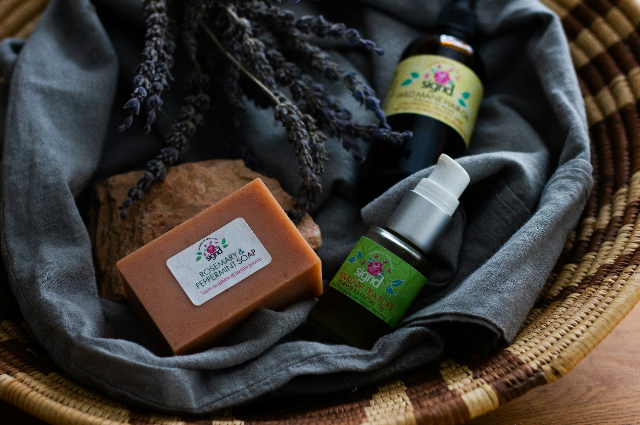
In recent years, a subtle but rapidly growing revolution has been underway in the Indian beauty industry: the rise of “waterless” or “anhydrous” beauty products. For a new generation of environmentally conscious consumers what we might call the “conscious checkout” shopper, these products are about more than “organic” or “chemical-free.” They reflect a deeper awareness of water as a precious national resource in a country where water stress and scarcity are increasingly real.
Below, I explore what waterless beauty is, why it resonates in India now, and what challenges remain.
What is “Waterless Beauty”?
Definition: Waterless (also called “anhydrous”) beauty products omit water as a base ingredient. Instead of the usual 60–80% (or even more) water in typical creams, lotions, shampoos, or cleansers, waterless formulations use oils, butters, waxes, botanical extracts, powders, or solid formats.
Typical Forms: Solid bars (soaps, shampoos, conditioners, moisturizers), Powder-to-mix products (cleansers, face masks, shampoos), Concentrated oils, butters or serums, Balms and solid creams.
Origins: The concept gained prominence initially via K-beauty and independent “clean beauty” brands but is now spreading globally and into mainstream markets.
Why does water often dominate conventional beauty products? The answer is that water is a cheap component and is used as a filler; it adds volume and gives the product a certain consistency while keeping the active ingredients diluted. However, water-based formulations have their share of disadvantages as well: they can become a breeding ground for bacteria (thus requiring added preservatives), they dilute the active ingredients (thus the product becomes less potent), and very often, they result in bigger packaging and more plastic waste.
On the other hand, waterless skincare products basically want to achieve a higher concentration of active ingredients (thus, you use less product). Avoid or greatly reduce preservatives (because, without water, bacterial growth is less of an issue). They use more sustainable packaging, like smaller, lighter, often plastic-free, and reduce the environmental footprint. They also offer solid, concentrated, travel-friendly formats.
Why Waterless Beauty resonates with Indian Consumers — especially the “Conscious Checkout” Crowd:
Growing Awareness of Water Scarcity: Water remains the most vulnerable resource in India and is therefore under a lot of pressure. In the light of rising environmental consciousness, many urban consumers, and particularly the youth, are becoming more and more conscious of how their daily lifestyle (including beauty routines) affects water use. The concept of a beauty routine saving the planet is real to people: selecting products that "consume less water" turns into a tiny yet significant gesture of sharing the burden.
From “Organic/Natural” to “Resource-Sensitive” Sustainability: “Organic” or “chemical-free” labels were once the principal badge of “clean beauty.
” But waterless beauty represents a deeper shift: sustainability rooted not only in what goes on our skin, but what goes into the manufacturing and life-cycle of products, including water, packaging, transportation, preservatives, and waste. In that sense, for many Indian consumers, waterless beauty aligns better with broader environmental values than just “natural” or “Ayurvedic” labels.
Concentrated, Effective, and Lasting Products: Because waterless formulas are more concentrated, a little goes a long way, which often translates into longer-lasting products. Even in premium skincare segments, these products still attract cost-conscious customers. There is a large proportion of waterless products that are also constituted with a lesser number of preservatives, thus people with sensitive skin may be the ones to benefit.
Sustainability Beyond the Label: Waterless products are typically packaged in smaller, lighter, and sometimes plastic-free packaging, thereby reducing both packaging waste and carbon footprint in shipping are reduced. For Indian consumers who are becoming more and more conscious of the environmental impact (packaging waste, plastic pollution, resource use), these attributes give them real worth.
The research provides a basis for the assertion that waterless beauty products are becoming a popular choice worldwide and in the Asia-Pacific region. Indian players, especially smaller “clean beauty” brands, are beginning to adopt waterless formulations to meet the demand. Together, these reasons have resulted in a rising “conscious checkout” consumer demographic in India - individuals who, apart from caring for the ingredients, also care for the resources used, the environmental impact, and the long-term sustainability.
What Makes Waterless Beauty Particularly Relevant in India:
Water stress is usually more obvious: In a lot of Indian cities, water scarcity, groundwater depletion, and irregular supply - these are the realities that people live with. Contrary to affluent countries, where water appears to be inexhaustible, Indian consumers have a more direct understanding of the value of water. By choosing waterless beauty, one may feel that they are making a small, everyday contribution to conservation.
Eco-Conscious Middle Class & Young Consumers on the Rise: The new generation is not only aware of global environmental issues, but they also want to demonstrate that awareness by their daily consumption - be it food, fashion, or beauty. Waterless beauty offers a way to “practice what you believe” without dramatically changing lifestyle.
Affordability vs. Sustainability Trade-offs: Several waterless products, largely from international or boutique brands, may be sold at a premium price. However, because these products are concentrated, they are said to last longer. This feature can attract buyers who are very careful with their money if these products are presented in the right way. The Indian brands that are taking the waterless route may be in a position to provide “sustainable yet affordable” products.”
Local Natural Ingredients & Traditional Wellness: India has a long-standing tradition of using oils, butters, and herbal extracts mostly through Ayurveda or traditional skincare. India's heritage is very well aligned with waterless formulations. The transition thus seems to be more culturally inherent than “a foreign trend.”
Challenges & Criticisms: Why Waterless Beauty is Not a Silver Bullet:
“Waterless” ≠ “Water-Neutral”: The final product may not include water; however, water is used at different stages: for growing the botanicals, processing the oils, manufacturing, and cleaning the equipment. Therefore, the total water footprint can still be quite high.
Potential for Higher Cost: Waterless products contain more concentrated active ingredients and require specialized manufacturing. Hence, they usually have higher retail prices. This, in turn, limits the number of potential consumers who can afford these products.
Need for Consumer Education: Many people who buy cosmetic products may not immediately grasp the meaning of “waterless” or its importance. Without providing education and labelling, as well as being transparent, the transition will still be slow.
Not a Complete Environmental Solution: As critics note, waterless beauty is only one piece of the sustainability puzzle. Water use across agriculture, industry, infrastructure, domestic use, and policy-level conservation matters far more. Choosing a waterless shampoo bar won’t solve water stress at a systemic level.
Case Study:
Here’s a case study of a successful Indian D2C personal-care brand that scaled by focusing on dermatologically tested, efficacy-driven, zero-waste products, ensuring platform stability on Shopify.
Brand spotlight: Minimalist
Why Minimalist works as a case study:
Science-first and efficacy-driven formulation, Minimalist built its brand around transparency. Instead of vague “natural / glow/fairness” promises common in India, they list active ingredients, concentrations, formulation details, and emphasise “science-backed” skincare.
Clear, honest branding over hype. They avoided celebrity marketing or heavy glam packaging; instead, they used simple clinical-style design, straightforward communication about ingredients, benefits, and usage.
Strong business performance and scaling as D2C: Minimalist had a revenue of more than ₹350 crore in FY24, with good profitability and growth according to the reported figures.
Efficiency and repeat customers - As per the report, the brand kept a very high repeat rate (close to 60%, which is twice the industry average), i.e., customers made the products work for themselves and came back, a very important indicator of real product efficiency and not just hype for one time.
Minimal reliance on offline retail; D2C-first approach: Most of the sales were from online channels. That is in line with a pure direct-to-consumer model, which cuts down on the costs of retail and allows tighter control over the brand experience and customer data.
Because of this, Minimalist has become “the” example of how a modern, Indian D2C skincare brand can scale rapidly by focusing on substance over style.
Key Strategic Pillars Behind Their Success:
Transparency & honesty: Ingredient-first communication; clear formulation labels; no exaggerated claims.
Targeting the right consumer: Focus on “skincare-aware urban 18–35” demographic - people who care about actives, results, and not glossy ads.
Lean product catalog (initially: Launched with a modest range (~ 60 products), to manage inventory, quality control, and focus on core winners.
Product quality over minimal cost: More was spent on premium ingredients, and production was controlled (rather than the cheapest possible manufacturing), to ensure efficacy - even if margins per product were lower.
Digital & D2C first, performance-oriented marketing: Focus on content, community, organic growth; later, performance marketing with good ROAS.
Repeat customers & retention: High repeat rate due to actual results, which reduced dependence on continuous high ad spends and made growth sustainable.
Verdict: Minimalist is a strong template, but incomplete if zero-waste is a core goal
Minimalist’s growth story is among the most compelling in Indian D2C skincare, especially for efficacy, ingredient-first positioning, and scalable business performance. If your primary goal is “dermatologically tested, results-oriented, efficacy-driven, D2C scale,” Minimalist offers a near-ideal blueprint.
However, if zero-waste / sustainability / circular-economy is non-negotiable, Minimalist falls short of that ideal, meaning a new brand pursuing your full set of criteria would need to adapt the Minimalist model significantly (especially on sourcing, packaging, supply-chain).
Beyond the Label: Why Waterless Beauty Matters
The rise of waterless beauty in India signals something deeper than a cosmetic trend. It reflects a growing generation of shoppers who view consumption not just through the lens of “natural,” but through the lens of responsibility to their skin, to the planet, and to future generations.
For many, ticking “organic” or “paraben-free” is no longer enough. They want their beauty routine to align with the values of conservation, sustainability, and mindfulness. And waterless beauty, with its reduced water usage, concentrated formulas, and smaller footprints, offers a tangible way to do that, every morning, every routine.
That said, waterless beauty alone won’t solve India’s water crisis. But when paired with broader environmental awareness and conscious lifestyle choices, it can be a meaningful part of a larger shift from “consumerism” to “conscious consumption.”
References:
- https://www.vogue.in
- https://www.femina.in
- https://www.hercircle.in
- https://demurebeauty.in
- https://www.linkedin.com