
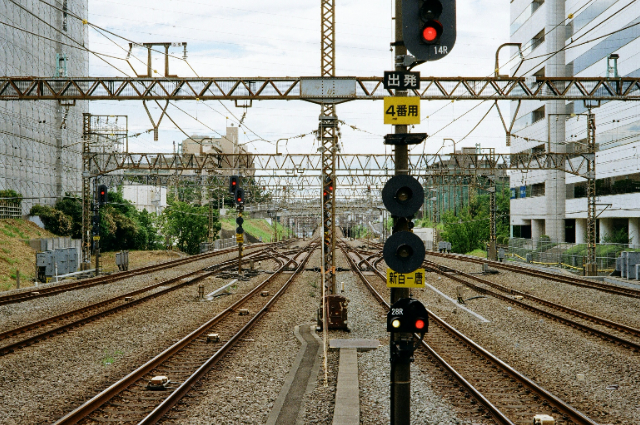
When a train derails, collides, or grinds to a catastrophic halt, the first explanation is often predictable: congestion, human error, or the pressures of rush hour. But after yet another devastating rail tragedy, commuters and families are asking a harder question: Is this really about rush hour—or is it about system failure? Across major transit networks—from Indian Railways to Amtrak and the MBTA—recent accidents and near-misses point to deeper structural cracks in the way rail systems are funded, maintained, and modernised.
The Pattern Behind the Headlines:
Every train accident has unique details. A missed signal. A faulty switch. A distracted operator. Aging tracks. But if one examines the situation a little more closely, the pattern is clear: Aging infrastructure that has outlived its usefulness, Deferred maintenance due to a lack of budget, signalling systems that are antiquated and vulnerable to human error, Overextended personnel working at capacity due to staffing shortages, Unchecked urbanization without a corresponding expansion of the transit system. Rush hour isn’t creating problems; it’s exposing them. When the system is running at full capacity every day, even small problems can rapidly snowball into huge disasters.
Infrastructure on Borrowed Time:
Many rail systems are still using infrastructure from the past several decades. In certain areas, rail lines installed in the middle of the last century are now handling traffic volumes that would have been unthinkable at the time of their installation. In nations with extremely large rail networks, such as India, where millions of people use Indian Railways every day, the demands are simply too great. And in the United States, high-profile derailments on Amtrak routes have raised questions about federal support and safety systems. Systems such as Positive Train Control (PTC) have greatly improved safety at installations—but have often been slow to roll out in full because of expense and technicalities.
Human Error—or Human Limits?:
In the aftermath of an accident, the spotlight often falls on the operator. But we must ask: Were they working excessive hours? Was the signalling interface intuitive and modern? Were safety alerts clear and timely? Was staffing adequate? Blaming individuals can obscure institutional accountability. Fatigue, insufficient training, and outdated control systems create environments where mistakes are more likely—and more deadly.
Funding vs. Public Dependence:
Public transportation is paradoxical. It is essential to millions, yet often politically underfunded. Commuters depend on trains to: Get to work, attend school, Access healthcare, and support urban economies. But infrastructure budgets are frequently the first to face cuts. In cities like Boston, where the MBTA serves as a backbone of daily life, service slowdowns and safety incidents have ignited public frustration. Passengers aren’t just asking for on-time arrivals—they’re demanding safety.
Climate Stress and Modern Pressures:
Contemporary rail networks are plagued by issues their original designers never could have foreseen: Heat damage to tracks, Flooding of tracks, Increased freight traffic, and higher passenger density. Climate-induced instability introduces a new source of danger to already antiquated infrastructure. If the industry doesn’t actively adapt, it may see more accidents, not fewer.
The Cost of “Good Enough”:
Transportation safety is often governed by a perilous philosophy: If accidents are few, then the system is acceptable. However, the word “few” means very little to the families of victims. Every accident is a symptom of: Inadequate oversight, A missed maintenance window, A postponed upgrade, or a warning sign ignored. Infrastructure failure doesn’t happen overnight. It happens incrementally.
What Real Reform Looks Like:
Preventing the next disaster is more than just thoughts and answers. It takes: Predictive Maintenance - AI-driven diagnostics and real-time track monitoring. Open Safety Audits - Public disclosure of risks before they become disasters. Dedicated Infrastructure Funding - Multi-year protected budgets insulated from politics. Investment in Staff - Sufficient people, training, and fatigue management. Modernized Signaling - Fully automated protection where feasible.
June 2, 2023, near Bahanaga Bazar station in Balasore district, Odisha, India.
What Happened: The Coromandel Express passenger train was wrongly routed on the wrong track and collided with a parked freight train. The Coromandel Express derailed and crashed into another passenger train (the Howrah Superfast Express) on the next track, resulting in a three-train collision.
Casualties: Hundreds of passengers were killed (at least 275 reported dead), and over 1,000 were injured, making it one of the worst train disasters in India in decades.
Root Cause / System Failure:
Failure of the signal and track management system: Indian Railways officials pointed to a problem with the electronic track management/signalling system that was supposed to keep the trains on the proper, separate tracks. Reports later found that faulty connections made during repairs to an automated signalling circuit caused the system to wrongly direct the passenger train onto a track where another train was parked. Officials and analysts said this kind of systemic infrastructure failure — not simply human impatience or overcrowding — lay at the heart of the disaster.
Why This Incident Illustrates System Failure:
Not Rush–Hour Crowding: Unlike many minor commuter accidents (like falls from overcrowded suburban trains), this tragedy occurred due to a breakdown in safety systems and signalling infrastructure— the very systems designed to prevent collisions.
Infrastructure Shortcomings Highlighted: The crash prompted intense scrutiny of India’s railway signalling technology, repair procedures, staffing, and investment in safety upgrades — all points that point to broader “system failures” rather than isolated operator mistakes.
“This Isn’t Rush Hour”:
Rush hour is predictable. System failure is preventable. When trains collide or derail, it is rarely because too many people need to get home. It is because systems designed decades ago are being asked to perform at 21st-century capacity without 21st-century investment. Public transportation is not a luxury. It is public trust on rails. And when that trust breaks, it is not congestion we are witnessing. It is neglect.
. . .
References: