
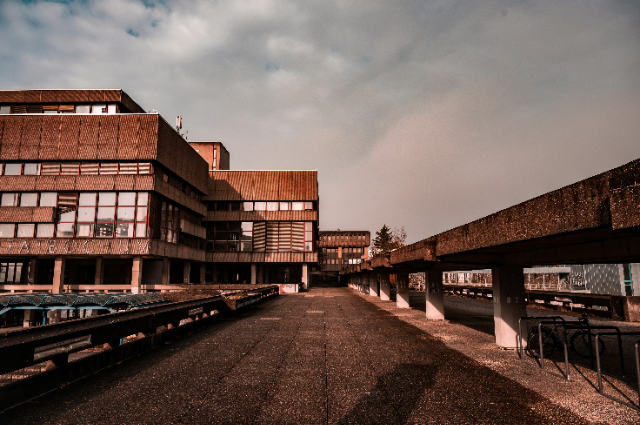
Walk into many modern schools today, and you’ll be impressed instantly. Glass buildings, Smart boards, Cafeterias that look like cafés. Everything shines.
Yet behind all this exterior, something important is always being neglected.
Education, which was once rooted in curiosity and critical thinking, is increasingly being redefined as a consumer necessity. Schools compete not on the quality of teaching, but on facilities and brand appeal. Parents are sold the image of success long before real learning actually begins.
This change has created what can be called the Facility Trap — a system where money flows more easily into infrastructure and marketing than into teachers, pedagogy, or meaningful learning. While schools grow larger and more luxurious, classrooms often grow emptier in spirit.
The commercialisation of education does not always announce itself in a grand style. It hides behind the glossy brochures, impressive results, and the promise of future success. But beneath it lies a growing crisis — one that broadens inequality, reduces learning to credentials, and makes students turn into customers rather than thinkers.
Students are among the most idealistic members of society. Their youthful pursuit of ideals, fuelled by passion, innocence, and creativity, represents limitless potential that society can harness for progressive transformation. Throughout history, students have not only participated in but also shaped progressive movements. What defines them is their selfless sacrifice for the greater good of society.
Through their everyday experiences, students learn, reflect, and analyse, offering alternatives that challenge dominant knowledge traditions while resisting authoritarianism within and beyond the classroom. In doing so, they generate new ideas and progressive ideals that contribute to the radical transformation of society.
Over the past few decades, education has drastically changed from being seen as a public good to being treated as a private investment, as some may say. Schools and universities are now brands competing in a market. Success is now measured by rankings and visual appeal rather than the quality of education that is being offered.
This change is closely connected to rising economic pressures and social aspirations. For many families, education has become the basic pathway to progress in mobility, making parents willing to pay more for anything that promises an advantage. In response, institutions invest heavily in visible assets — modern buildings, advanced facilities, international affiliations — because these features are easy to market and sell.
Similarly, teaching itself has become less appreciated. Teachers face wage cuts and reduced autonomy, while decision-making power tends to move upward to administrators whose focus is only on growth and profitability. Learning is repackaged into outcomes like grades, scores, and employability statistics.
Within this system, students are consciously seen as consumers. Education is no longer something to be explored passionately, but something to be purchased in the best way possible. This market-driven mindset lays the very foundation for inequality, and a growing disconnect between what education promises and what it delivers regularly.
The commercialisation of education doesn’t arrive with a price tag — it arrives disguised as “progress.” Schools adopt the language of business: performance metrics, return on investment, market competitiveness. But beneath this vocabulary lies a quiet transformation in what education truly means.
- The Credentialism Trap
Across schools and universities, learning has been reduced to a checklist. Success is measured by test scores, certificates, and admissions into elite institutions. Critical thinking and emotional intelligence — the basis of real education — take a back seat to numbers that can be marketed.
Students, in turn, now become passive consumers, focusing on grades over growth. Their sense of worth depends on credentials rather than competence. Employers later report hiring graduates with impressive degrees but limited ability to solve real-world problems, which is evidence of a system that rewards output, and not true insight.
- The Rise of Coaching Factories
Parallel to this, the private coaching and ed-tech industry has turned learning into a high-stakes race. Middle-income families now spend more on private tutors and online prep courses than on school tuition itself. This “shadow education economy” deepens inequality: only those who can afford extra coaching can compete.
For children who come from low-income households, even admission into a good school is not enough. Without access to premium AI tutors, they remain at detriment to entering school. The gap between opportunity and outcome widens silently — all in the name of “personalised learning.”
- The Managerial Shift in School Leadership.
This is seen when the principal’s office, once the heart of mentorship, now mirrors a corporate room for sales talk. Success is measured by enrollment rates, brand image, and social media visibility.
Subjects that foster critical thought — arts, philosophy, ethics — are often sidelined because they don’t have a high “market ROI.” Hiring decisions are made based on affordability or appeal, not educational excellence. Schools compete for attention, not understanding.
This managerial shift changes education into an enterprise that appears efficient. Teachers are treated as replaceable, students as customers, and learning as a product that is designed to be packaged, sold, and measured.
The city of Kota in Rajasthan has become one of the most striking real-world examples of how commercialisation reshapes education. It was once a quiet town, but as of recent, Kota is now seen as India’s coaching capital, which hosts thousands of private institutes that enable students to prepare well for competitive exams like IIT-JEE and NEET. Families from across the country send their children there, investing huge sums in coaching with the hope of securing a better future for them.
In this ecosystem, school education becomes secondary. Students often attend school only for attendance, while their real learning — and pressure — comes from coaching factories that operate like high-performance businesses. Success is measured narrowly: ranks, scores, and selections. Emotional well-being, curiosity, and holistic growth are treated as distractions. The Facility Trap is not just about money; it is about misplaced priorities. A meaningful education system invests first in people like the teachers, students, and ideas, and it shouldn’t be the other way around, not in branding and infrastructure alone. Schools will continue to produce credentials instead of thinkers until they realise that schools shouldn’t be able to market.
Education should not be a marketplace but a space for growth.
REFERENCES: