
In India, people do not usually think of mental illness as a medical issue that needs to be treated by a doctor. Instead, mental illness is often talked about as if someone is possessed by a spirit or has been cursed. People also think that mental illness is a punishment from God. When someone in a family has an illness, the family does not look for a psychiatrist to help them. They ask for people who are sick to commit to prayer who are sick. The family does not make any attempt to find a clinic or a hospital to get assistance. They would rather look for a place like a shrine, where they can pray. Mental illness is a problem in rural India, and people need to start thinking about it in an entirely different way.
There is a place called Mira Datar Dargah. This place is really special to a lot of people. They think of Mira Datar Dargah as a kind of Mira Datar Dargah where they can find help. Mira Datar Dargah is like a court where people can go to solve their spiritual problems. Many people go to Mira Datar Dargah because they think they have spirits or jinns inside them. They think these spirits are making them sick. Doctors say these people actually have things, like schizophrenia or bipolar disorder or conversion disorder, when they come to Mira Datar Dargah.
For a time, programs that help people with mental health issues did not do a good job of reaching the people who needed them. This was not because there was no treatment, but because scientists tried to replace people's religious beliefs with science instead of working together with these beliefs. Then something surprising happened. In this place, doctors did not try to change peoples beliefs. The medical treatment actually worked with the mental health patients faith. Mental health programs started to work with faith. That is when things started to get better.
This article examines a rare and radical model where psychiatry operates inside a religious shrine, where pills are prescribed as blessings, and where faith healers become the most effective mental health gatekeepers in rural India.
Mental health care in India is having a time. This is not because doctors are not able to figure out what is wrong with people or because they do not have the medicine. The problem is that people do not trust health care. In small towns and villages people think that mental illness is not something that happens in the body or mind. They think it is something that happens because of things. People in these places do not like going to hospitals. They think hospitals are not trustworthy. On the hand they really trust their religious leaders and the places where they go to pray. Mental health care in India is struggling because of this.
There is a problem here. This problem is very sad. You have doctors who help people with health issues, and they do not have enough people to see. At the time, many people are going to shrines, and they are not getting the help they need from doctors. Families are spending all their money on things like rituals, travel, and places to stay. They are doing this because the doctors are not explaining things in a way that makes sense to them. The mental health doctors are not speaking their language.
Stigma further complicates access. Visiting a psychiatrist carries social shame, while visiting a dargah does not. Faith offers dignity; medicine, unfortunately, often offers labels. Any successful intervention in such a context must therefore do more than treat illness — it must respect belief without reinforcing harm.
The big change happened in 2008 when Altruist did something. This was led by a worker named Milesh Hamlai. Of trying to teach patients Milesh Hamlai focused on the people who really had power: the mujavirs, also known as faith healers. Milesh Hamlai worked with the mujavirs because they were the ones that people looked up to. The mujavirs were very important, in the community.
Altruist did not try to change what people thought about possession. Instead Altruist changed the way they treated people. The mujavir would do a ritual to remove the bad spirit. After the ritual the mujavir would give the families a piece of paper that told them where to go for help and say:
The spirit is really strong. If you want your prayer to work faster you have to take this medicine. The spirit will help you and the medicine will make it happen sooner. You need to take the medicine for the prayer to really work.
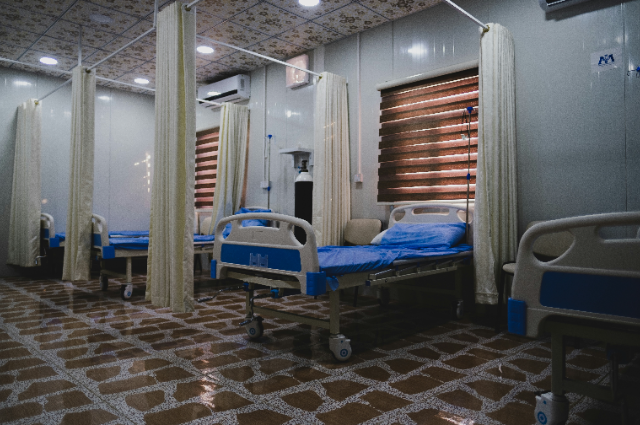
The patient would then go to a clinic that the government pays for which’s inside the dargah compound. This clinic is for people with problems. The patient would get some medicine to help with their issues. They think this medicine is special because it helps weaken the spirits that are inside them. When the patients take this medicine they get a lot better. The patient is more likely to take the medicine as they should. The violence that the patient does goes down a lot. The patient gets better. Recovers from their problems more often.
Today, the project has made it possible to treat over 38,000 patients and has been cited by the Supreme Court of India as a model worth replicating.
God's Clinic shows us that we do not have to choose between science and superstition. A lot of the time, what helps people get better is not what is actually true. What they really trust. God's Clinic is a place where people can find healing. God's Clinic does this by looking at what people trust.
By respecting tradition while delivering treatment, the Mira Datar model proves that culturally sensitive psychiatry is not a compromise — it is innovation. Sometimes, the path to medicine does not begin in a hospital, but at a shrine. And sometimes, the most effective prescription is one that faith is willing to swallow.
. . .
REFERENCES: