
Some brands try to be liked. Others try to be trusted.
Hell Pizza tries to be feared, discussed, and impossible to ignore.
It was discovered in New Zealand that Hell Pizza has developed its entire business around death, sin, horror, and provocation. From pizzas named after the Seven Deadly Sins to marketing campaigns that openly talk to others without offense, legality, and moral discomfort, the brand operates on one important belief, which is that outrage gets attention, and attention markets.
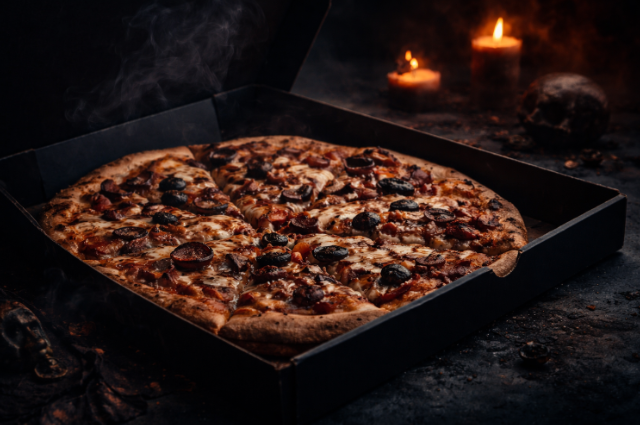
Rather than considering its image to make everyone initiate themselves with it, Hell Pizza is really different. It leans into darkness — skeletons, flames, black boxes, cynical humor — creating a brand that feels less like fast food and more like a cultural statement. This article examines how Hell Pizza deliberately uses shock as a strategy, and what its success reveals about modern consumer culture.
For brands, this means success no longer depends on who shouts the loudest, but on who connects the deepest. Winning attention requires empathy, creativity, and timing—not noise. To understand how influence really works in this landscape, you first have to understand the economy that powers it.
Want to stand out from the pack? We’ve used insights from IE Business School’s recent Marketing Summit 2025 to show how creativity can make all the difference.
In an era where consumers are constantly bombarded with advertisements, brands struggle not just to sell products but to be noticed. Traditional marketing relies on positive associations — happiness, family, comfort. But in the attention economy, neutrality is death.
Hell Pizza emerged in a media landscape where controversy travels faster than approval. Social media, news cycles, and viral outrage reward brands that provoke strong emotional reactions — even negative ones. In this context, offense becomes currency. A scandal can generate more visibility than years of conventional advertising.
Understanding Hell Pizza requires seeing it not as a reckless brand, but as one that understands the psychology of attention deeply — and exploits it deliberately.
This article states that Hell Pizza does not intentionally seek to offend, but it engineers offense.
Its horror aesthetic, satanic imagery, and dark humor are tools to be used. By consistently pushing boundaries of taste, religion, and social norms, the brand assures a constant public backlash. Each backlash fuels media coverage, debates, and social sharing — all without the brand paying for traditional advertising.
Unlike brands that apologize after controversy, Hell Pizza doubles down to a fault. This refusal to conform strengthens brand loyalty among a specific audience: the consumers who value irreverence and anti-corporate humor. The brand sacrifices universal approval in exchange for cultural memorability.
In doing so, Hell Pizza turns sin into identity and outrage into a marketing engine.
One of Hell Pizza’s most effective branding tools is its Seven Deadly Sins menu, where indulgence is framed as moral transgression. “Lust” becomes a meat-heavy pizza. “Greed” promises excess toppings. “Gluttony” celebrates overconsumption. Rather than keeping the unhealthy indulgence hidden from the public, the brands get intrigued by it, thereby turning guilt into dark humor.
Beyond the menu, Hell Pizza has initiated campaigns that brought about public outrage and regulatory scrutiny, including the ads involving religious symbolism and themes of death. These campaigns frequently attract complaints, investigations, and condemnation — followed by massive spikes in public attention and sales.
The pattern is consistent:
- Launch a provocative campaign
- Trigger moral outrage
- Receive free media coverage
- Reinforce brand identity
- Convert attention into sales
A plane crash and everyone goes bonkers, but did we just forget that easily 10,000 planes fly every day with no issues?
Yet that single piece of news triggers fear of flying, fear of travelling, etc
Marketing Through the 7 Deadly Sins
Going a full circle back to the 7 Deadly Sins of Marketing
Now, I’m not saying this will make your customers more sinful or that you have to have such sins yourself
No… please don’t do that
Rather, it is an understanding of this concept, and tweaking your marketing and advertising to add maybe one or two things to trigger or draw out that emotional factor.
Whether it is to make your brand more memorable or to get the product sale, you can allow your creativity to flow with what you want to do.
And I will be sharing a couple of notable brands and how they brand themselves, or even how they do their ads.
To be fair, though, those brands might not have such intentions to work with such an angle.
Rather, it is my interpretation that I see their marketing efforts along the lines of the 7 Deadly Sins.
This will be a long article, because I will be going through each sin and how it can be used in your marketing, so save this article somewhere and return to it when you need to
When outrage becomes strategy, consumers must decide: are we reacting because we are offended — or because we are being expertly manipulated?
In the end, Hell Pizza’s greatest product may not be pizza at all, but controversy itself.
This case study shows how Hell Pizza uses controversy as fuel. Hell Pizza shows us an uncomfortable truth about modern marketing: in a crowded media environment, being controversial can be more profitable than being respectable. The brand excels more on backlash. Hell Pizza is not just selling pizza — it is selling a philosophy of defiance. By giving room for darkness, sin, and outrage, it has created a brand that ignores neutrality and flourishes on cultural tension.
Whether one finds the brand offensive or clever, its success forces us to talk about the ethics of attention-driven capitalism.
REFERENCES: